

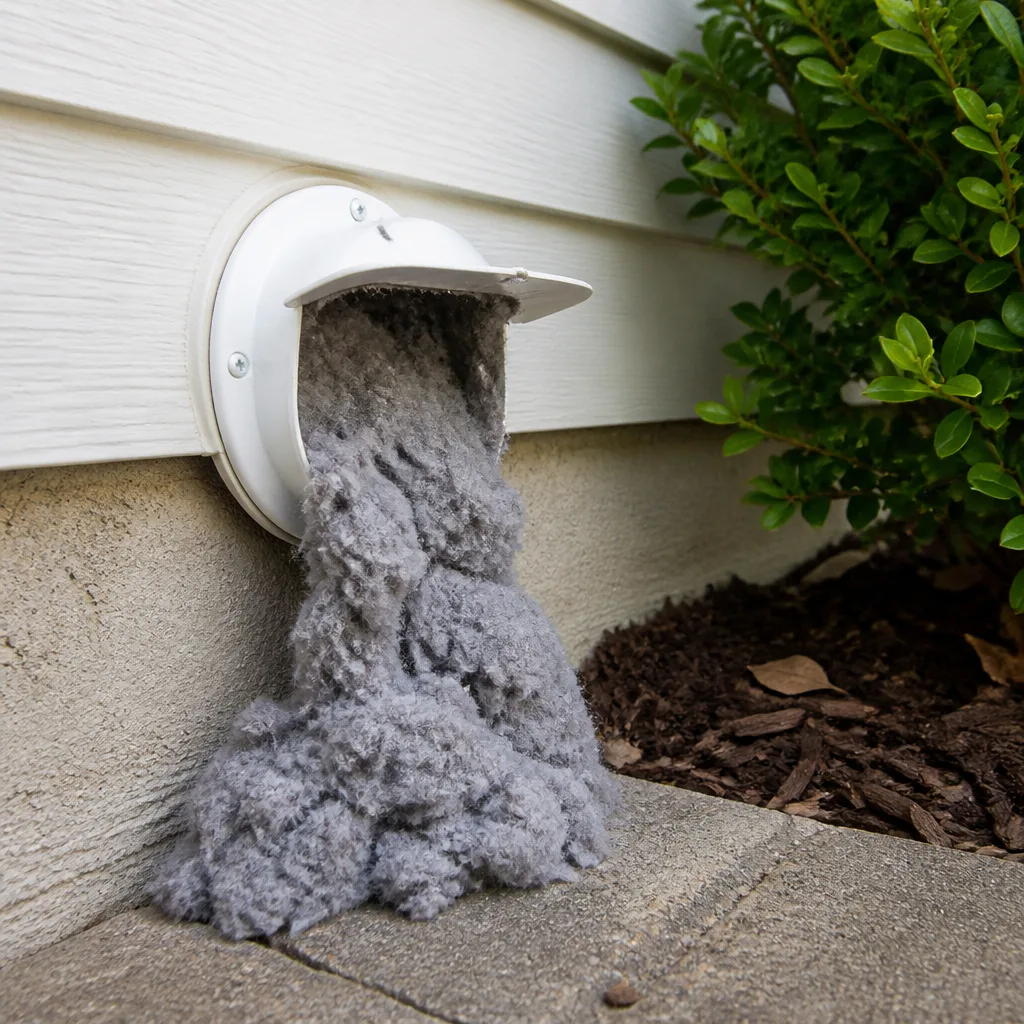
 Dryer vent cleaning
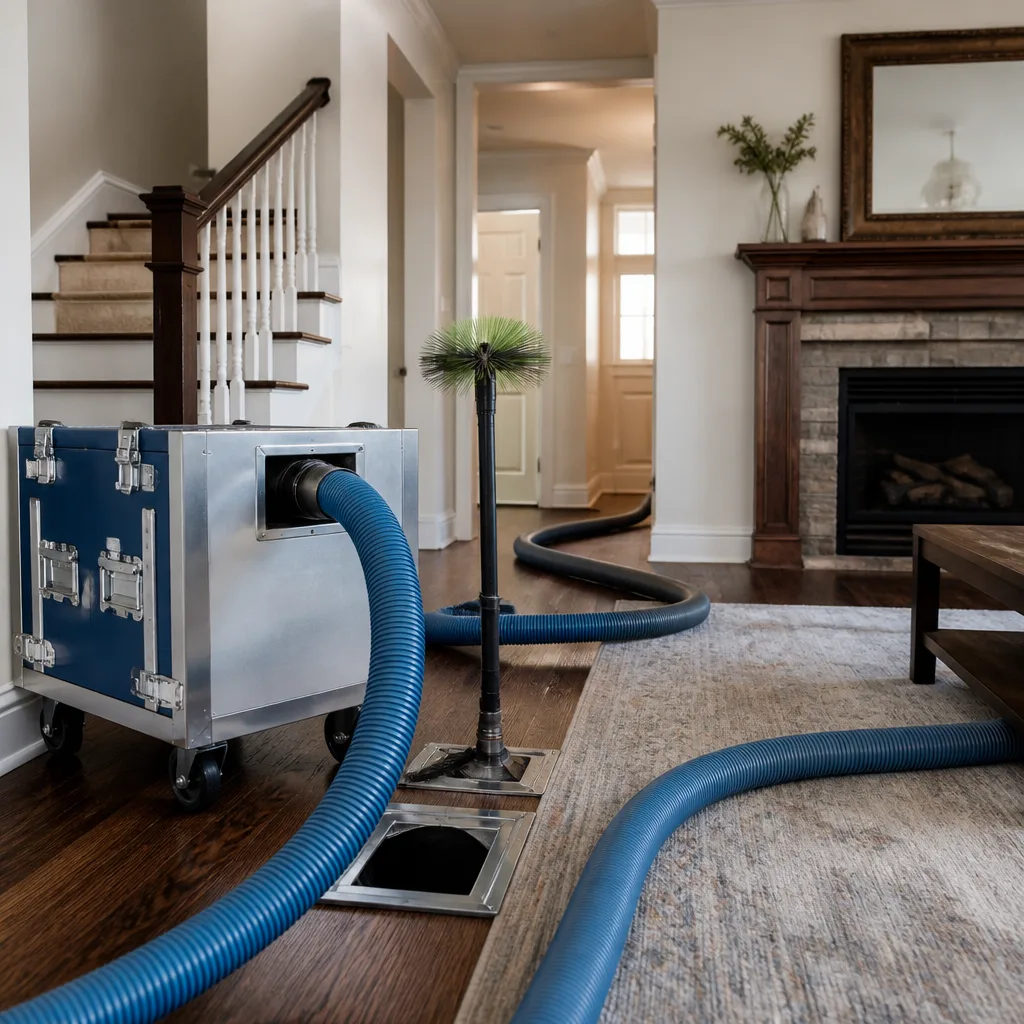 Whole-home duct cleaning
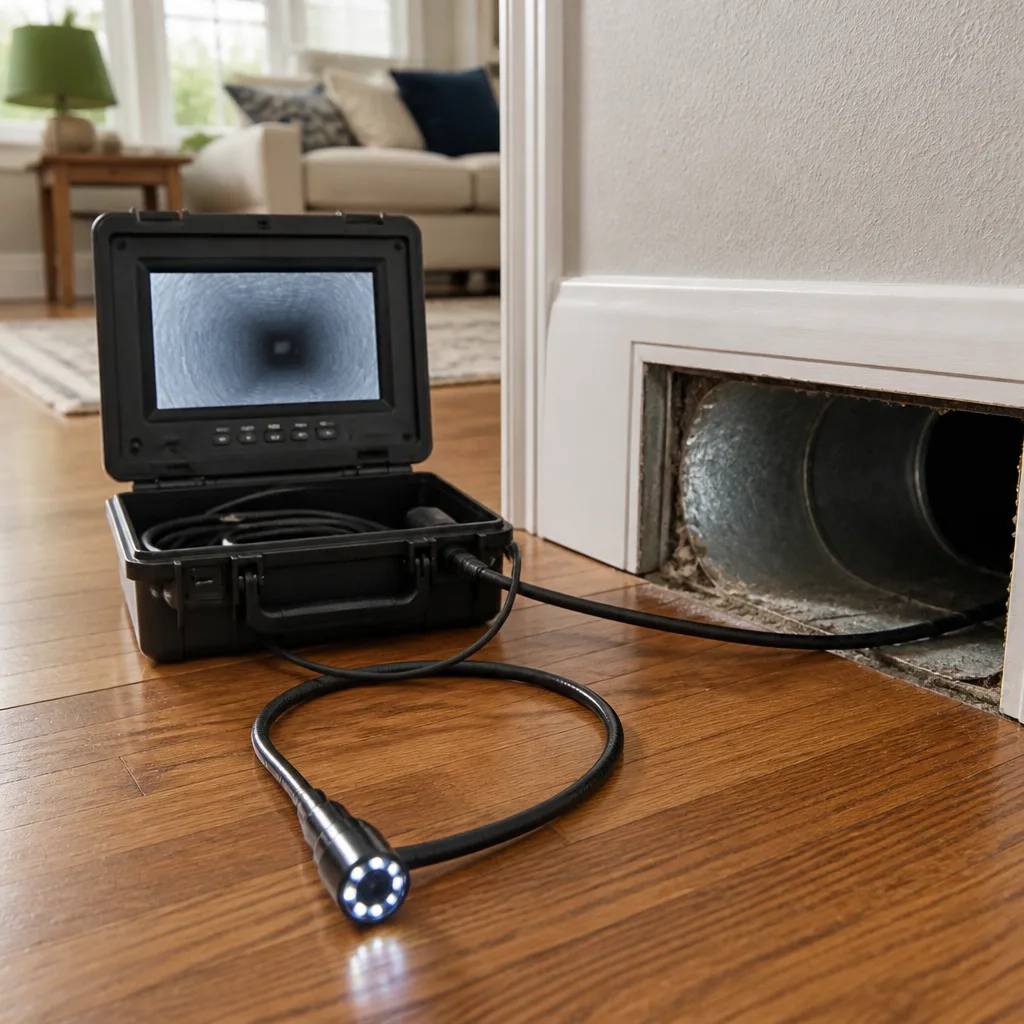 Camera inspection
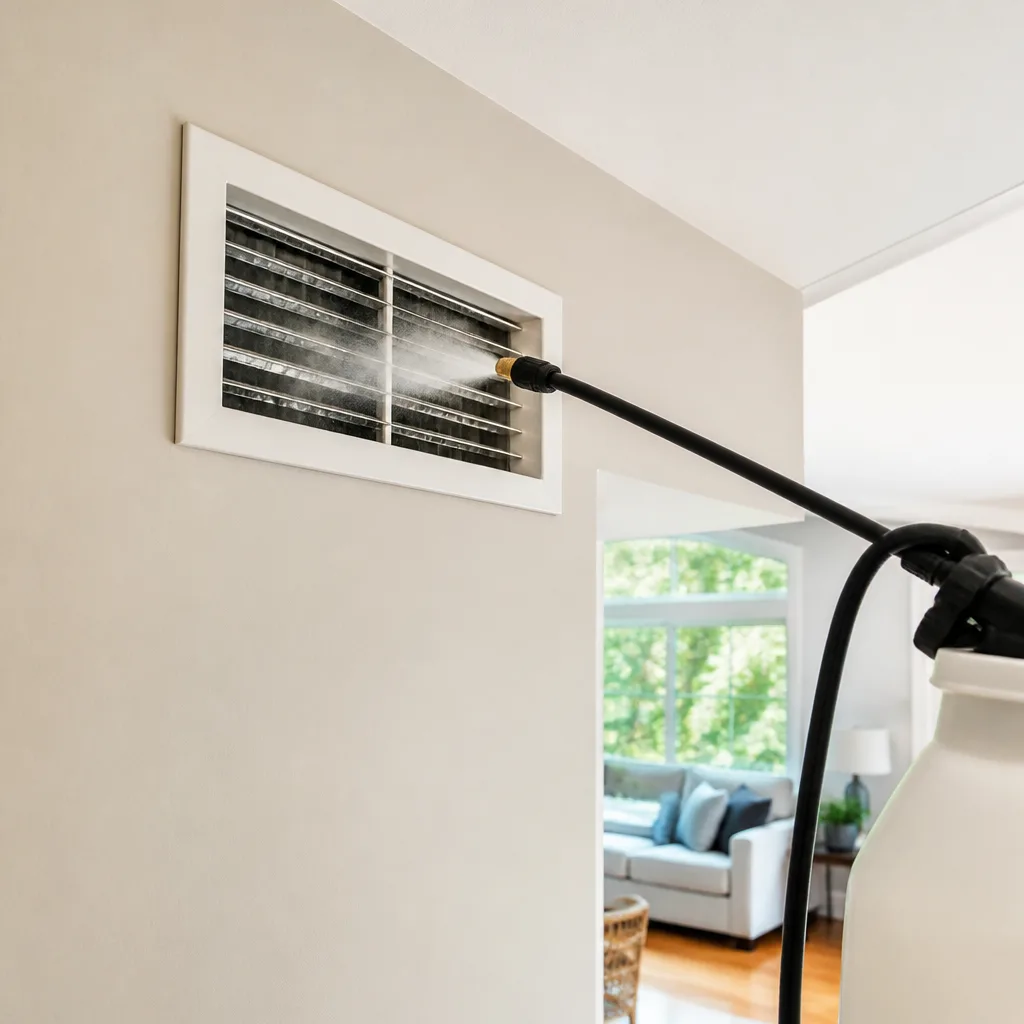 Sanitizing & deodorizing
Whole-system duct and dryer vent check with before-and-after photos - you see exactly what came out of your vents
That "$99 whole-house special" is a bait ad - the real number appears once they are in your hallway, or the "clean" is a shop-vac at the register. We photograph the inside of your ducts before and after instead.
Fast, Reliable Dryer Vent Cleaning Across Lake Los Angeles
Dryer vent cleaning in Lake Los Angeles typically runs $120 – $245 for a standard single-dryer home, with most jobs completed in under two hours. The real issue here isn’t just lint. It’s the fine desert grit that blows off the open Antelope Valley floor and settles inside roof-mounted runs and long exterior vent paths, fusing with lint until airflow collapses. We work throughout the 93591 zip code, from the older ranch homes near Avenue O to the manufactured properties off 170th Street East, and we know exactly what this high-desert dust does to a dryer exhaust system. Call (833) 589-9773 and we’ll schedule a cleaning that actually addresses what’s happening inside your vent, not just what’s sitting in the trap.
Why Duct Cleaning Lancaster Is Lake Los Angeles’s Preferred Dryer Vent Cleaning Company
We’re a full-scope duct specialist, not a generalist cleaning crew. That matters in Lake Los Angeles because the same wind-driven dust that loads your dryer vent also settles in your HVAC returns, your evaporative-cooler ducting, and every abandoned chase in the house. Most companies vacuum the vent and leave. We diagnose the whole system, because a dryer vent here rarely fails in isolation.
Our techs run Rotobrush and Nikro equipment on every job, purpose-built systems engineered for duct and vent work rather than repurposed shop vacuums. When we open a Lake Los Angeles roof-mounted run, we’re not guessing. We’re using camera inspection to see the exact blockage, then agitation tools under negative pressure with HEPA filtration to pull the grit-and-lint crust out without blowing it back into the home. That’s the difference between a clean vent and an engineered clean.
Armando Keller leads our team, and he’s been clear about the standard from day one: if a duct or vent is structurally compromised, we repair it. We don’t clean around damage and call it done. For Lake Los Angeles homeowners, that means a dryer vent cleaning that identifies crushed flex sections, separated joints, or corroded roof caps before they become a bigger problem. We repair what others leave behind.
Styles & brands we work with
- Whole-home duct cleaning
- Dryer vent cleaning
- Camera inspection
- Sanitizing & deodorizing
Commercial Dryer Vent Cleaning in Lake Los Angeles
Commercial Dryer Vent Cleaning in Lake Los Angeles deals with a different animal than a single-family home. Rural properties in 93591 often run multiple dryers in outbuildings, laundry sheds, or small commercial operations where the vent runs are long, roof-mounted, and exposed to the same relentless dust that covers everything else out here. We clean multi-dryer systems, long horizontal runs, and roof penetrations with equipment sized for the job, not a handheld brush.
Commercial work in Lake Los Angeles typically runs $180 – $340 depending on the number of dryers, run length, and accessibility. We schedule commercial jobs during off-hours when it makes sense for the property, and we document the work with before-and-after photos so property managers can verify the vent was actually cleared. That’s not a bonus feature. It’s the baseline.
Multi-Dryer and Outbuilding Systems
When a Lake Los Angeles property runs two or three dryers off a shared main or separate outbuilding runs, the failure mode is almost always the same: the furthest dryer loses airflow first because its run is the longest and the grit loading never stops. We map each run, clean each one independently under negative pressure, and flag any run that’s already collapsed or crushed. Rural properties don’t get a pass on commercial-grade cleanliness just because they’re residential zoned.
Verification and Documentation
After every commercial cleaning, we provide before-and-after photos of the actual vent interior, not a stock image. Property managers in Lake Los Angeles use those photos to show owners exactly what was removed and confirm the job wasn’t a surface wipe. The number of times we’ve found a “clean” vent that was never opened past the first three feet would surprise most owners.
Dryer Vent Cleaning Service in Lake Los Angeles
Dryer Vent Cleaning Service in Lake Los Angeles starts with a camera inspection, because the typical failure here is never visible from the outside. A standard residential cleaning in 93591 runs $120 – $245 for a single dryer, and that price covers the whole vent path: from the appliance connection, through the interior run, and out the roof or exterior termination. We don’t do per-vent pricing or teaser coupons that balloon on arrival. One flat price per system, agreed before work starts.
What we consistently find in Lake Los Angeles is a fused crust of desert grit and lint that a trap cleaning never touches. The wind here carries silt finer than playground sand, and it settles in the vent between cycles. Once that grit mixes with damp lint, it hardens against the vent walls and airflow drops. That’s when dryers start taking two cycles to finish a load, and that’s when homeowners call us.
Long and Roof-Mounted Runs
Rural lots in the Antelope Valley mean long vent runs, and long runs collect more grit per foot than short city runs. When the run is roof-mounted, which is common on the older ranch and manufactured homes here, the sun bakes the vent from above while the desert wind scours it from outside. We clean roof-mounted runs with professional agitation and negative pressure, then inspect the roof cap and bird guard while we’re up there.
Swamp Cooler and Shared Chase Problems
Many Lake Los Angeles homes still have abandoned evaporative cooler ducting sharing a chase with the dryer exhaust. Wind-blown desert silt bleeds through those old ducts and feeds directly into the lint pathway, so even a recently cleaned vent re-clogs fast. We identify those paths during inspection and tell you exactly what’s happening. If a section of flex is crushed or separated, we repair it. The cleaning is only as good as the system it’s running through.
Trusted Brands We Service in Lake Los Angeles
We’re familiar with the equipment Lake Los Angeles homeowners and property managers actually run. That includes Honeywell and Aprilaire filtration systems that depend on clean upstream ductwork to function as designed. When a home has a whole-house Aprilaire unit but a clogged dryer vent feeding dusty air back into the utility room, the filter is fighting a losing battle. We stock common replacement components for roof caps, bird guards, and flex sections, so most Lake Los Angeles jobs are completed same-visit without a second trip. Fast turnaround matters because a dryer that can’t exhaust is a dryer that can’t be used.
See the difference
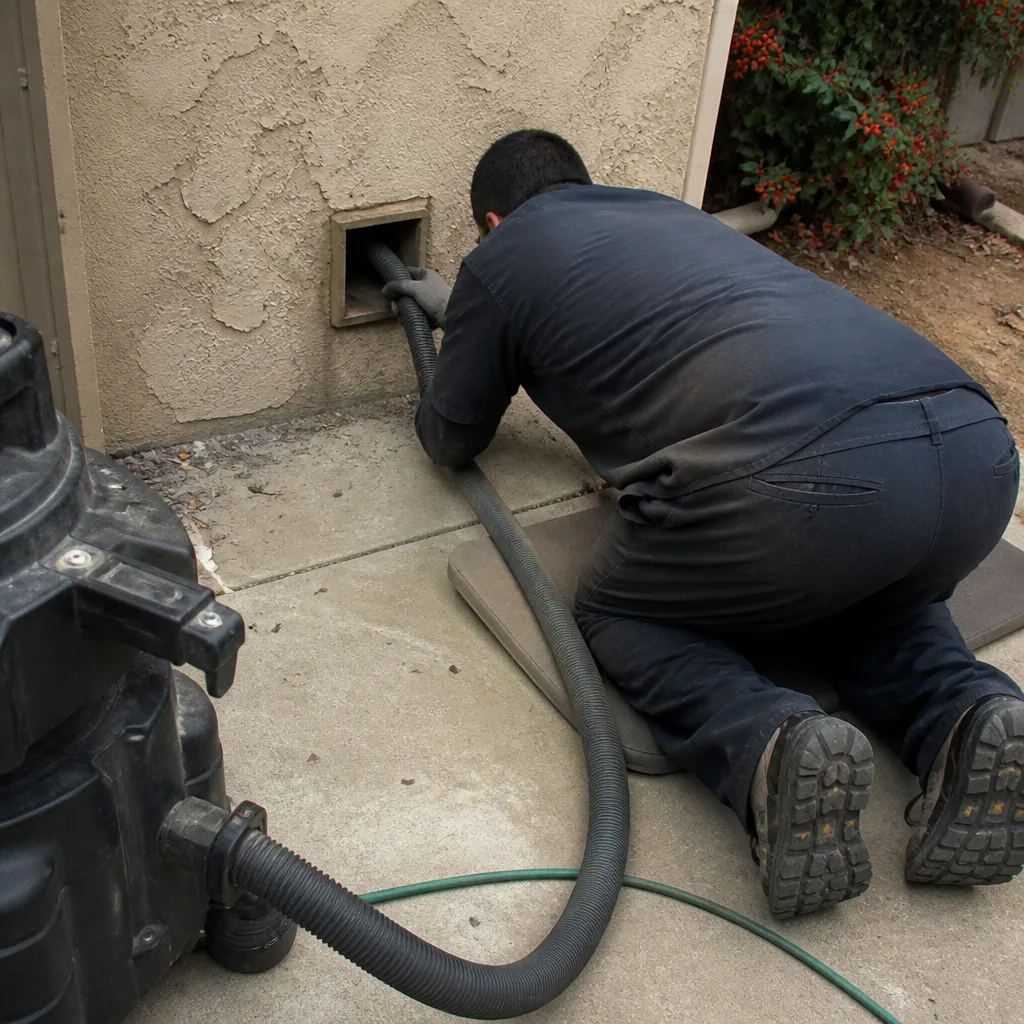 Before
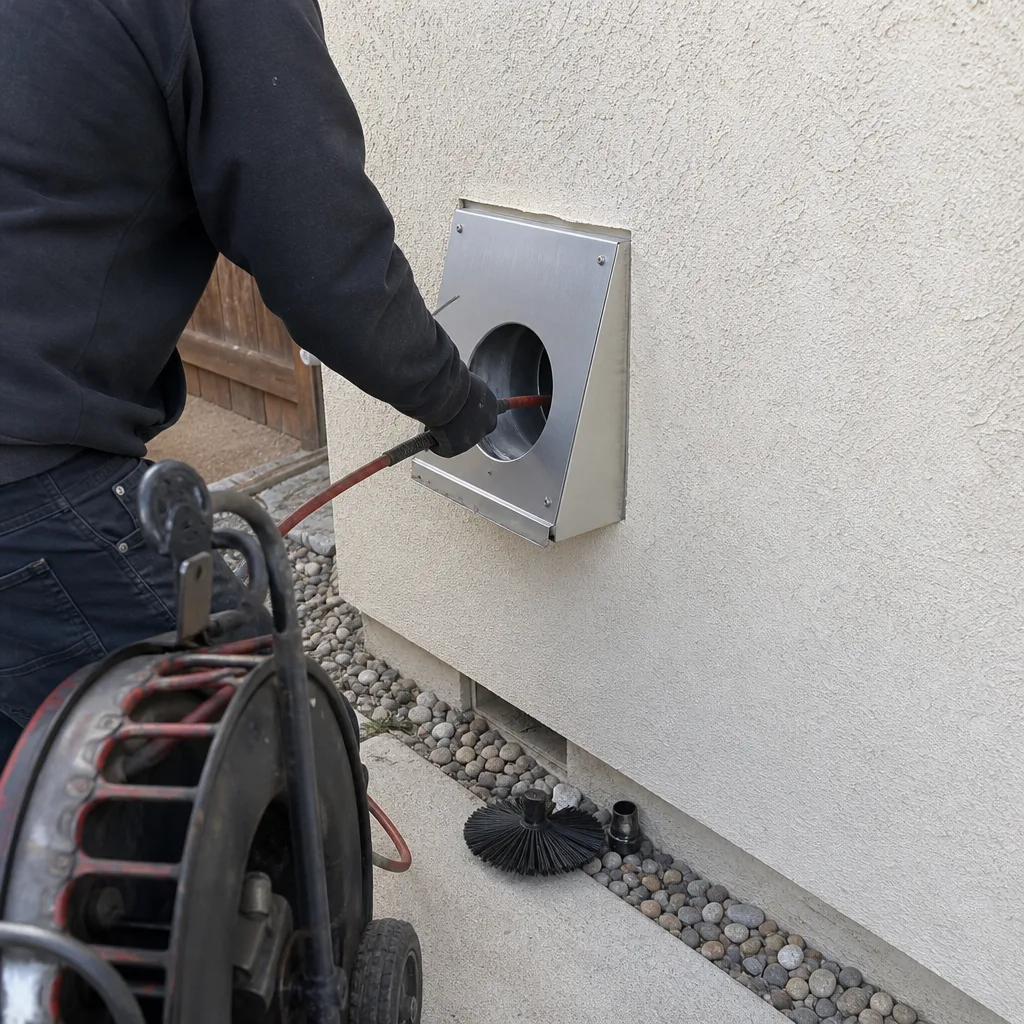 After
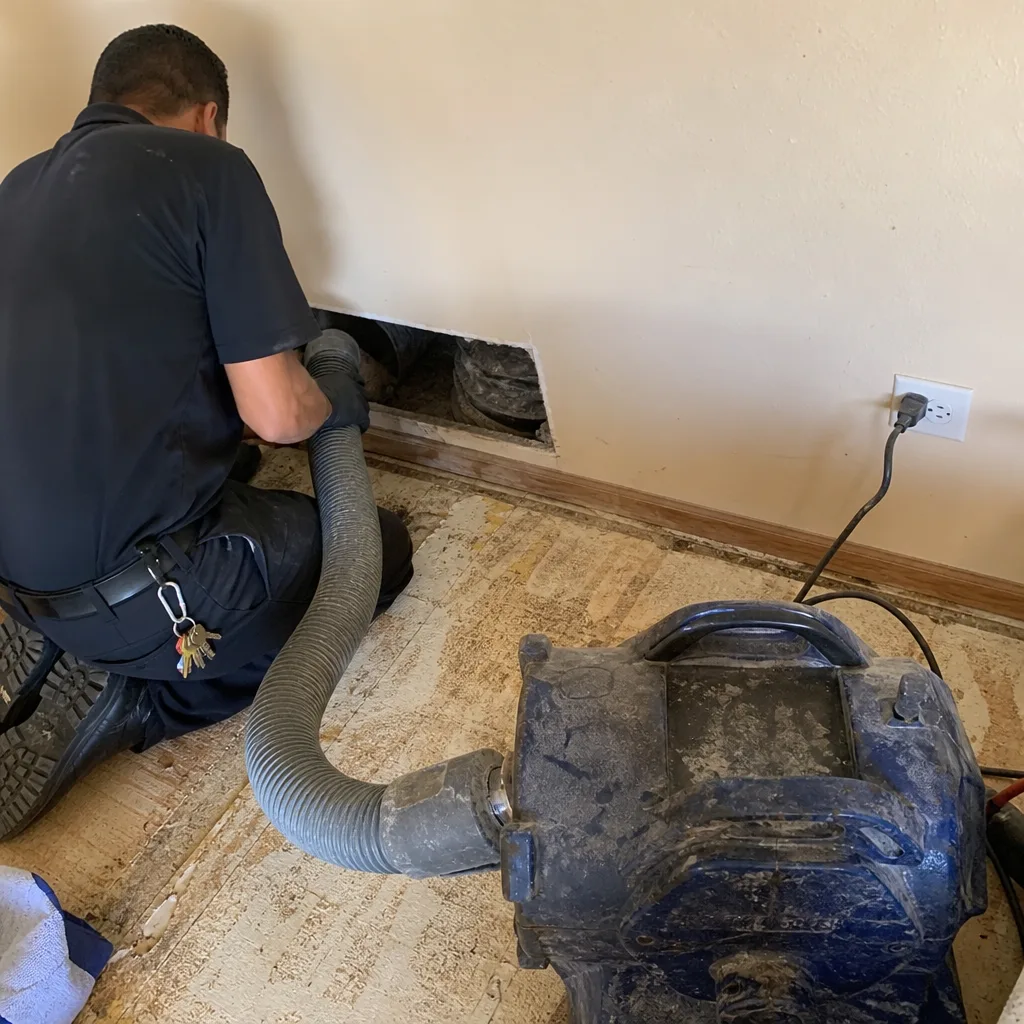 Before
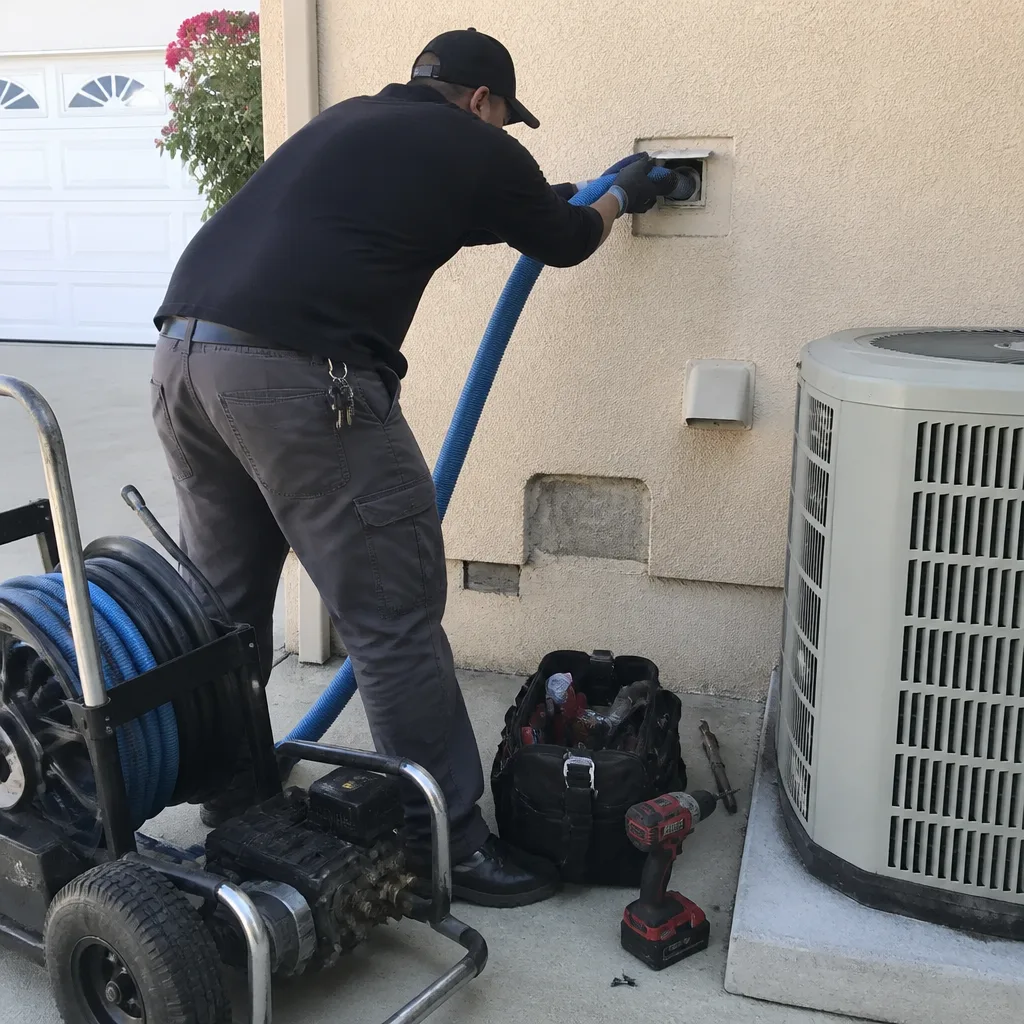 After
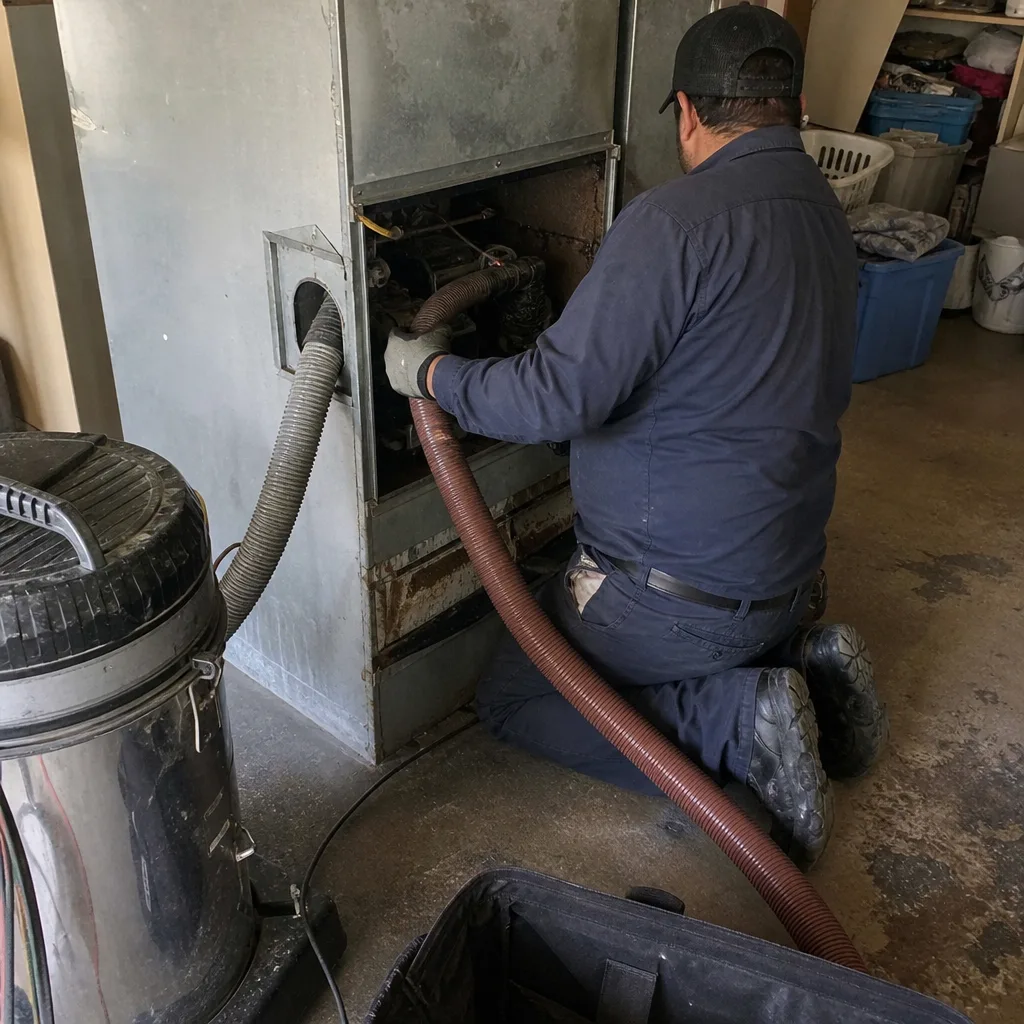 Before
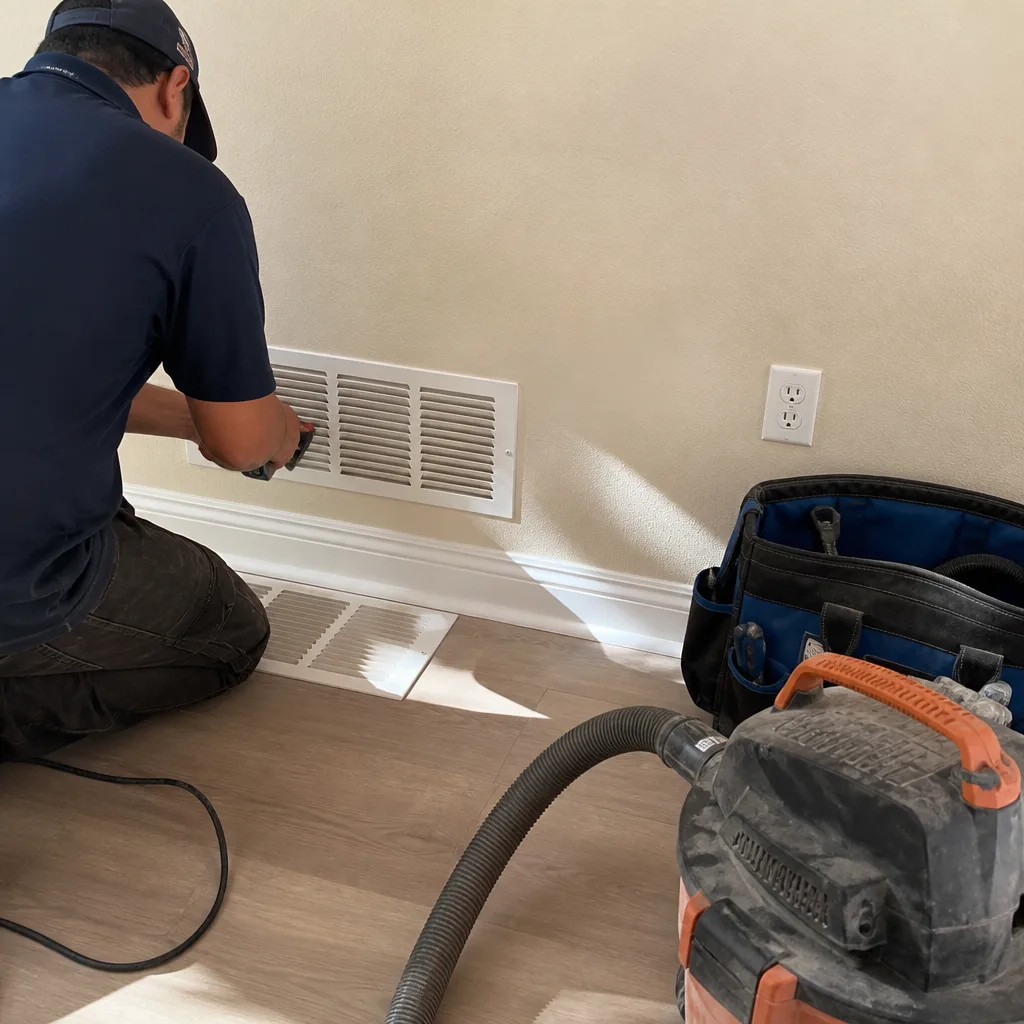 After
Common Dryer Vent Cleaning Problems We See in Lake Los Angeles Homes
- Grit-fused lint blocking roof-mounted runs. The wind off the open desert deposits silt into the vent path between every load. Once it mixes with damp lint and bakes in the sun on a roof run, it forms a crust that restricts airflow and forces the dryer to work harder. We remove it with agitation under negative pressure, not by poking a rod through the middle and leaving the walls coated.
- Abandoned swamp cooler ducts feeding dust into the lint pathway. Homes that ran evaporative coolers for decades often have leftover duct networks in the same chase as the dryer exhaust. Those abandoned paths leak wind-blown desert dust into the vent between cleanings. We identify them during camera inspection so homeowners understand why their vent keeps clogging faster than it should.
- Crushed or separated flex sections from DIY attempts and old installs. Original flex duct on 1970s and 1980s rural homes gets brittle under the high-desert sun and cracks. When a homeowner or handyman shoves a leaf blower up the exterior vent to “clean” it, the back-pressure collapses the flex and pushes debris toward the dryer instead of removing it. We replace crushed sections as part of the repair.
- Roof caps and bird guards caked with wind-driven debris. The same winds that coat everything in Lake Los Angeles with dust also pack it around roof caps and bird guards. A blocked cap acts like a dam at the very end of the run. We clear and inspect the termination on every job, because a clean vent with a clogged cap is still a blocked vent.
Pricing for Dryer Vent Cleaning in Lake Los Angeles, CA
Residential dryer vent cleaning in Lake Los Angeles runs $120 – $245 for a standard single-dryer system, and that’s the flat price per system, not a per-vent fee that adds up once the tech arrives. Commercial or multi-dryer jobs run $180 – $340 depending on run count and configuration. If the inspection turns up crushed flex, a failed roof cap, or a bird guard that needs replacement, we quote that repair separately and you approve it before any work happens.
What changes the price in 93591 specifically is run length and roof access. A single-story manufactured home with a short wall vent sits at the low end. A two-story ranch with a roof-mounted run and a long chase sits higher. Either way, call (833) 589-9773 for a free estimate. You’ll get a real number, not a teaser rate that inflates on the driveway.
We Also Serve Cities Near Lake Los Angeles
Our Dryer Vent Cleaning team works across the Antelope Valley. We regularly run jobs in Sun Village, Palmdale, Lancaster, and Vincent, and we know the dirt and dust profiles of each area. If you’re in Lake Los Angeles or any of the surrounding communities, Dryer Vent Cleaning in Lake Los Angeles is one phone call away: (833) 589-9773.
Serving Lake Los Angeles, CA – Our Local Coverage Area
We’re based in the Lake Los Angeles area and know this community well. Use the map below to see our service coverage – if you’re nearby, we can almost certainly help.
FAQs About Dryer Vent Cleaning in Lake Los Angeles
Every 12 to 18 months is realistic for most Lake Los Angeles homes, and some properties with roof-mounted runs or abandoned swamp-cooler ducting should do it closer to every 12 months. The wind-driven grit in 93591 loads a vent faster than the lint-only conditions in coastal or urban areas. If your dryer is taking longer than one cycle to finish a load, call (833) 589-9773 and we’ll inspect it.
The Antelope Valley wind carries fine desert silt that settles into your vent between every load, and in Lake Los Angeles that grit mixes with lint to form a hardened crust. City homes deal mostly with lint alone, but 93591 adds a constant feed of airborne dust from unpaved roads and open land. Add a roof-mounted run baking in the sun, and the clog cycle shortens considerably.
Yes, we clean commercial and multi-dryer systems at Lake Los Angeles outbuildings, laundry sheds, and rural commercial properties. The job involves mapping each run, cleaning under negative pressure, and documenting the work with before-and-after photos. Commercial jobs run $180 – $340 depending on how many dryers and how long the runs are.
It often does. Many Lake Los Angeles homes have abandoned evaporative cooler ducts that share a chase with the dryer exhaust, and those old paths leak wind-blown dust into the vent between cleanings. We find grit-and-lint mixes in 93591 vents that inland city crews rarely see, and the swamp-cooler connection is the reason. During inspection, we identify those bleed points so you know what’s actually happening.
Yes, significantly more. We run a camera down the full vent path to locate the blockage, then use Rotobrush or Nikro agitation tools under negative pressure with HEPA filtration to break up and remove the grit-and-lint crust. The trap is the last thing we check, not the first. The trap cleaning you do at home catches maybe 10 percent of what’s actually in the run.
Written by Armando Keller, Owner at Duct Cleaning Lancaster, serving Lake Los Angeles and the surrounding Antelope Valley.