
Last updated November 2, 2026
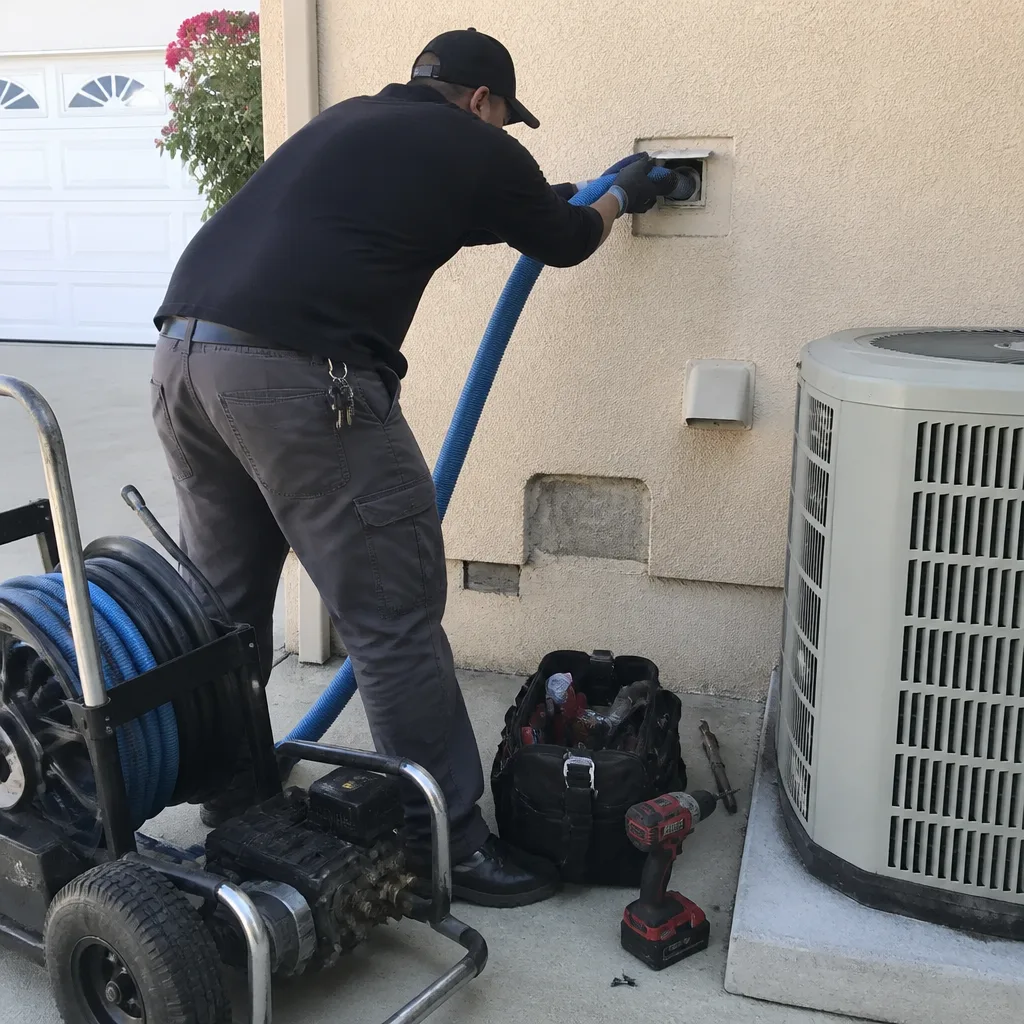
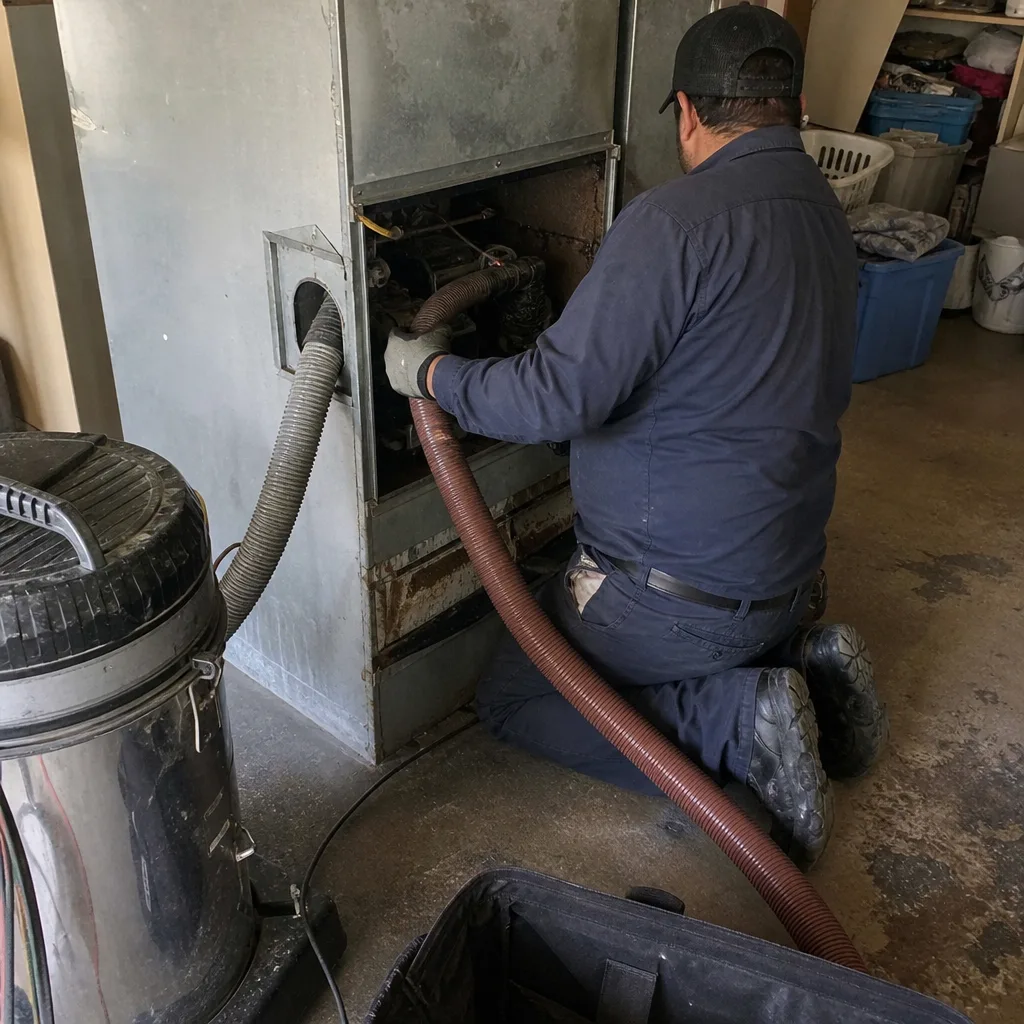
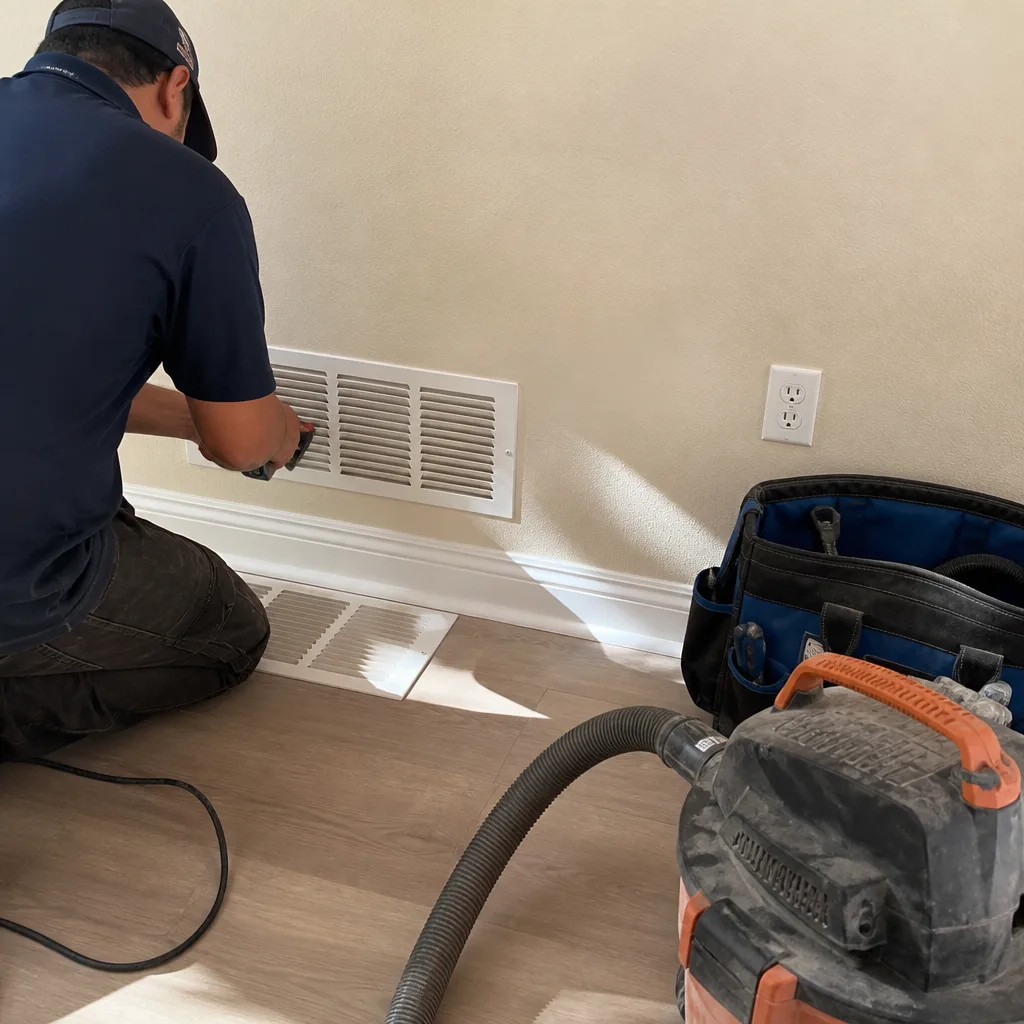
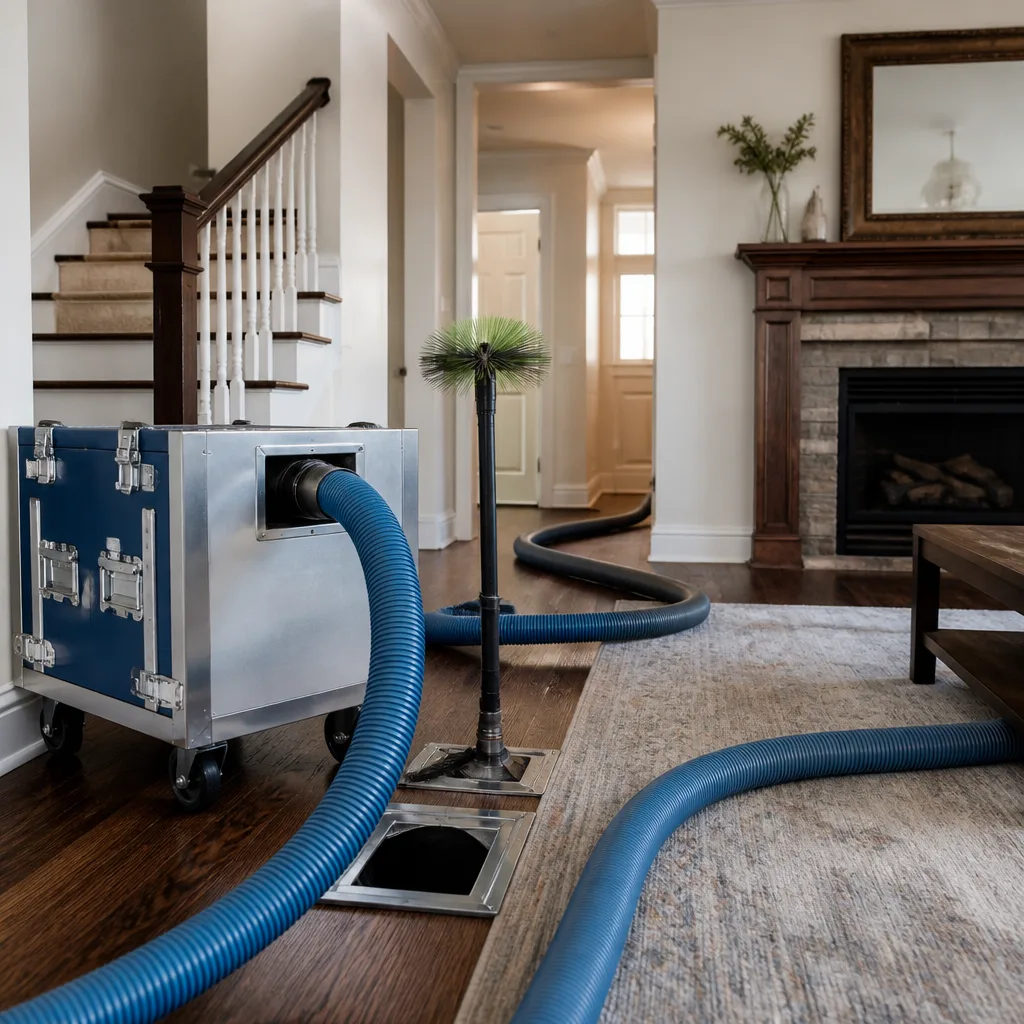 Whole-home duct cleaning
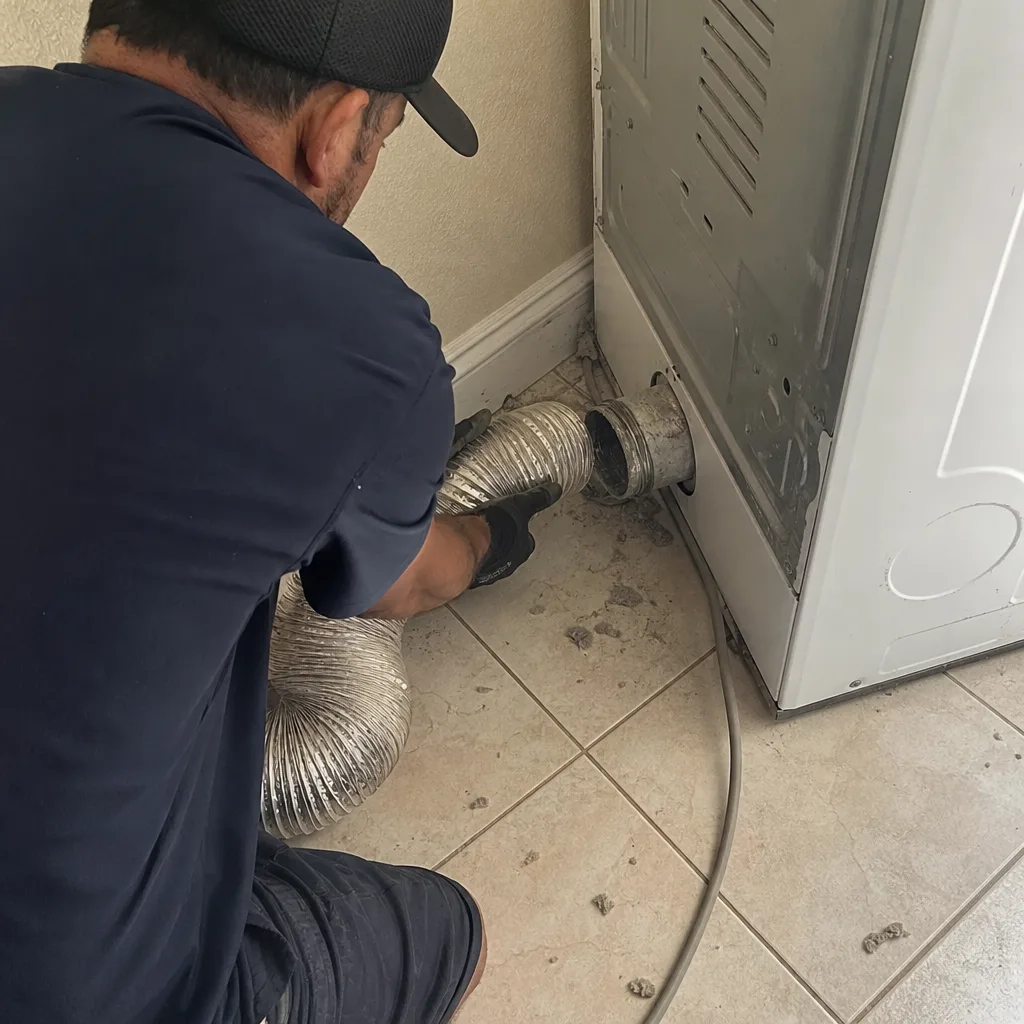
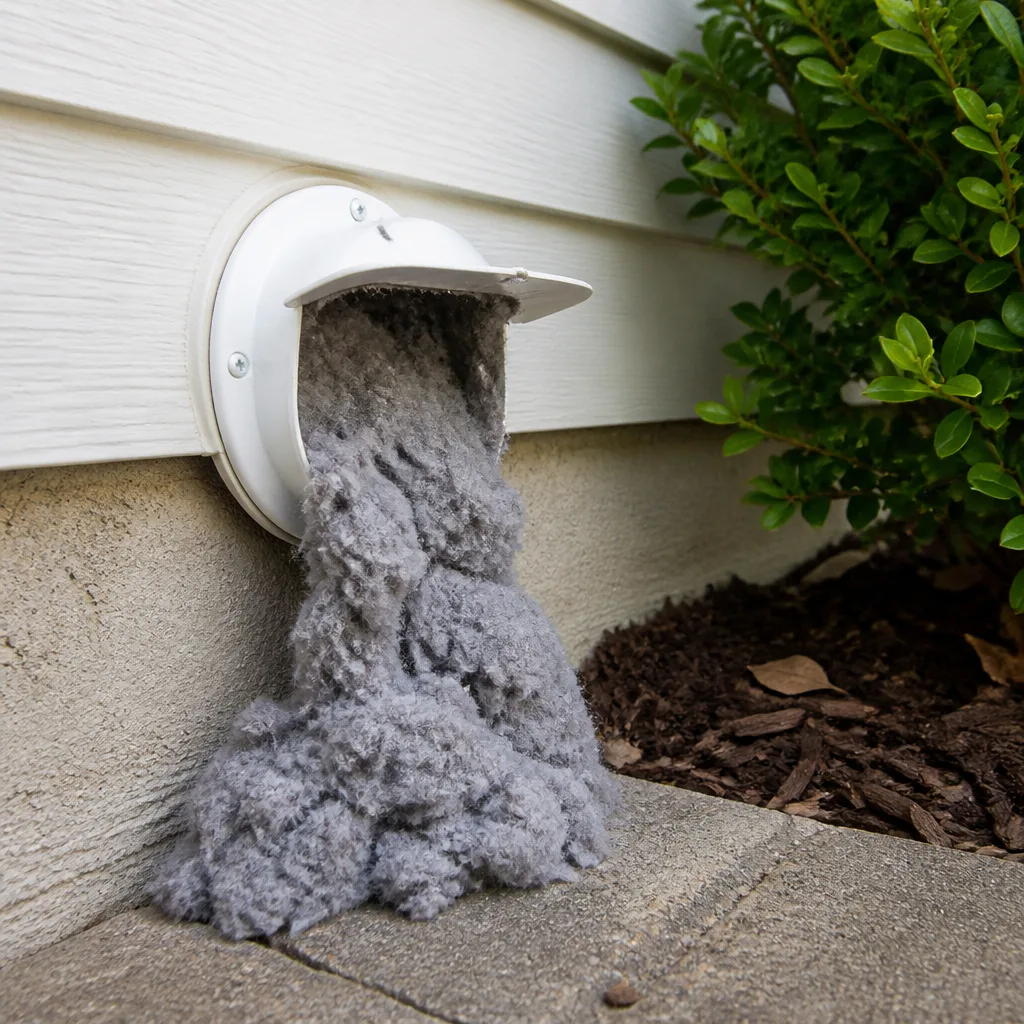 Dryer vent cleaning
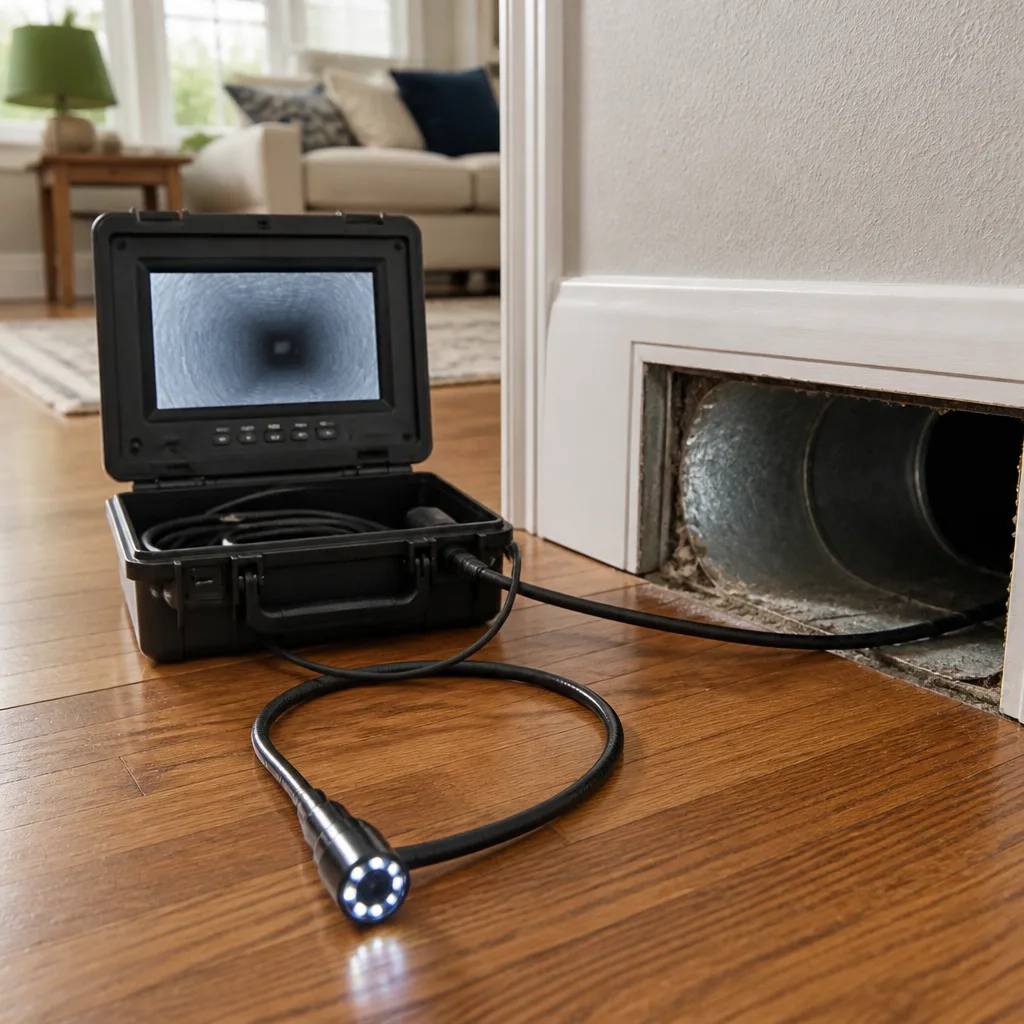 Camera inspection
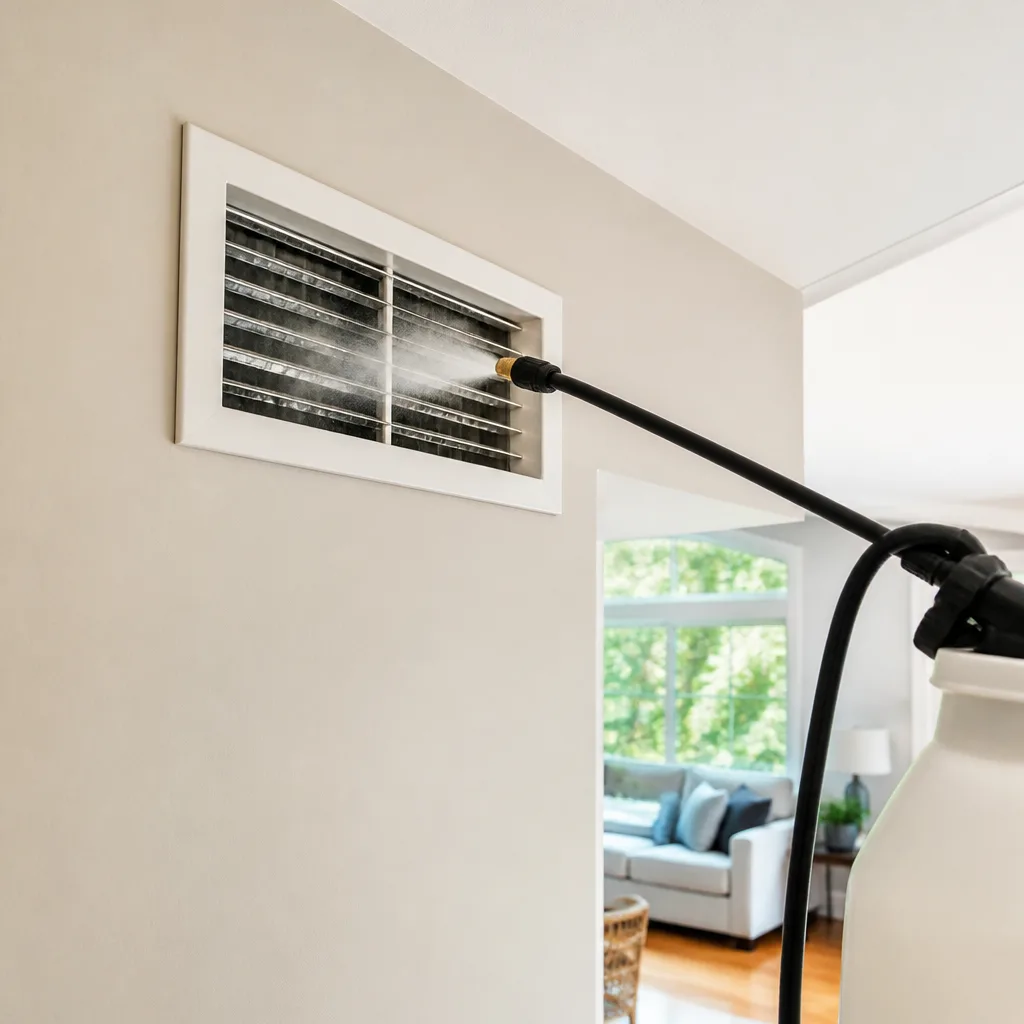 Sanitizing & deodorizing
Whole-system duct and dryer vent check with before-and-after photos - you see exactly what came out of your vents
That "$99 whole-house special" is a bait ad - the real number appears once they are in your hallway, or the "clean" is a shop-vac at the register. We photograph the inside of your ducts before and after instead.
The Complete Air Duct Cleaning Guide for Lancaster Homeowners
The EPA’s most widely cited guidance on air duct cleaning was written without regional climate differentiation. That means the advice most Lancaster homeowners find online was calibrated for a humid Ohio suburb, not a high-desert environment that generates airborne particulate at a categorically different rate. This guide covers what actually matters in the Antelope Valley: how Santa Ana winds, high-desert dust, and extreme attic temperatures accelerate duct contamination faster than national averages predict, how professional source-removal cleaning actually works, and how to calibrate your maintenance schedule to Lancaster’s specific environmental reality.
Styles & brands we work with
- Whole-home duct cleaning
- Dryer vent cleaning
- Camera inspection
- Sanitizing & deodorizing
Quick Answer
Air duct cleaning in Lancaster typically costs $350 – $650 for a whole-home system, and the service usually takes 3 – 5 hours. Lancaster homeowners should inspect their ducts every 2 – 3 years and clean more frequently than the national 3 – 5 year recommendation because Antelope Valley dust and Santa Ana wind events deposit particulate inside ductwork at an accelerated rate. The most important factor in any cleaning is not the price – it’s whether the contractor uses true negative-pressure source removal equipment, not a portable vacuum.
Table of Contents
- Why Lancaster’s Climate Demands a Different Duct Cleaning Schedule
- How Professional Duct Cleaning Actually Works: Source Removal Explained
- How to Inspect Your Ducts: Supply Registers, Return Plenums, and the Air Handler Coil
- Why Duct Repair and Cleaning Must Happen Together
- A Lancaster-Specific Maintenance Calendar
- How Much Does Air Duct Cleaning Cost in Lancaster, CA?
- How to Choose a Duct Cleaning Contractor in Lancaster
- Common Mistakes to Avoid
- When to Call a Professional
- Frequently Asked Questions
- The Bottom Line
Why Lancaster’s Climate Demands a Different Duct Cleaning Schedule
The Antelope Valley sits at roughly 2,350 feet of elevation in a high-desert basin that acts as a natural collection point for airborne particulate. Unlike coastal California cities where marine air keeps dust suspended and moving, Lancaster’s dry heat and low humidity cause dust to settle quickly – and settle everywhere. Your ductwork is no exception.
Here’s what we see in Lancaster systems that homeowners in other regions rarely experience:
- Santa Ana wind events deposit fine dust through the exterior air intake. During a single Santa Ana event, wind speeds of 40 – 60 mph can push desert particulate through roof vents, crawl space openings, and any exterior gap. That dust enters the return side of your HVAC system and settles in the return plenum first, then migrates through branch lines.
- High-desert soil composition produces a finer particulate than coastal dust. The Antelope Valley’s dry lakebed sediment and decomposed granite break down into ultra-fine particles that remain airborne longer than heavier coastal sand. These fine particles pass through your HVAC filter more readily and coat the interior surfaces of your ducts, coil, and blower motor.
- Extreme temperature swings cause duct contraction and expansion. Lancaster regularly swings 30 – 40 degrees between day and night temperatures. This thermal cycling causes unsealed duct joints to flex, opening small gaps where dust infiltrates – then sealing back up when temperatures equalize. By the time you notice, particulate has already entered the system.
The practical takeaway: if you’re following the national “every 3 – 5 years” recommendation, you’re likely already behind schedule for Lancaster conditions. Most homes in this area benefit from an inspection every 2 years and cleaning every 2 – 4 years depending on occupancy, pets, and proximity to unpaved roads or active construction.
We also see a clear pattern after major regional dust storms. Homes in neighborhoods near open desert edges – think west Lancaster, Quartz Hill, and the areas bordering the Antelope Valley California Poppy Reserve – collect visible dust layers in supply registers within weeks of a major wind event. If you can wipe gray dust from your supply register covers a month after cleaning them, that’s the same particulate accumulating inside your ductwork.
For a detailed look at how cleaning works in neighboring communities, see our Air Duct Cleaning in Acton page, which covers similar high-desert conditions at slightly higher elevation.
How Professional Duct Cleaning Actually Works: Source Removal Explained
The difference between a real duct cleaning and a surface-level “vacuum and go” comes down to one mechanical principle: negative-pressure source removal versus contact vacuuming. Most homeowners don’t know the distinction exists, but it’s the single most important factor in whether your cleaning actually does anything.
Contact vacuum cleaning – what discount operators and DIY equipment rely on – works by pushing a brush or vacuum head directly against the duct surface. The problem is that residential duct systems branch repeatedly: the main trunk line splits into branch lines that narrow as they run to each room. A contact vacuum can only reach the first few feet of each branch before the hose can’t navigate the turns. The result is a system that looks clean near the registers but remains fully contaminated deeper in the runs where most particulate settles.
Negative-pressure source removal – the method used by credible duct specialists – works differently. Here’s the process:
- A high-powered vacuum unit is connected to the main trunk line, creating continuous negative pressure throughout the entire duct system.
- With the system under vacuum, compressed air tools and motorized agitation brushes are inserted through each register opening in sequence.
- The agitation loosens debris from the duct walls, branch lines, and plenums. The negative pressure pulls that loosened material back through the system and into the vacuum’s containment – not into your home.
- After agitation and extraction, the interior surfaces are inspected with a camera system to verify that debris has been fully removed from all accessible reaches.
Equipment matters in this process. Purpose-built systems like Rotobrush and Nikro units are engineered specifically for duct cleaning – they provide the air volume, filtration capacity, and agitation power that repurposed shop vacuums simply cannot match. At Duct Cleaning Lancaster home, we run Rotobrush and Nikro equipment because portable consumer-grade vacuums lack the airflow to create effective negative pressure across an entire residential duct system.
Additionally, professional setup includes containment measures. Using Abatement Technologies equipment – the same category of negative-air and containment machinery found in remediation projects – prevents cross-contamination during the cleaning itself. Without proper containment, you’re simply redistributing dust from the ducts into your living space and then running the HVAC fan to pull it back in.
How to Inspect Your Ducts: Supply Registers, Return Plenums, and the Air Handler Coil
You don’t need to wait for allergy symptoms or visible dust clouds from your registers to know whether your ducts need attention. There are three inspection points that give you a clear picture of your system’s contamination level, and most Lancaster homeowners never look past the first one.
1. Supply Registers – Your First Signal
Remove two or three supply register covers in different rooms – ideally one near the air handler and one at the farthest end of the house. Look at the inside surfaces of the register boot (the metal box behind the cover) and the first visible section of duct. What you’re looking for:
- Dry, gray-brown dust coating: Normal for Lancaster homes within 6 – 12 months of cleaning. Heavy accumulation within weeks suggests a compromised filter or unsealed duct joints pulling dust from the attic.
- Oily or sticky residue: This indicates kitchen grease, candle soot, or tobacco particulate. It adheres to duct walls and acts as a magnet for further dust accumulation. Requires mechanical agitation to remove – a simple vacuum pass won’t do it.
- Visible debris beyond fine dust: Drywall chunks, insulation fragments, or pest droppings indicate a structural breach or animal intrusion. This is a repair issue, not just a cleaning issue.
2. The Return Plenum – Where the Real Story Is
The return plenum is the large metal box that collects air from your return vents and feeds it into the air handler. Because all return air passes through this single chamber before hitting your filter, it accumulates the highest concentration of particulate in the entire system. In Lancaster homes with single-return systems (common in older construction), the return plenum can collect an inch of dust within 3 years.
Accessing the return plenum usually requires removing a panel near the air handler – something a technician will do during an inspection. But if you’ve had your system serviced recently, ask the technician to show you the return plenum interior. It’s the single most informative view of your system’s contamination state.
3. The Air Handler Coil – The Often-Forgotten Surface
Your evaporator coil sits inside the air handler, directly in the path of all air moving through your HVAC system. When dust bypasses the filter or accumulates over time, it coats the coil’s fins. The result is reduced heat transfer – your AC runs longer to achieve the same temperature, and your energy bill climbs. More importantly, a dust-coated coil provides a damp, dark environment for mold growth, particularly during Lancaster’s summer season when condensation is continuous.
A coil inspection requires a professional with the right tools. During a comprehensive duct cleaning, the technician should assess coil condition alongside duct contamination. If your coil is visibly clogged, cleaning the ducts without addressing the coil is incomplete work – the coil will simply shed particulate back into the freshly cleaned system.
For homeowners in the surrounding foothill communities, the same inspection logic applies. See our Dryer Vent Cleaning in Acton page for guidance on the other critical air pathway most homes neglect.
Why Duct Repair and Cleaning Must Happen Together
Here’s the scenario we encounter regularly in Lancaster and the surrounding area: a homeowner pays for duct cleaning, gets a visibly improved system, and within six months the dust returns. The culprit is almost always the same – unrepaired duct leaks pulling contaminated attic air into the system.
Lancaster attic temperatures routinely exceed 140°F in summer. That heat accelerates the breakdown of duct tape adhesives, mastic seals, and flexible duct connectors. Attics in the Acton area see additional stress from colder winter nights at higher elevation, causing more aggressive thermal expansion and contraction cycles. The result is a network of small leaks that you can’t see from inside the home.
Those leaks create negative pressure zones inside the duct system. When your HVAC fan runs, it pulls air from the attic – air that carries insulation fibers, rodent droppings, construction dust, and desert particulate that has settled on the attic floor. That contaminated air enters the duct system downstream of your filter, completely bypassing filtration, and deposits directly into the air you breathe.
This is why Air Duct Repair in Acton and surrounding communities matters as much as cleaning. A competent duct specialist assesses the structural integrity of the system during the cleaning inspection, identifying:
- Disconnected duct sections – often found after attic work or pest activity
- Torn or collapsed flex duct
- Failed seals at register boots, plenum connections, and take-offs
- Crushed trunk lines from stored items or foot traffic in attics
- Improperly supported duct runs that sag and pull connections apart over time
We repair what others leave behind. A cleaning that ignores structural damage is a temporary fix – the system re-contaminates itself within months. The right sequence is always inspection first, repair second, cleaning third, and verification last. That’s the full-scope approach most cleaning-only companies structurally cannot offer.
A Lancaster-Specific Maintenance Calendar
National duct cleaning guidance treats timing as a simple count of years since last cleaning. Lancaster’s environment doesn’t work that way. Our schedule recommendations account for the specific events that drive duct contamination in the Antelope Valley:
Post-Wildfire Smoke Season (August – November)
Wildfire smoke from regional fires – the Lake Hughes area, Angeles National Forest, or the broader Sierra Nevada – carries fine particulate that your HVAC filter partially captures. But smoke aroma and the finest particles pass through standard filters and deposit inside duct surfaces. If you run your AC during a smoky period, schedule an inspection within 30 days of the smoke clearing. The particulate load from even one significant smoke event in Lancaster can equal a year of normal dust accumulation.
Post-Santa Ana Wind Season (October – January)
Santa Ana events push dust through every exterior penetration. After a season with multiple strong wind events, inspect supply registers for fresh gray accumulation. In our experience, homes in west Lancaster and areas bordering open desert see measurable duct dust loading after just 2 – 3 significant Santa Ana events.
Post-Construction Dust (Year-Round – Regional Development Driven)
Lancaster’s ongoing residential development means construction dust is a constant presence in many neighborhoods. Homes within half a mile of active grading, foundation work, or new construction will see elevated dust infiltration not because their ducts are leaking, but because the ambient air contains more particulate than the system was designed to handle. If you live near active development, shorter inspection intervals are justified even without other risk factors.
Annual Pre-Summer AC Service (April – May)
Before the summer cooling season begins – and before Lancaster temperatures make attic work genuinely unpleasant – schedule a duct and coil inspection. This catches winter-season dust accumulation and any damage from thermal cycling before your AC runs continuously for months, forcing contaminated air through the system at maximum volume.
The pattern we recommend for most Lancaster homes:
- Annual: Visual inspection of supply registers, filter condition, and return grilles
- Every 2 years: Professional camera inspection of duct interiors, return plenum, and coil condition
- Every 2 – 4 years: Full negative-pressure duct cleaning – timing depends on pets, occupancy, proximity to open desert, and local construction activity
- Annually: Dryer vent cleaning – check our Dryer Vent Cleaning in Acton service page for regional-specific guidance on this frequently overlooked fire hazard
How Much Does Air Duct Cleaning Cost in Lancaster, CA?
Whole-home duct cleaning in Lancaster typically costs between $350 and $650, depending on system size, accessibility, contamination level, and whether repair work is needed alongside cleaning. Here’s how that breaks down:
| Service Component | Typical Range in Lancaster |
|---|---|
| Whole-home duct cleaning (up to 10 vents) | $350 – $450 |
| Additional vents (per vent, 11+) | $15 – $25 each |
| Return plenum deep cleaning (add-on) | $50 – $100 |
| Air handler coil cleaning (add-on) | $75 – $150 |
| Dryer vent cleaning (standalone) | $100 – $180 |
| Duct repair work (varies by scope) | $150 – $1,500+ |
Two factors drive cost variability in the Antelope Valley specifically. First, single-story ranch homes with accessible attics are faster to clean than two-story homes with second-floor supply runs that require extension equipment. Second, homes with existing duct damage – failed seals, disconnected sections, crushed flex duct – require repair labor before cleaning can be effective, and those repairs are quoted separately based on scope.
Be wary of any quote under $250 for a whole-home system. At that price point, the contractor is either running a portable vacuum without meaningful negative pressure, skipping branch lines entirely, or planning to upsell aggressively once inside the home. The economics of proper equipment, training, and time simply don’t support quality work at that number.
How to Choose a Duct Cleaning Contractor in Lancaster
The duct cleaning industry has a reputation problem, and it’s earned. The barrier to entry is a van and a vacuum, and the homeowner typically can’t see the results without a camera inspection. Here’s how to separate real specialists from surface-level operators:
Ask What Equipment They Run
If the answer is “professional-grade tools” without naming a system, keep looking. Purpose-built duct cleaning systems – Rotobrush and Nikro are the two most recognized names in the trade – deliver the air volume and agitation power required for true source removal. A contractor who can’t or won’t name their equipment platform is likely running consumer-grade or repurposed equipment.
Ask About Their Repair Capability
This is the question that separates cleaning-only shops from full-scope duct specialists. Ask directly: “If you find a disconnected duct section or failed seal during the cleaning, do you repair it, or do I need to call someone else?” If the answer is that they only clean, you’re hiring a partial solution. Structural damage identified during cleaning needs repair before the cleaning has any lasting value.
Ask About Containment Methods
Proper duct cleaning creates a lot of loosened particulate. That particulate needs to go into the vacuum’s filtration system, not your living room. Contractors using Abatement Technologies equipment – the same negative-air and containment approach used in remediation projects – are operating at a categorically higher standard than those without containment protocols.
Ask About Filtration System Familiarity
A competent duct specialist should be able to discuss how your clean ducts interact with your filtration hardware. Familiarity with Honeywell and Aprilaire product lines – the two leading whole-home filtration brands – signals a technician who understands the complete air quality picture, not just duct internals.
Verify with a Camera Inspection
Any credible contractor will offer pre- and post-cleaning camera inspection. This is your only verification that the work was actually done. If a contractor resists showing you the post-cleaning footage, that’s not a scheduling issue – it’s a red flag.
Common Mistakes to Avoid
- Following national cleaning intervals without accounting for Lancaster’s environment. The Antelope Valley’s high-desert dust loading and Santa Ana events mean your system accumulates particulate faster than the national average. A 5-year interval that works in the Midwest is overdue in the Antelope Valley.
- Choosing a contractor based on the lowest quote. Duct cleaning at bargain pricing almost always means contact vacuuming instead of negative-pressure source removal. You’ll pay less upfront and get a system that’s still contaminated past the first branch line.
- Cleaning ducts without inspecting for leaks and disconnections. If your system has unrepaired gaps in the attic, a fresh cleaning is a temporary fix. The leaks will re-contaminate the system within months.
- Replacing furnace filters during cleaning and thinking that’s sufficient. Filter replacement is good practice, but it doesn’t address material already deposited on duct walls, in branch lines, or on the coil. Once particulate is inside the duct system downstream of the filter, no filter change will remove it.
- Ignoring dryer vent cleaning as a separate but related service. Dryer vents are a distinct air pathway with their own contamination profile – and their own fire risk. A duct cleaning does not clean your dryer vent. These are separate services and both matter for Lancaster homes.
- Waiting for visible symptoms before taking action. By the time you see dust clouds from registers or smell musty odors when the AC runs, the system has been circulating contaminated air for months. Inspection-driven maintenance beats symptom-driven repair every time.
When to Call a Professional
Some situations clearly justify immediate professional attention. If you’ve completed a renovation project that generated drywall dust, your ducts need cleaning before you run the HVAC system again – that dust is fine enough to pass through filters and abrasive enough to accelerate blower motor wear. If you see visible mold growth inside a supply register or on the air handler coil, that’s a remediation issue that requires professional containment, not a DIY project. If your energy bills have climbed steadily without a corresponding change in rates or usage, a clogged coil or duct obstruction may be forcing your system to work harder. And if you’ve never had a camera inspection of your duct system – regardless of when it was last “cleaned” – you’re operating on assumptions, not data. Duct Cleaning Lancaster offers free estimates in Lancaster – call (833) 589-9773 to schedule an inspection.
Frequently Asked Questions
Whole-home duct cleaning in Lancaster typically ranges from $350 to $650 for a standard single-family home, with the final price depending on system size, contamination level, accessibility, and any needed repairs. Quotes under $250 should raise skepticism about equipment quality and thoroughness. Call (833) 589-9773 for a free estimate on your specific system.
Most Lancaster homes benefit from professional duct inspection every 2 years and full cleaning every 2 – 4 years, which is more frequent than the national 3 – 5 year recommendation. Homes near open desert, active construction, or with multiple pets should lean toward the shorter interval.
Cheaper quotes typically reflect contact vacuum cleaning with portable equipment rather than true negative-pressure source removal with professional systems like Rotobrush. Contact cleaning cannot reach deep into branch lines, leaving the majority of your duct system untouched. The price difference is the cost of actually cleaning the full system versus cleaning only what’s visible at the registers.
Request pre- and post-cleaning camera inspection footage. Any reputable contractor will show you the interior condition of your main trunk line, return plenum, and representative branch lines before and after the work. If a contractor cannot or will not provide this verification, treat the work as unverified. Call (833) 589-9773 to schedule an inspection that includes full camera documentation.
Yes, for Lancaster allergy sufferers. The Antelope Valley’s high-desert environment produces year-round particulate from dust, pollen, and seasonal wind events. When your HVAC system runs, it circulates whatever sits inside your ducts. Removing that accumulated particulate reduces the recirculating allergen load that your filter cannot address once material has settled downstream of the filter.
Duct cleaning addresses the HVAC air distribution system – the trunk lines, branch runs, plenums, and registers that move heated and cooled air through your home. Dryer vent cleaning addresses the separate exhaust pathway that carries hot, humid air and lint from your clothes dryer to the exterior. They are different systems with different contamination profiles, and neither service substitutes for the other. See our Dryer Vent Cleaning in Acton page for detail on the dryer vent service.
DIY duct cleaning is generally ineffective for the portions of the system that matter most. Consumer vacuums cannot create the negative pressure needed to extract debris from branch lines and plenums, and without proper containment you risk redistributing dust throughout your home. Professional equipment from Rotobrush, Nikro, and Abatement Technologies exists for a reason: residential duct systems are mechanically complex enough to require purpose-built tools.
The Bottom Line
Lancaster homeowners dealing with high-desert dust, Santa Ana wind events, and extreme attic temperatures need to treat duct maintenance as more than an occasional chore. Inspect your system annually, clean every 2 – 4 years, and never separate cleaning from repair – an unsealed duct system re-contaminates itself regardless of how thoroughly it was cleaned. The right contractor runs purpose-built equipment, shows you camera verification, and can address structural damage alongside cleaning. When you’re ready to see what’s actually inside your ducts, the team at Duct Cleaning Lancaster home is equipped to inspect, clean, and repair the full system. Call (833) 589-9773 for a free estimate.
Written by the team at Duct Cleaning Lancaster, serving Lancaster since 2014.
See the difference
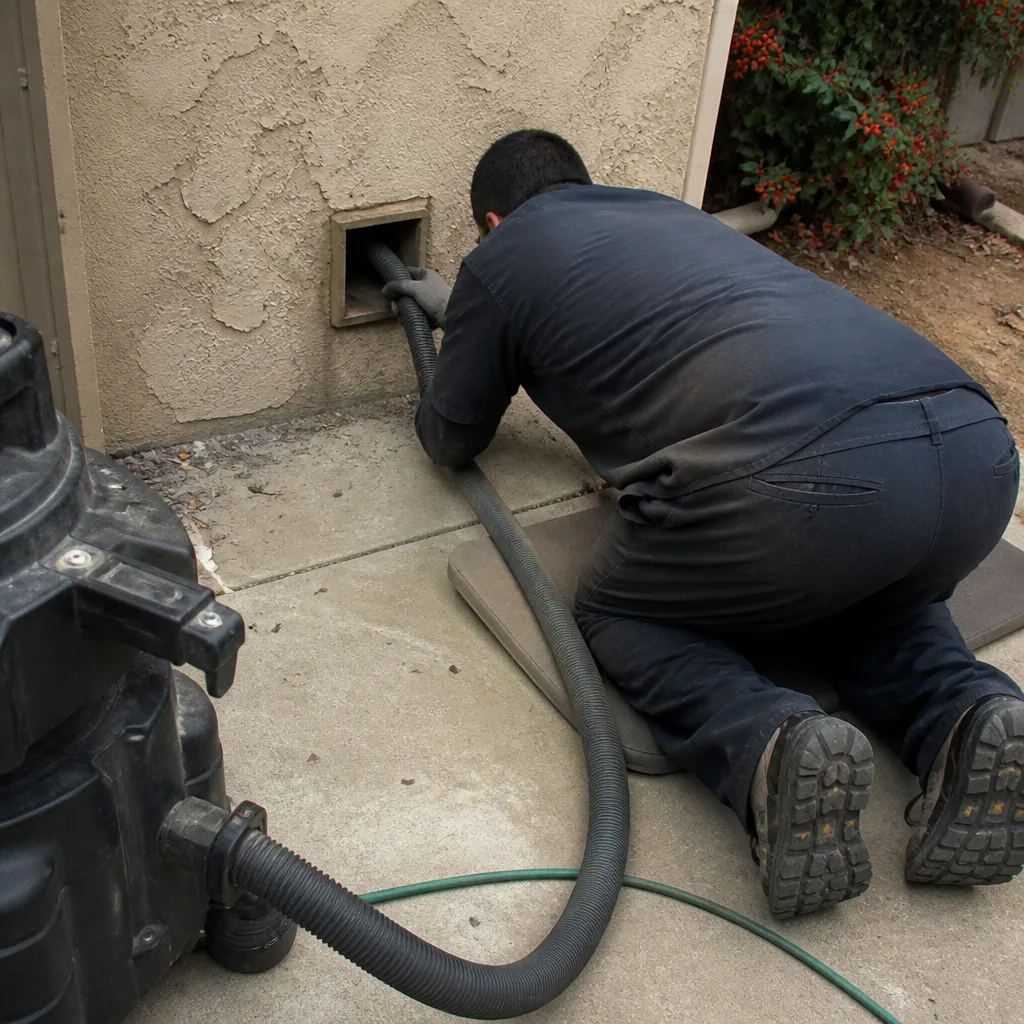 Before
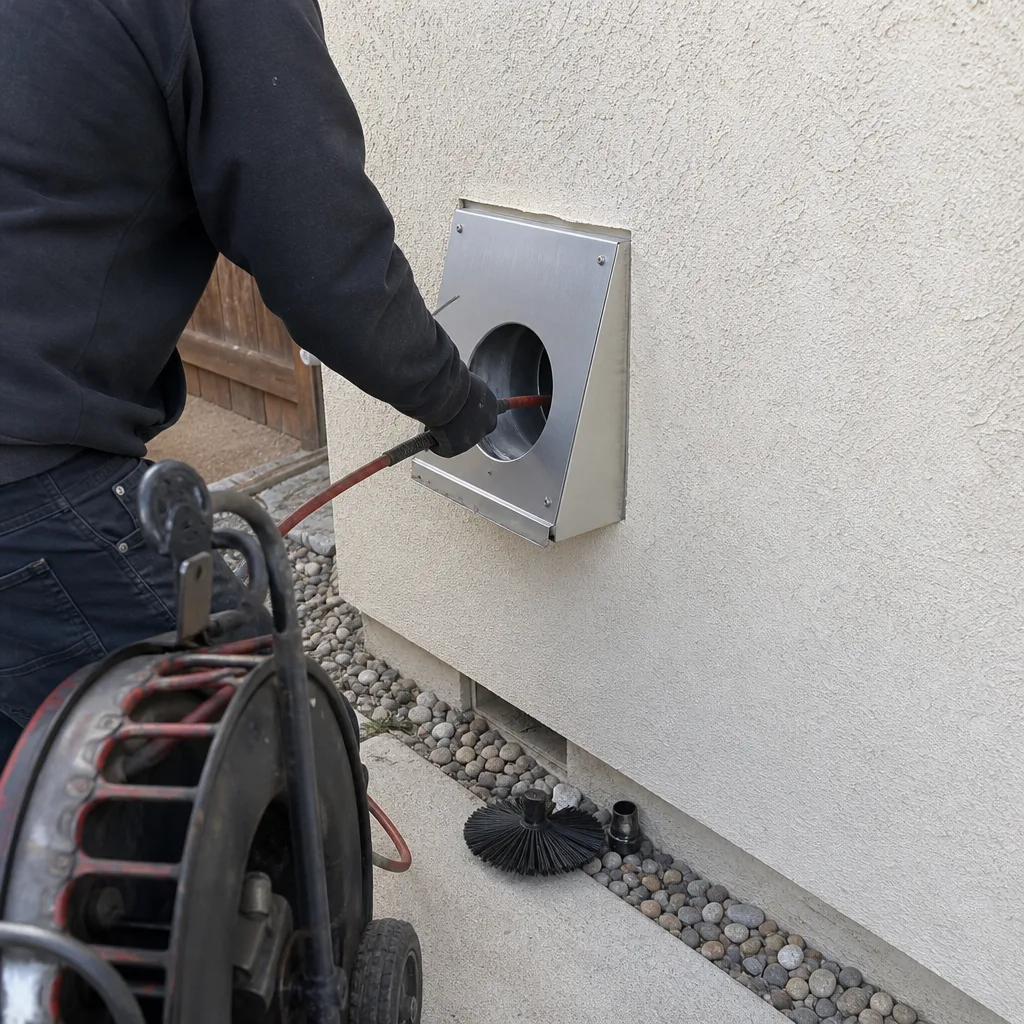 After
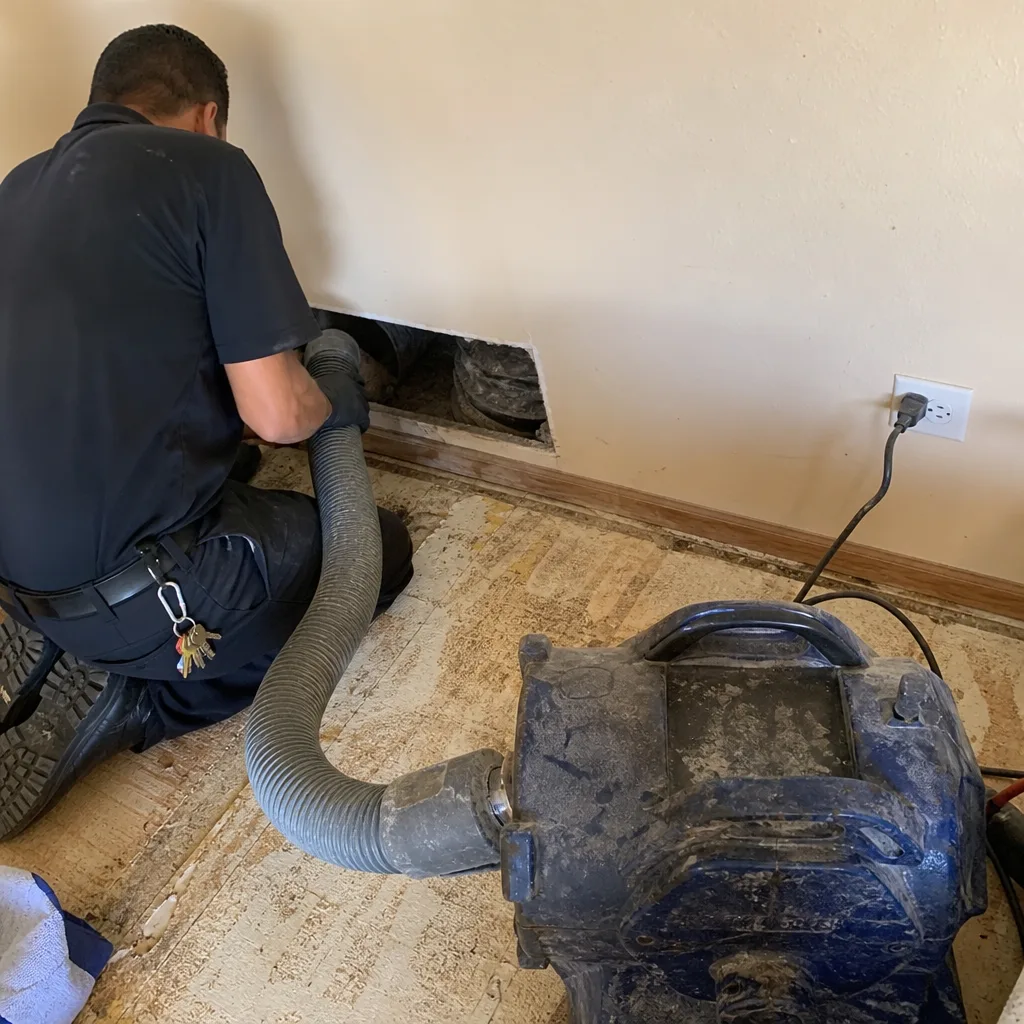 Before
 After
 Before
 After