
Last updated November 2, 2026
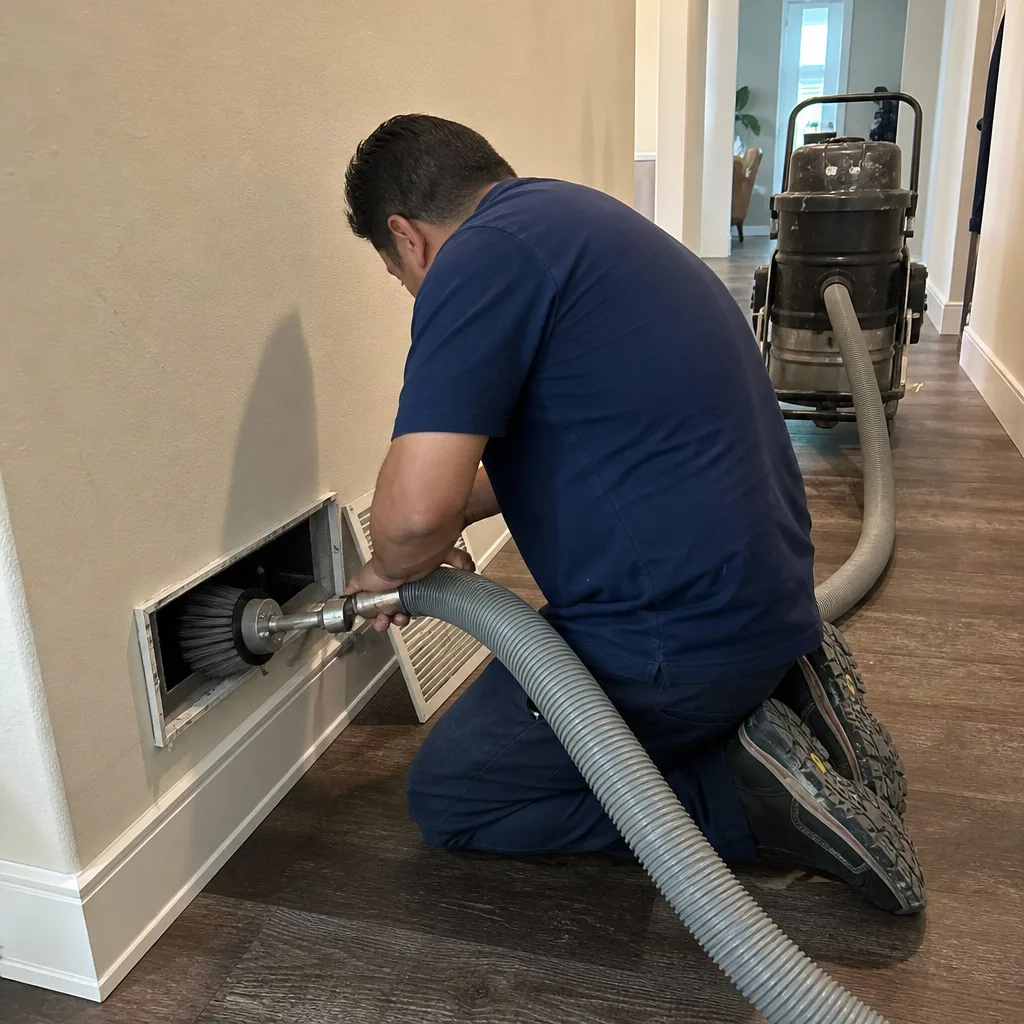
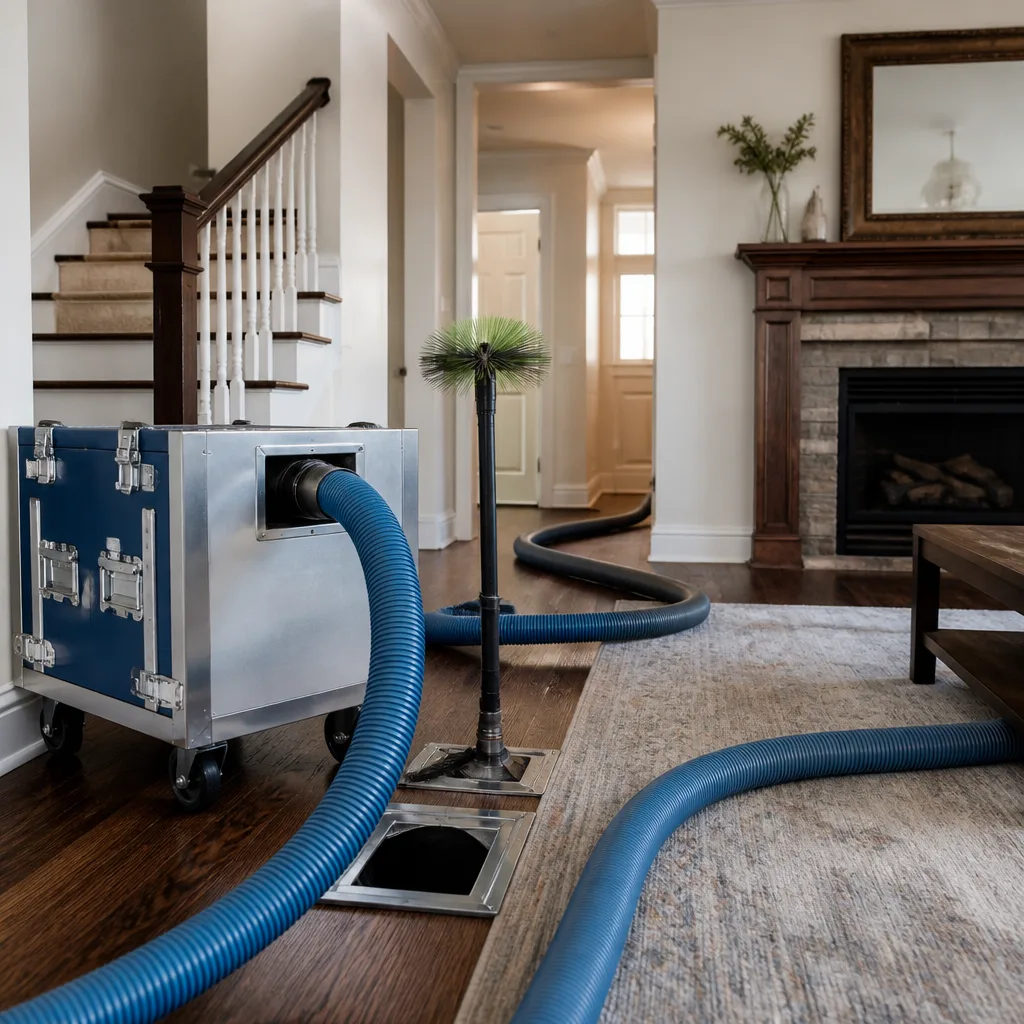 Whole-home duct cleaning
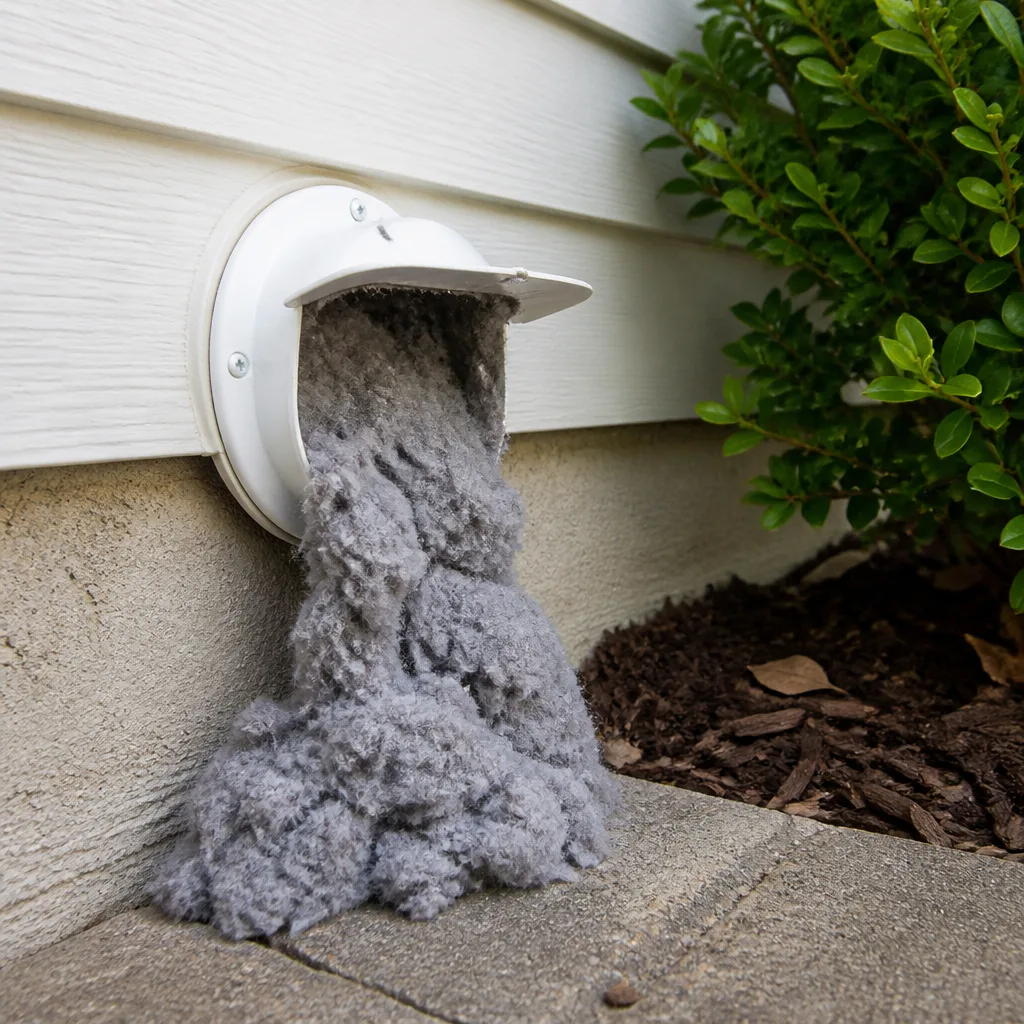 Dryer vent cleaning
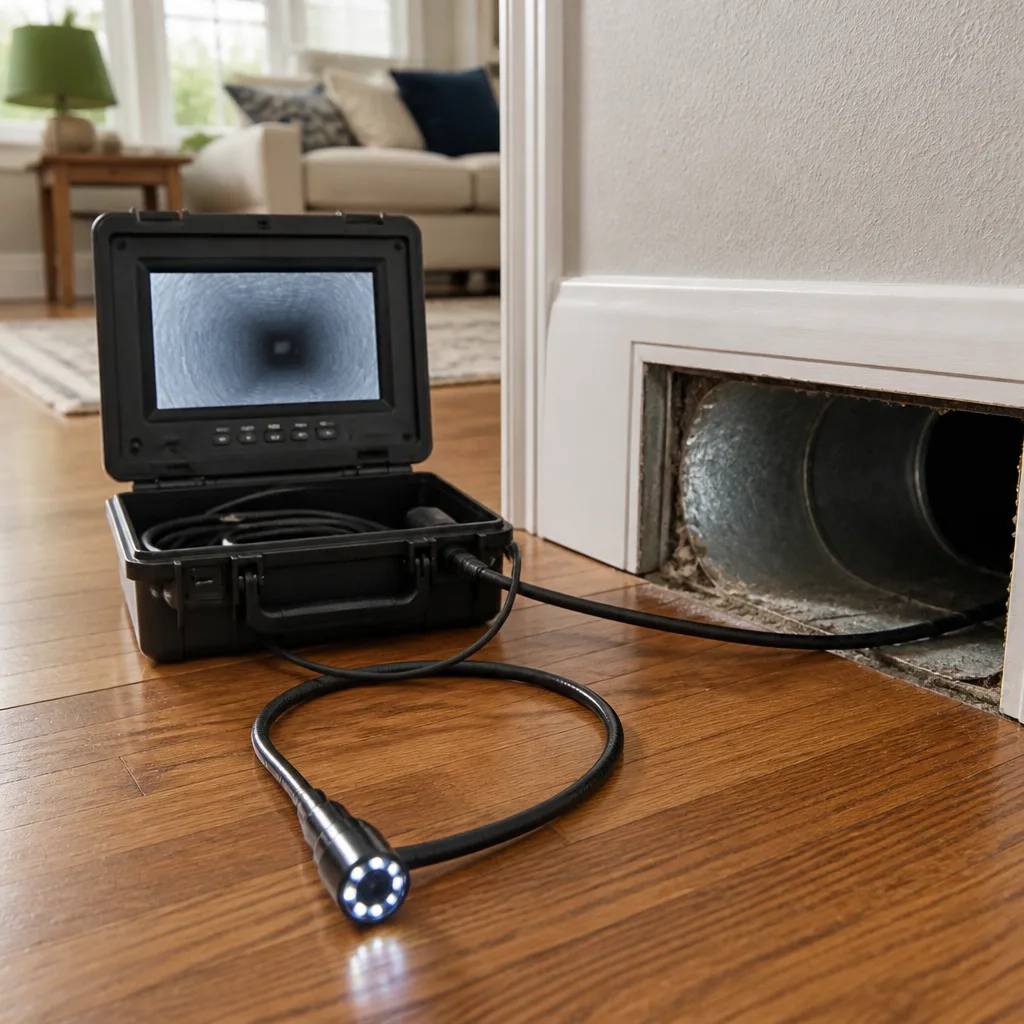 Camera inspection
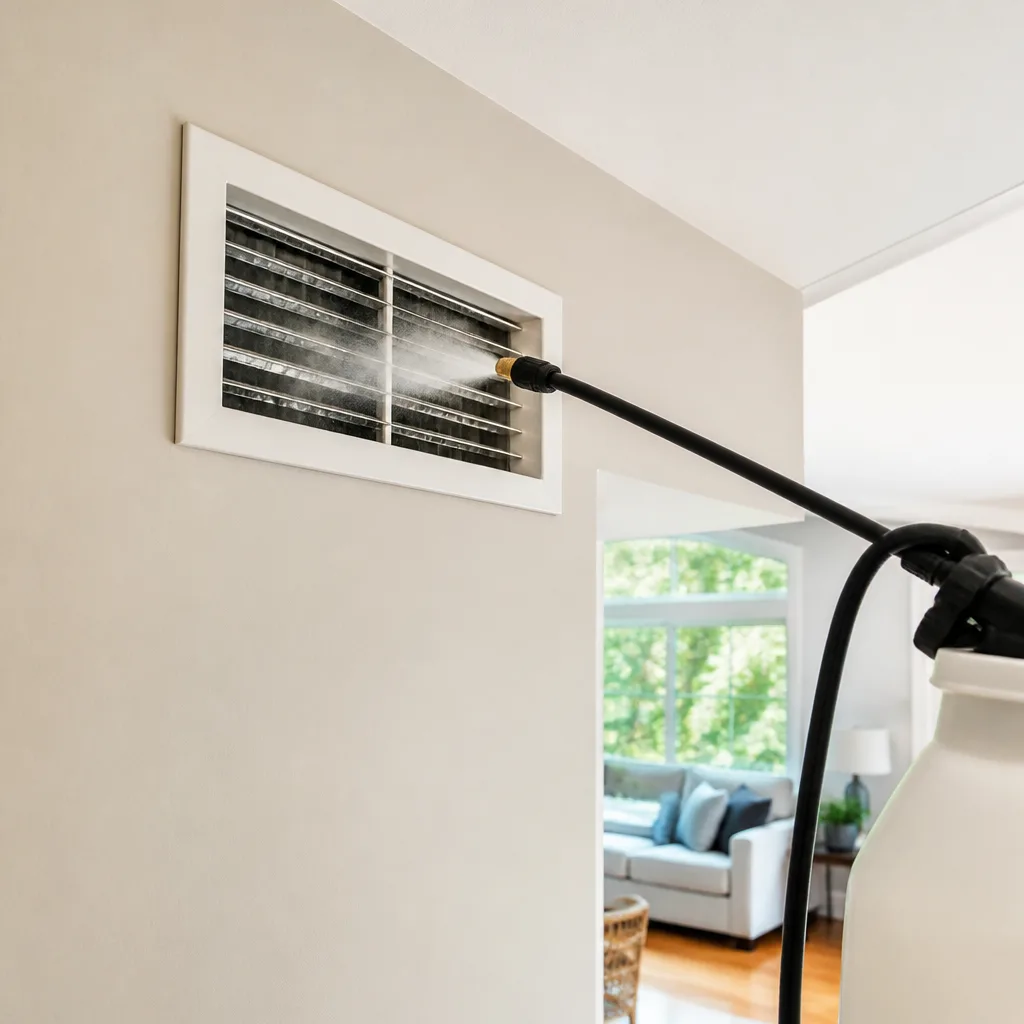 Sanitizing & deodorizing
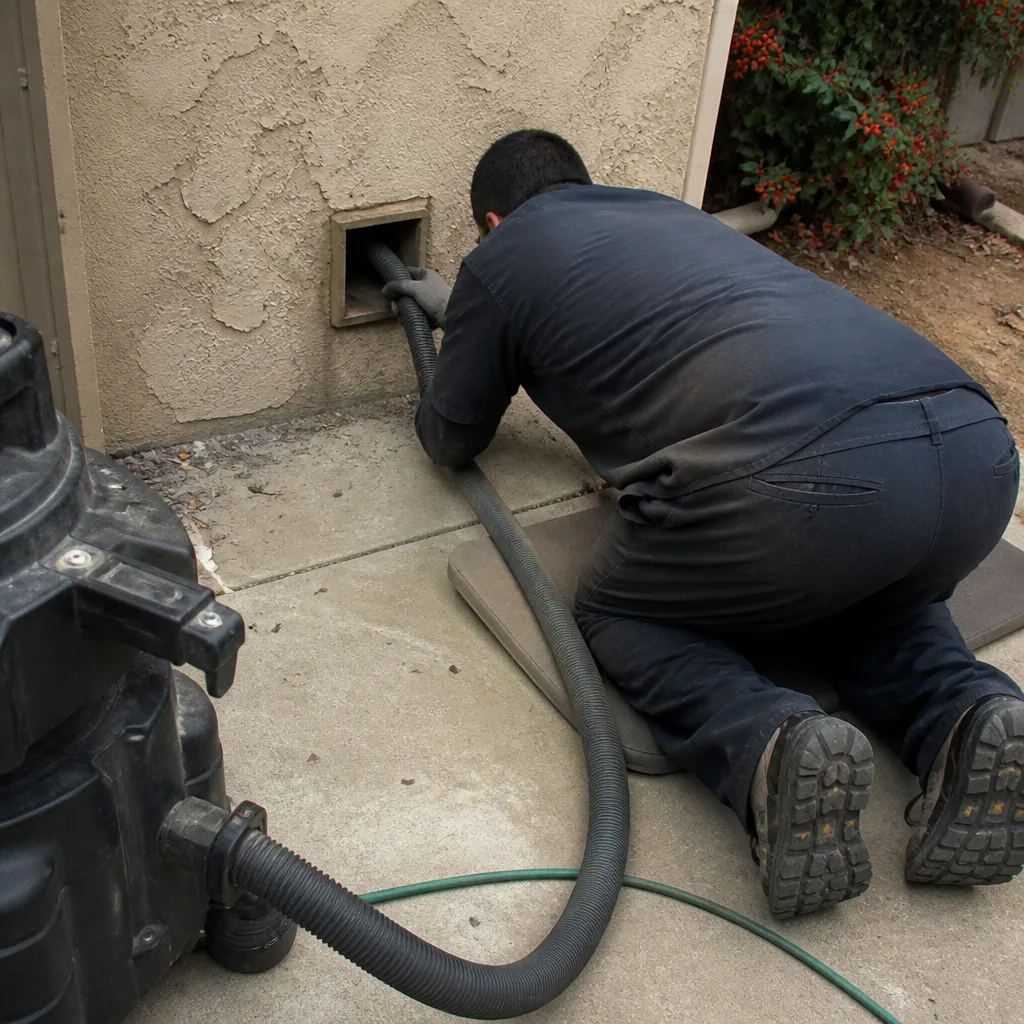
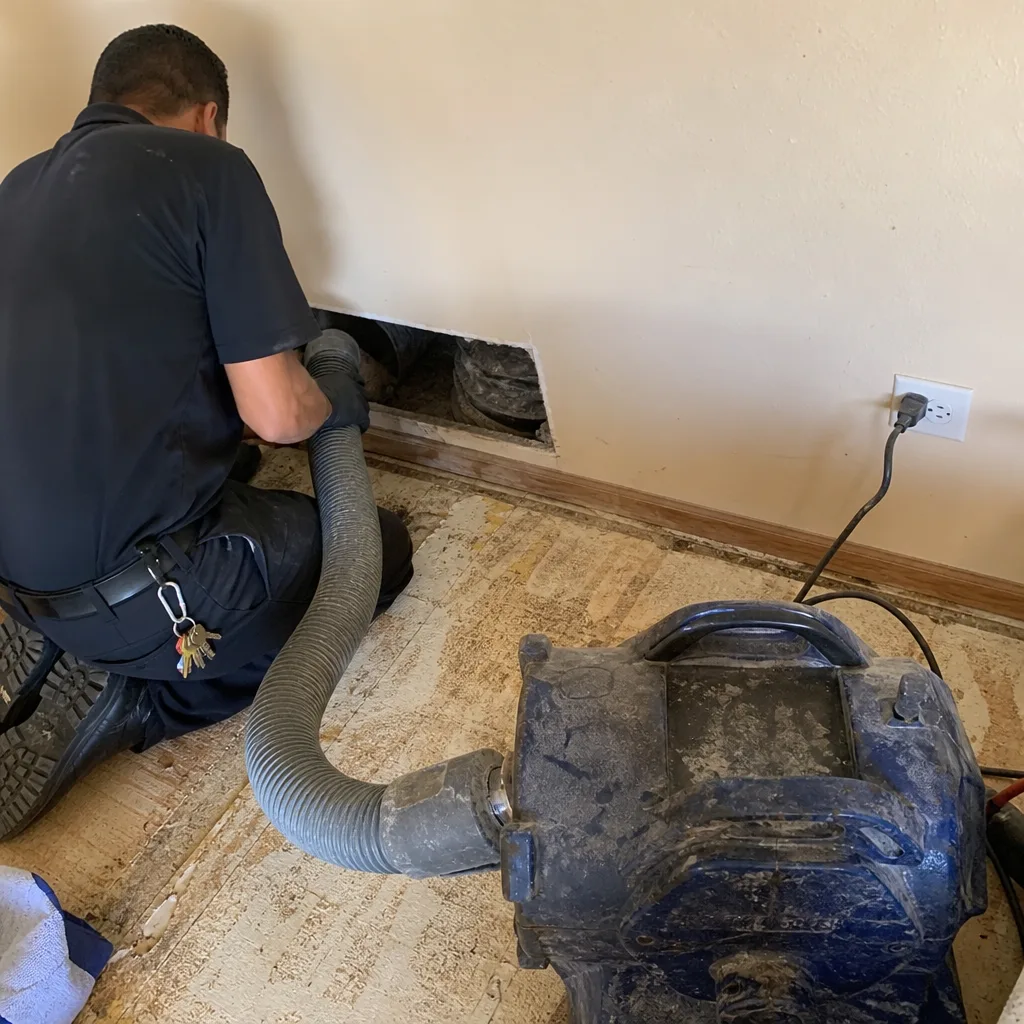
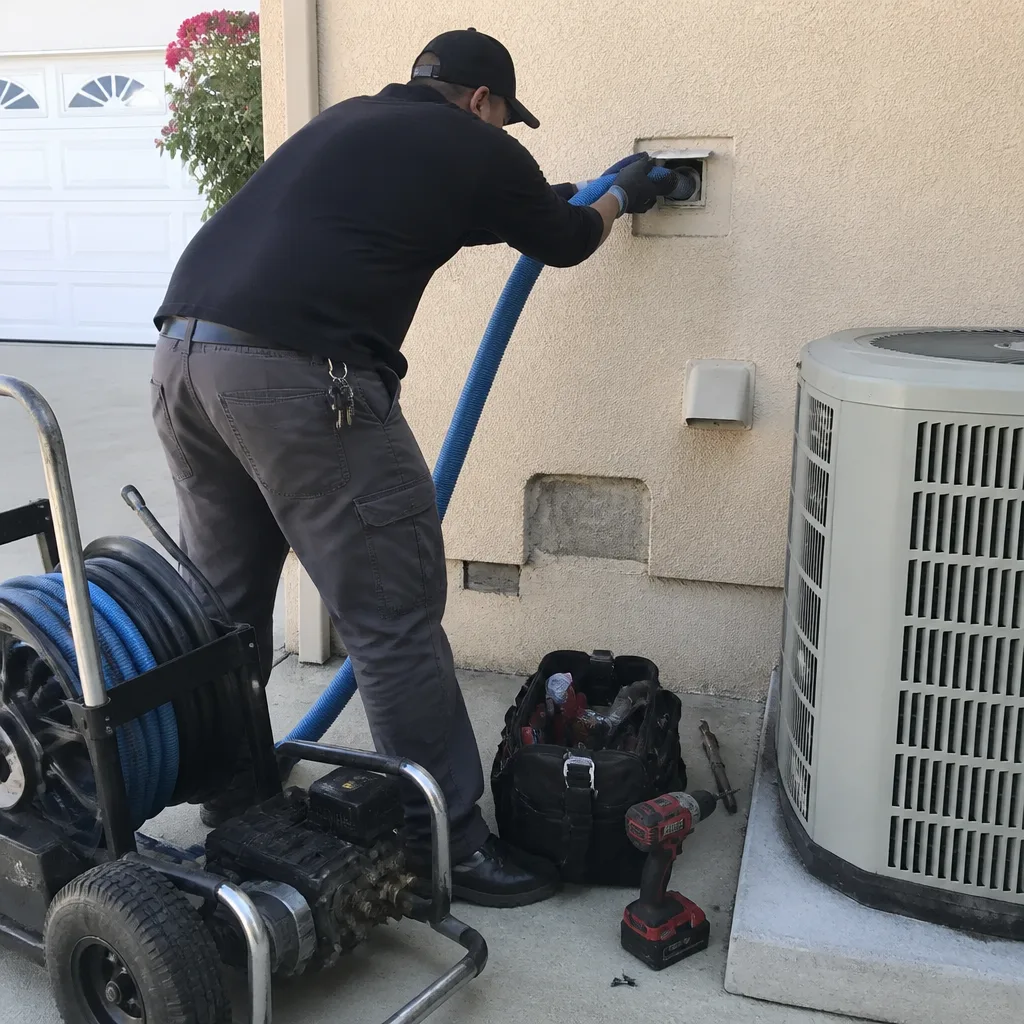
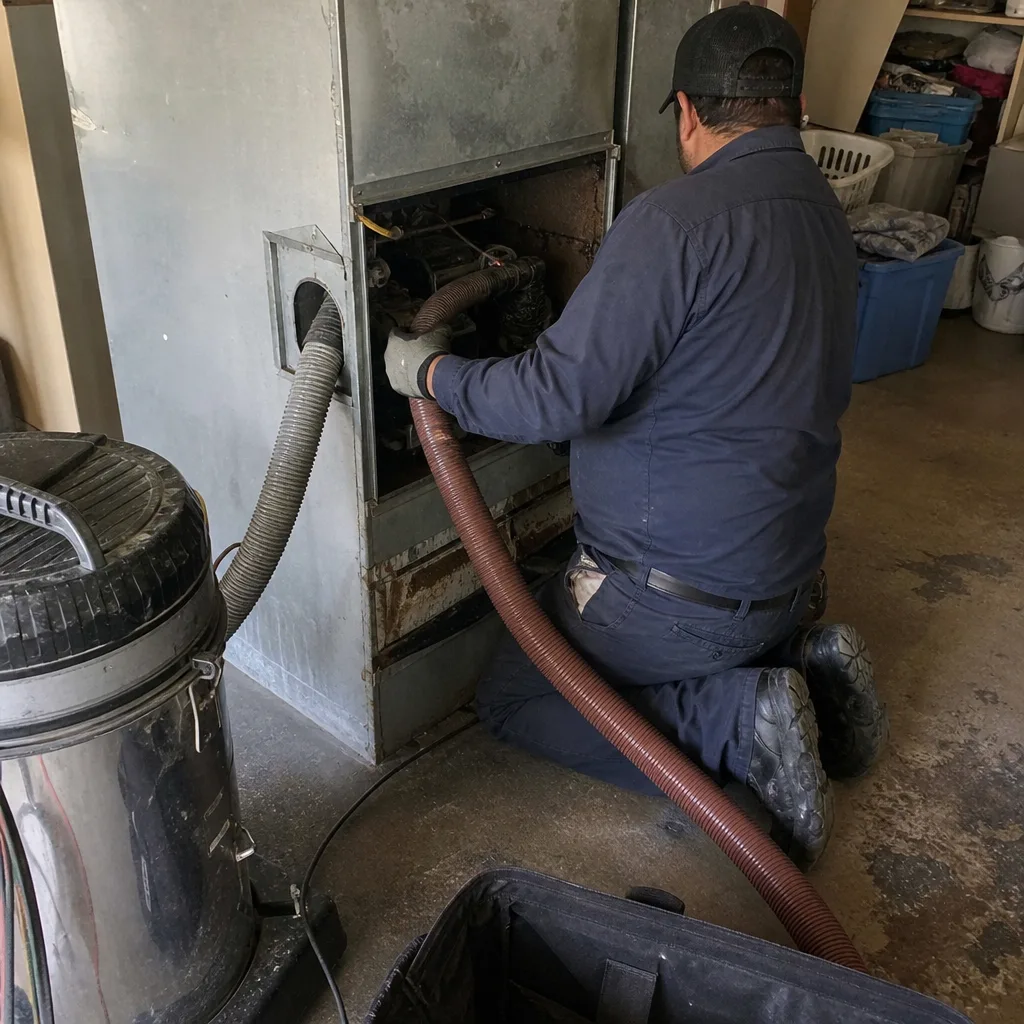
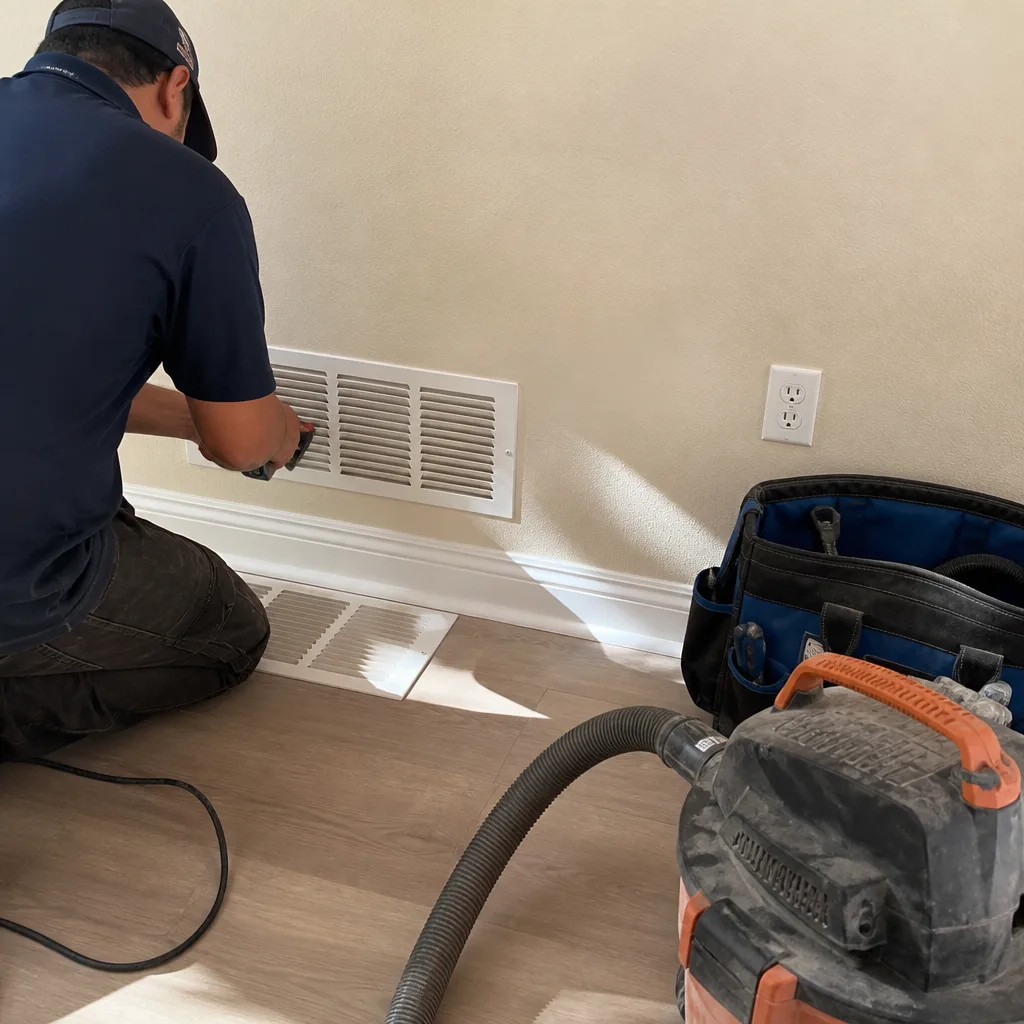
Whole-system duct and dryer vent check with before-and-after photos - you see exactly what came out of your vents
That "$99 whole-house special" is a bait ad - the real number appears once they are in your hallway, or the "clean" is a shop-vac at the register. We photograph the inside of your ducts before and after instead.
DIY vs Professional Air Duct Cleaning: The Lancaster Homeowner’s Decision Guide
A standard shop vacuum produces roughly 50 to 80 CFM of suction. A professional truck-mounted duct cleaning system produces 15,000 to 20,000 CFM. That’s not a marginal difference. It’s a different category of equipment entirely, and once you understand what that gap means in practice, the DIY versus professional question stops being about cost savings and starts being about physics. This guide explains exactly what DIY duct work can and cannot accomplish, when homeowner maintenance makes sense, and when attempting to clean your own ducts in Lancaster will create a false economy that costs more than hiring a specialist for Air Duct Cleaning from the start. You’ll learn how duct material, home age, contamination type, and the Antelope Valley’s particular dust load all factor into the decision.
Styles & brands we work with
- Whole-home duct cleaning
- Dryer vent cleaning
- Camera inspection
- Sanitizing & deodorizing
Quick Answer
DIY air duct cleaning is legitimate as a maintenance task for register cleaning, filter replacement, and visible debris removal, but a standard homeowner vacuum cannot generate the negative air pressure required to extract compacted dust from duct interiors. Professional cleaning in Lancaster with truck-mounted or high-CFM portable equipment removes debris that DIY methods only loosen and redistribute, as covered in our guide on How to Hire an Air Duct Cleaning Contractor in Lancaster: A Step-by-Step Guide. If your ducts contain construction dust, rodent debris, or mold, DIY agitation without containment actively worsens indoor air quality.
Table of Contents
- The Physics of Negative-Air Extraction: Why CFM Decides the Outcome
- What DIY Duct Cleaning Can Legitimately Accomplish
- The Lancaster Flex Duct Risk: When DIY Causes Damage
- Contamination Scenarios Where DIY Makes Things Worse
- The Decision Matrix: Home Age, Duct Material, and Contamination History
- What Professional Duct Cleaning Actually Costs in Lancaster
- Why Equipment Brand Names Matter: Rotobrush, Nikro, and the Gap They Bridge
- A Homeowner Maintenance Routine That Complements Professional Cleaning
- Common Mistakes to Avoid
- When to Call a Professional
- Frequently Asked Questions
- The Bottom Line
The Physics of Negative-Air Extraction: Why CFM Decides the Outcome
Duct cleaning is not a scrubbing operation. It is an extraction operation. The distinction matters because most homeowners approach the task as if the goal were to loosen dirt, when the actual goal is to remove it from the airstream entirely. A rotating brush or a vacuum hose attachment can agitate debris. Only a sustained negative pressure differential can pull that debris out of the duct and into a collection chamber. That differential is measured in cubic feet per minute, or CFM.
A typical wet/dry shop vac, even a larger 16-gallon model, moves somewhere between 50 and 80 CFM at the end of a 2.5-inch hose. That is enough to pick up visible sawdust from a workbench or lint from a dryer screen. It is not enough to overcome the friction loss that occurs over a 20- or 30-foot duct run, around elbows, and across a closed-off branch line. By the time the suction reaches the far end of a duct trunk feeding a bedroom register in a Lancaster ranch-style home, the effective pull has dropped to a fraction of its rated figure.
Professional systems operate in an entirely different range. Truck-mounted units built on gasoline or diesel engines, along with high-output portable systems using multiple vacuum motors in series, routinely generate 15,000 to 20,000 CFM at the collection point. Rotobrush and Nikro both manufacture systems in this class, engineered specifically for duct work. The difference is not a matter of degree. It is the difference between clearing leaves off a driveway with a leaf blower versus a handheld hair dryer.
Static pressure matters too. A professional system maintains negative pressure across the entire duct network while agitation tools work inside, which keeps loosened debris from escaping into the living space. A shop vac creates a localized low-pressure zone at the hose tip and nothing more. Debris disturbed three feet away from that tip simply falls back into the duct or gets blown into other branch lines. We have seen Lancaster homeowners who spent a full weekend vacuuming registers only to find dust accumulating around supply vents again within weeks and returning to our Duct Cleaning Lancaster home page by way of a search engine after the problem persisted.
What DIY Duct Cleaning Can Legitimately Accomplish
None of this means DIY work is worthless. It means DIY work has a defined scope, and that scope is complementary to professional cleaning rather than a substitute for it. Homeowners in Lancaster who understand this distinction get the most value from both approaches.
Here is what you can reasonably do yourself:
- Register and grille cleaning: Removing floor and ceiling registers, washing them with warm water and mild detergent, and wiping the visible boot interior behind each register. This removes dust that would otherwise reenter the airstream immediately after any cleaning.
- Filter replacement: Checking your furnace or air handler filter monthly during Lancaster’s high-dust months and replacing it when visibly loaded. A clogged filter forces the blower to work harder and shortens the life of any professional cleaning you have done. If you run a Honeywell media cabinet, knowing your filter’s MERV rating and replacement schedule is basic homeowner maintenance.
- Visible mold spotting: Removing a register and inspecting the immediate boot area with a flashlight. You are looking for green, black, or gray patches, and for signs of moisture staining. This is detection, not treatment. If you see mold, you need professional assessment and likely repair, not more vacuuming.
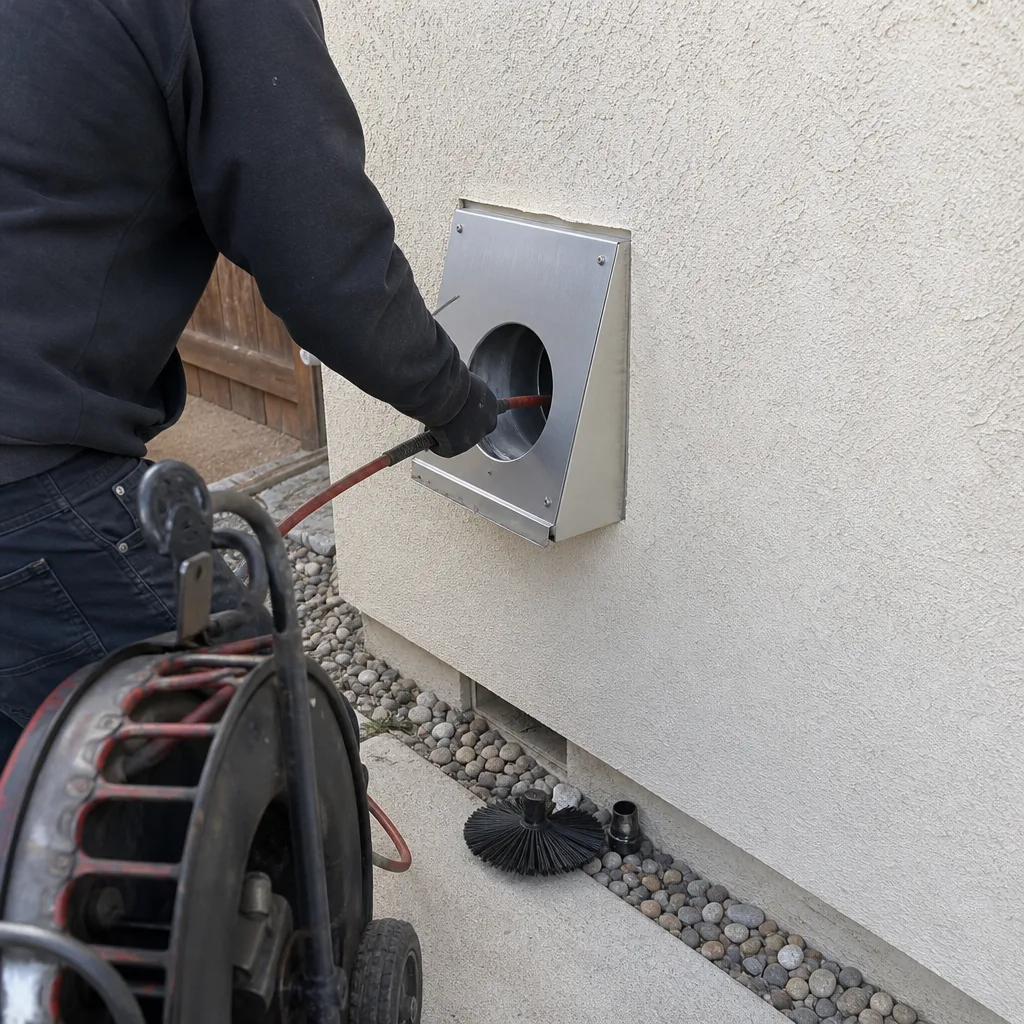
- Basic dryer vent brushing: Using a flexible dryer vent brush kit from the exterior vent opening to remove accessible lint buildup in the first few feet of the run. This reduces fire risk between professional dryer vent cleanings, especially in Lancaster homes where dryer ducts vent through the roof and run lengths commonly exceed 15 feet.
- Return air cavity inspection: Opening the return air filter housing and checking the blower compartment for visible dust accumulation. This gives you a baseline for how quickly your system is loading up between cleanings.
These tasks fall under maintenance. They extend the useful life of a professional cleaning, but they do not perform one. The reason is simple: none of them address the debris packed into the duct trunk runs, branch lines, and plenums where the majority of accumulated material lives. For that, the equipment requirement jumps by two orders of magnitude.
The Lancaster Flex Duct Risk: When DIY Causes Damage
A significant portion of Lancaster’s housing stock uses flexible duct, especially in homes built or retrofitted since the 1980s. Flex duct consists of a wire coil spiral wrapped in insulation and an outer vapor barrier. Inside that coil is a thin plastic inner liner, typically a few mils thick. That liner is the air seal. When it tears, the duct leaks conditioned air into the attic or crawlspace and draws unconditioned air into the system.
DIY vacuum attachments create an underappreciated risk here. A homeowner pushing a shop vac hose or a rotary brush attachment into a flex duct run has limited visibility and limited control. If the hose snags on the wire coil, or if a brush head catches the inner liner at a bend, the liner can tear or collapse. A collapsed liner restricts airflow the same way a kinked garden hose restricts water. The symptom is a room that never quite reaches temperature, which most people read as an HVAC problem and chase with thermostat adjustments for months before calling a specialist.
We regularly see flex duct damage in Lancaster caused by well-intentioned DIY attempts, and this is precisely where our repair capability matters. A cleaning-only company can tell you the duct is damaged. We can repair or replace the affected section because air duct repair in Acton and the surrounding Lancaster area is part of the same work scope we bring to every job. The ability to fix what a vacuum attachment broke, or what age and Antelope Valley heat cycles have already degraded, is the difference between cleaning around a problem and solving it.
The takeaway: flex duct is not a material that forgives aggressive DIY intervention. If your home has significant flex duct runs and you have not had a professional inspection, your first priority is understanding the condition of those runs before you put a vacuum attachment inside them.
Contamination Scenarios Where DIY Makes Things Worse
There are three contamination types where DIY agitation without professional containment actively worsens indoor air quality. Understanding these scenarios protects more than your ducts. It protects your lungs.
Rodent debris. Lancaster’s location at the edge of open desert means rodent pressure is a fact of life for many homes, particularly those built before modern sealing standards. Mice and roof rats seek out duct runs as nesting sites, especially in attics where flex duct offers an insulated, protected environment. Rodent debris in ducts includes droppings, urine-soaked insulation, nesting material, and often carcasses. Any of these carry hantavirus, leptospirosis, or other pathogens. Violently agitating rodent-contaminated ducts with a shop vac blows aerosolized particles into the home. A professional uses containment equipment, and Abatement Technologies class tools are the standard in remediation settings for exactly this reason. The equipment seals off the work area, maintains negative pressure, and captures contaminants before they reach living space air.
Mold colonies. If visible mold exists in your duct work, vacuuming it is the worst possible response. Vacuuming a mold colony with a consumer machine releases spores into the airstream at high concentration. What was a contained problem becomes a distributed one. Mold in ducts also indicates a moisture source that must be found and fixed, and that is a repair conversation, not a cleaning conversation. In Lancaster’s arid climate, mold in ducts almost always points to a specific mechanical failure: a leaking evaporator coil, a bathroom exhaust fan venting into the attic instead of outside, or a damaged duct boot allowing condensation. Fix the source first, then address the contamination.
Post-construction dust. New homes and recently renovated homes in Lancaster contain fine drywall dust, sawdust, and insulation particles that settle into duct work during the build. This dust is fine enough to pass through a shop vac filter, which means DIY vacuuming recirculates it into the home’s air rather than trapping it. Drywall dust in particular is abrasive and can score blower motor bearings over time. Professional extraction removes this material before the HVAC system forces it through every room.
In each of these scenarios, the DIY instinct to “do something” is worse than doing nothing. Agitation without extraction redistributes the problem. Extraction requires equipment built for the job.
The Decision Matrix: Home Age, Duct Material, and Contamination History
Instead of treating DIY versus professional as a binary choice, use these four variables to decide what your home needs right now. Answer each honestly and the path becomes clear.
Variable 1: Home age
- Under 5 years old: If post-construction dust was never professionally extracted, schedule one professional cleaning now, then maintain DIY register and filter care afterward. If builders cleaned ducts at close-out and you have been diligent with filters, DIY maintenance is appropriate for several years.
- 5 to 20 years old: If you do not know whether ducts have ever been cleaned professionally, assume they haven’t. Schedule an inspection and cleaning. Accumulated dust, pet dander, and lint from normal living have had time to pack into trunk lines.
- Over 20 years old: Duct condition is now a structural question. Flex duct liners degrade, metal duct joints separate, and insulation breaks down. In Lancaster’s heat, attic temperatures routinely exceed 140 degrees in summer, which accelerates insulation degradation. You need an inspection that can flow into repair work if needed, not just a cleaning.
Variable 2: Duct material
- Rigid metal duct: More tolerant of DIY register-level work. Metal ducts hold up better to vacuum brush attachments, though the extraction limitation described above still applies.
- Flexible duct: DIY vacuuming inside flex duct runs is not recommended. The inner liner risk is real, and damaged flex duct often needs replacement rather than patch work. Leave anything beyond register cleaning to professionals.
- Duct board: This pressed fiberglass material is common in older Lancaster homes. It cannot be aggressively brushed and requires professional cleaning methods that avoid damaging the interior surface.
Variable 3: Contamination history
- No known contamination, regular filter changes: DIY maintenance plus professional cleaning every 3 to 5 years is a reasonable cadence for most Lancaster homes.
- Known rodent activity, visible mold, or recent renovation: These are not DIY scenarios. Schedule professional assessment with a company that handles containment as standard practice.
- Smokers in the home, or previous pet-heavy occupancy: Tar and dander are sticky contaminants that bond to duct surfaces. They require mechanical agitation tools and high-CFM extraction combined. This is firmly in professional territory.
Variable 4: Time since last professional cleaning
- Under 2 years: DIY register and filter maintenance will carry you. Reassess at the 3-year mark.
- 3 to 5 years: Time to schedule professional cleaning. The Antelope Valley’s dust load means ducts accumulate measurable debris every year even with good filtration.
- Unknown or over 5 years: Stop planning DIY and start planning professional cleaning plus inspection. At this point, the debris load is compacted and beyond any consumer tool’s capacity.
What Professional Duct Cleaning Actually Costs in Lancaster
Duct cleaning prices in Lancaster vary by home size, system complexity, and accessibility, but homeowners should expect honest market ranges rather than per-vent teaser pricing. A whole-home duct cleaning for a typical 1,500 to 2,500 square foot single-family home in Lancaster generally runs between $350 and $650 depending on the number of systems, register count, and whether dryer vent service is added. Homes with two HVAC systems, or with unusually long duct runs, fall above that range.
Beware of quotes that seem dramatically lower. A $99 whole-home cleaning is a marketing hook, not a service quote. These offers exist to get a van in the driveway, and the invoice climbs once the technician “discovers” mold, pest debris, or “required” sanitizing treatments. Reputable companies quote one flat price per system before work begins, based on square footage and system count, not per-vent charges that can be inflated by counting vents differently.
What about repair work discovered during cleaning? This is where full-scope duct specialists differ from cleaning-only companies. If we find a disconnected duct branch in an attic, a crushed flex run, or a separated plenum during the cleaning, we can repair it on the same visit. A cleaning-only company notes it, hands you a separate referral, and leaves the system leaking air. We repair what others leave behind. Structurally, it is better to resolve both issues in one visit, with one price conversation, than to clean ducts that are still leaking conditioned air into the attic.
The honest comparison for Lancaster homeowners is not DIY cost versus professional cost. It is DIY time plus ineffective results plus possible damage versus a single professional visit that actually solves the problem. The false economy is spending a full weekend vacuuming registers and replacing filters, then still having dust in the air because three inches of debris sits packed in the duct trunk where no homeowner tool can reach it.
Why Equipment Brand Names Matter: Rotobrush, Nikro, and the Gap They Bridge
Homeowners researching duct cleaning in Lancaster encounter a wall of industry jargon, and it is easy to tune it all out as marketing noise. But specific equipment brands matter for a concrete reason: they tell you whether the company invested in tools built for this trade or repurposed something else for it.
Rotobrush is an industry-recognized name in duct cleaning, and its systems are engineered for the specific challenge of agitating internal duct surfaces while extraction runs simultaneously. The brush head spins inside the duct to dislodge compacted debris while the vacuum system pulls the loosened material into a sealed collection unit. That combination of mechanical agitation and simultaneous extraction is the core of what makes professional cleaning different from a homeowner with a shop vac attachment.
Nikro equipment operates in the same professional category, with systems designed for continuous negative pressure and high-volume debris collection. The difference between a Nikro unit and a consumer vacuum is visible the first time you see a professional cleaning in progress: the air exchange rate drops duct pressure enough that you can feel the pull at open registers in other rooms.
The deeper point is that equipment investment signals how a company thinks about the job. A company running Rotobrush or Nikro equipment has committed tens of thousands of dollars to tools that are useless for anything except duct work. A company running a shop vac with a long hose adapted to the task has not made that commitment, and the quality ceiling of their work reflects it. In our case, the equipment investment extends to Abatement Technologies containment tools, which are the same class of equipment used in remediation and air-quality-critical settings. That is the standard we apply in Lancaster because the Antelope Valley’s dust, pollen, and pest pressure demand it.
The air duct cleaning in Acton service area and the broader Lancaster market share the same environmental conditions, and the same equipment standard applies regardless of which neighborhood we are working in.
A Homeowner Maintenance Routine That Complements Professional Cleaning
Professional cleaning is an event. Homeowner maintenance is a rhythm. Both matter, and a sensible routine keeps the interval between professional visits productive rather than corrective. Here is the cadence we recommend for Lancaster homes.
- Monthly: Check your furnace or air handler filter. In Lancaster, the Santa Ana winds and high-desert dust mean filters load faster than they do in coastal or forested climates. Replace a 1-inch filter when light no longer passes through it easily. If you have a Honeywell media filter cabinet, inspect the media pad and replace on schedule.
- Quarterly: Remove all supply and return registers and wash them. While registers are off, wipe the visible boot interior with a damp cloth and inspect with a flashlight for mold, pest droppings, or moisture staining. Document what you see so you can compare over time.
- Twice yearly: Check the exterior dryer vent flap. It should open when the dryer runs and close fully when it stops. If it sticks open, birds and rodents can enter the duct run. If it does not open fully, lint may be accumulating behind it.
- Annually: Schedule dryer vent cleaning if you have not had it done in the past 12 to 18 months. The dryer vent cleaning in Acton team handles both the Lancaster and Acton areas, and this service is the single highest-value fire prevention task a homeowner can schedule annually.
- During renovations: If you are remodeling any room in Lancaster, seal off supply and return registers in that room before work begins. Drywall dust is fine enough to migrate through the entire duct system while work is underway. If you did not seal registers, schedule professional cleaning within 30 days after construction ends.
This routine does not replace professional cleaning. It extends its value, the same way brushing your teeth does not replace a dental cleaning. The equipment gap remains what it is, but the professional visit lands differently when a homeowner has been doing the maintenance work consistently.
Common Mistakes to Avoid
- Attaching a shop vac to a register and expecting deep cleaning. The CFM is insufficient over any meaningful duct length, and what you loosen inside the duct settles elsewhere. You are moving dust, not removing it.
- Pushing rigid brush attachments into flex duct. The inner liner tears easily, and a torn liner is a repair expense that exceeds the cost of the cleaning you were trying to avoid.
- Vacuuming visible mold. This aerosolizes spores into every room the HVAC system serves. If mold is visible in ducts, seal the registers and call a professional who handles containment properly.
- Using chemical “duct fogging” products as a substitute for cleaning. These products do not remove debris. They add chemical residue to a system that still contains the original contamination. Extraction is the only answer.
- Ignoring dryer vents because they are separate from HVAC ducts. Dryer vents accumulate lint at a faster rate than HVAC ducts accumulate dust, and the consequence is fire, not dust. Lancaster homes with long roof-venting dryer runs need annual professional cleaning regardless of how diligent the homeowner is about cleaning the lint screen.
- Assuming new homes have clean ducts. Construction dust from drywall, texture spraying, and insulation work settles into ducts during the build. A new home in Lancaster without a post-construction duct cleaning is circulating construction dust through every room until that material is extracted.
When to Call a Professional
Call a professional when any of these conditions apply: visible mold in any duct or boot, evidence of rodent activity in or around ducts, a home renovation completed without post-construction duct cleaning, unexplained allergy or respiratory symptoms concentrated at home, visibly dusty supply registers that return to dusty within weeks of cleaning, or no memory of any professional duct cleaning in five years or more. Flex duct damage from a previous DIY attempt also belongs on this list. Duct Cleaning Lancaster offers free estimates in Lancaster, including a full-scope assessment that identifies whether cleaning, repair, or dryer vent service is the right first step. Call (833) 589-9773 to schedule a walkthrough.
Frequently Asked Questions
Professional whole-home duct cleaning in Lancaster typically runs between $350 and $650 for a standard single-family home with one HVAC system, with final pricing set by square footage, system count, and register count. Reputable companies quote one flat price per system before work begins rather than per-vent pricing. Call (833) 589-9773 for an exact quote based on your home’s configuration, with a free estimate before any commitment.
No, a shop vac produces 50 to 80 CFM of suction while professional systems generate 15,000 to 20,000 CFM, and this difference means a shop vac cannot extract compacted debris from duct interiors. You can clean registers, wipe accessible boot areas, and replace filters effectively, but the actual duct run requires professional extraction equipment to remove material without redistributing it.
Most Lancaster homes benefit from professional duct cleaning every 3 to 5 years, with the cadence shortened by pets, smoking, recent renovation, or visible dust accumulation at registers. Homes with residents who have severe allergies or asthma may want a shorter interval. If you are unsure of the last cleaning date, schedule an inspection and let the evidence in the ducts set the schedule going forward.
Very low quotes are usually teaser pricing used to get a technician into the home, after which the invoice climbs with add-ons, sanitizing treatments, or per-vent upcharges. Legitimate whole-home cleaning costs reflect equipment investment, containment practices, and technician time. A $99 whole-home cleaning is not a realistic market price in Lancaster, and chasing it usually ends with either an inflated final bill or a surface-level job that leaves the real debris in place.
A reputable company documents the work with before-and-after photographs of your actual duct interiors, taken through access points during the cleaning. Ask to see the photos, and ask what equipment was used. Rotobrush or Nikro systems with Abatement Technologies containment tools are standard for real professional cleaning. If the company cannot show you photos and cannot name its equipment, assume the work was superficial. Call (833) 589-9773 and ask us about documentation standards before you book.
Yes, but the effect depends on what was actually in the ducts. Removing compacted dust, pet dander, construction debris, and pest droppings from the air path reduces the particle load circulated by your HVAC blower, which matters most for residents with allergies, asthma, or other respiratory conditions. The benefit is compounded when the same visit addresses damaged ducts that were leaking attic or crawlspace air into the conditioned space. Clean ducts alone help, and clean intact ducts help more.
The Bottom Line
The DIY versus professional duct cleaning decision in Lancaster is really a question about what your equipment can physically do. Consumer vacuums manage maintenance at the register level and nothing more. The compacted debris that accumulates in duct trunks, branch lines, and plenums will not move at 80 CFM, and attempting to move it anyway risks flex duct damage or contaminant dispersal that makes your air worse. The sensible path is a maintenance rhythm you own, and professional extraction you schedule. For additional help, see our more guides & resources. Duct Cleaning Lancaster serves Lancaster with full-scope duct service: cleaning, dryer vent work, and repair handled by one provider using Rotobrush, Nikro, and Abatement Technologies equipment. Air quality starts inside your ducts. Call (833) 589-9773 for a free estimate and we will show you what is actually in yours.
Written by the team at Duct Cleaning Lancaster, serving Lancaster since 2014.
See the difference
 Before
 After
 Before
 After
 Before
 After