
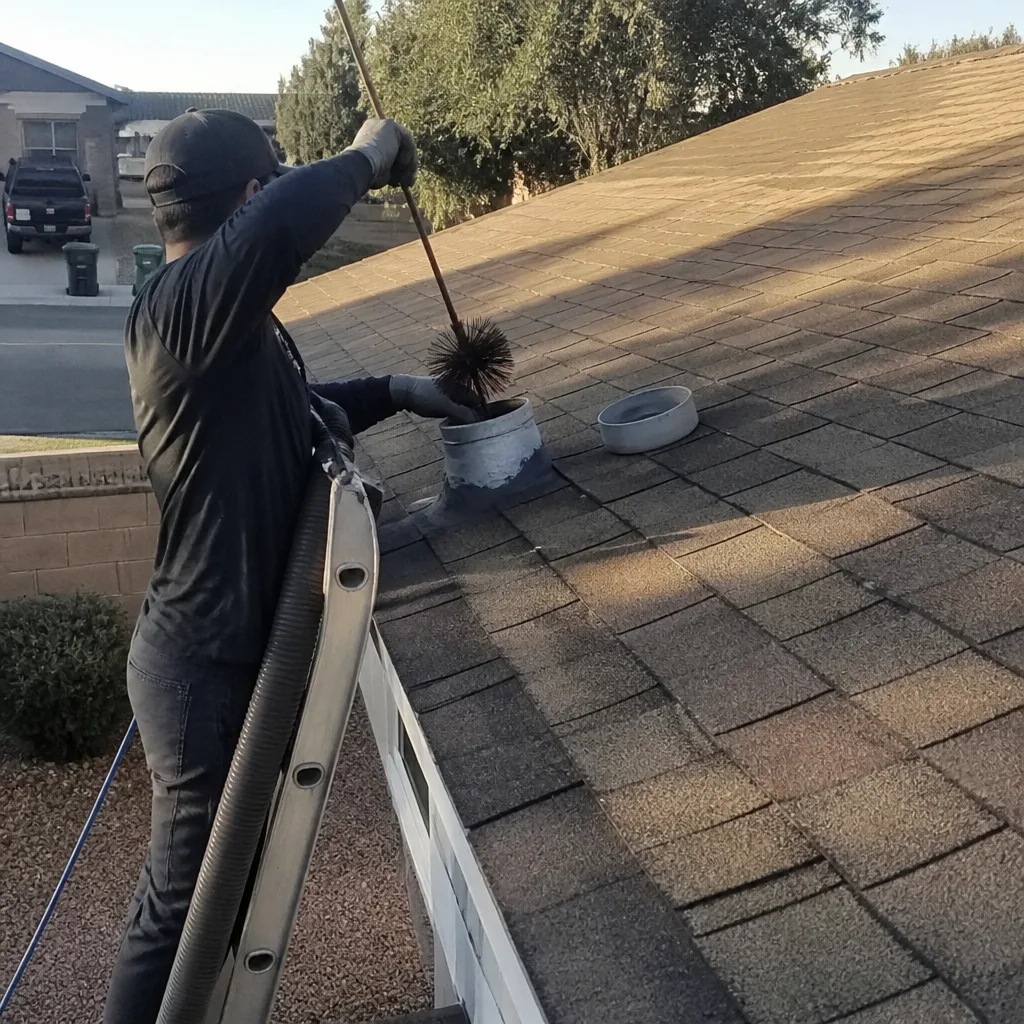
Last updated November 2, 2026
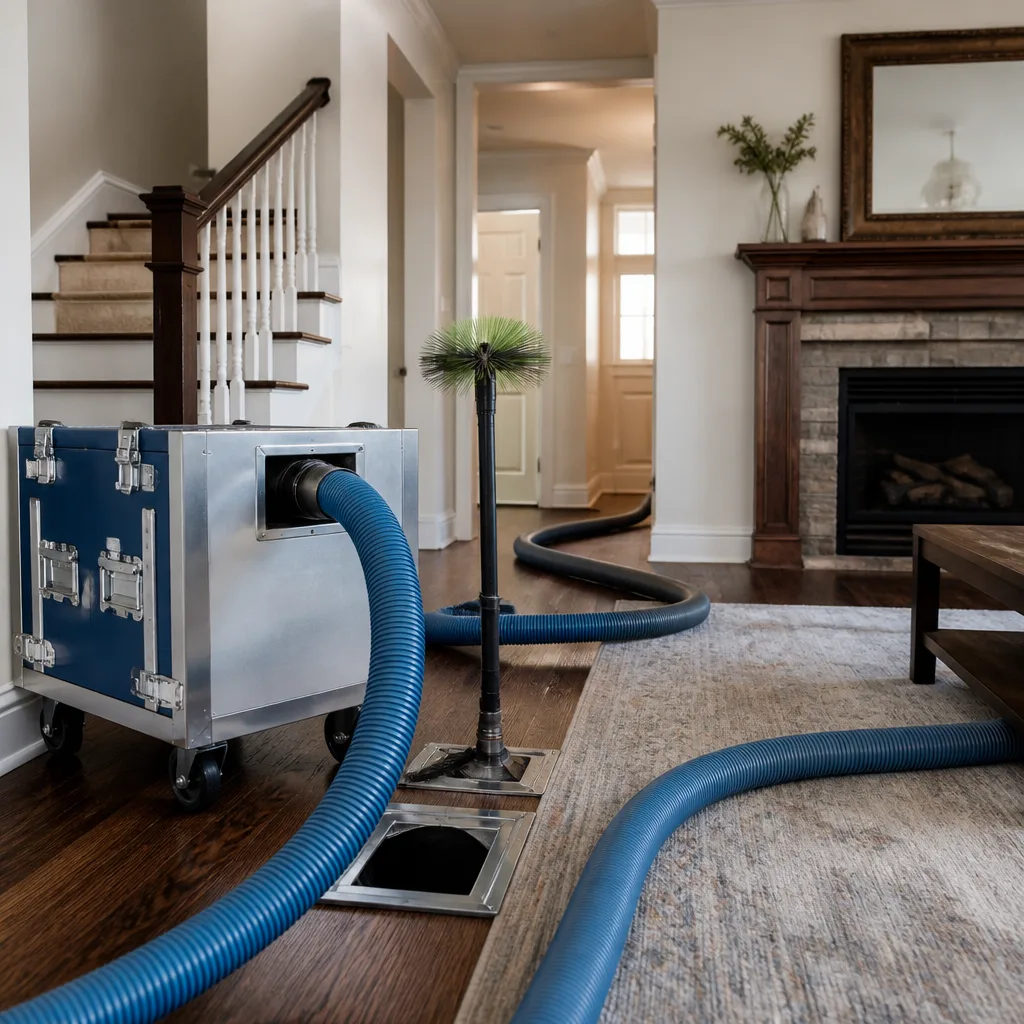 Whole-home duct cleaning
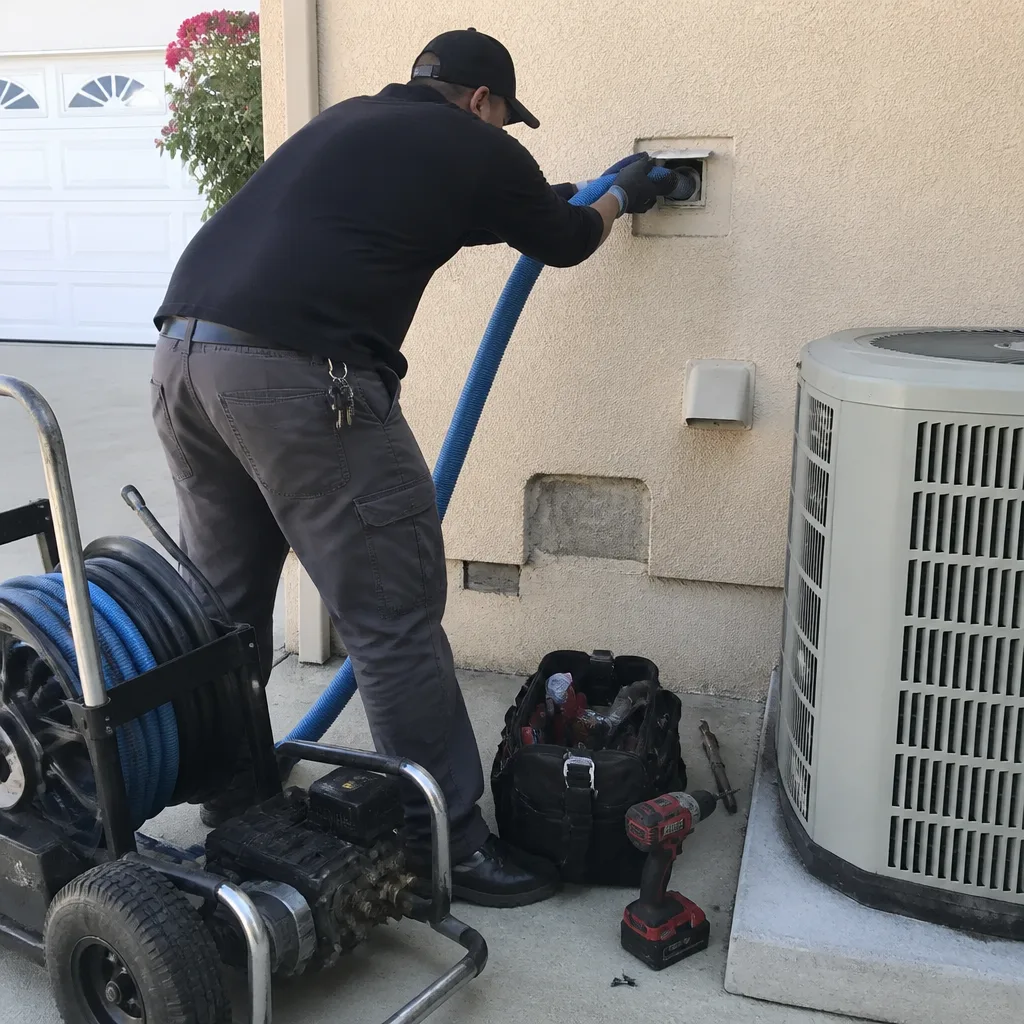
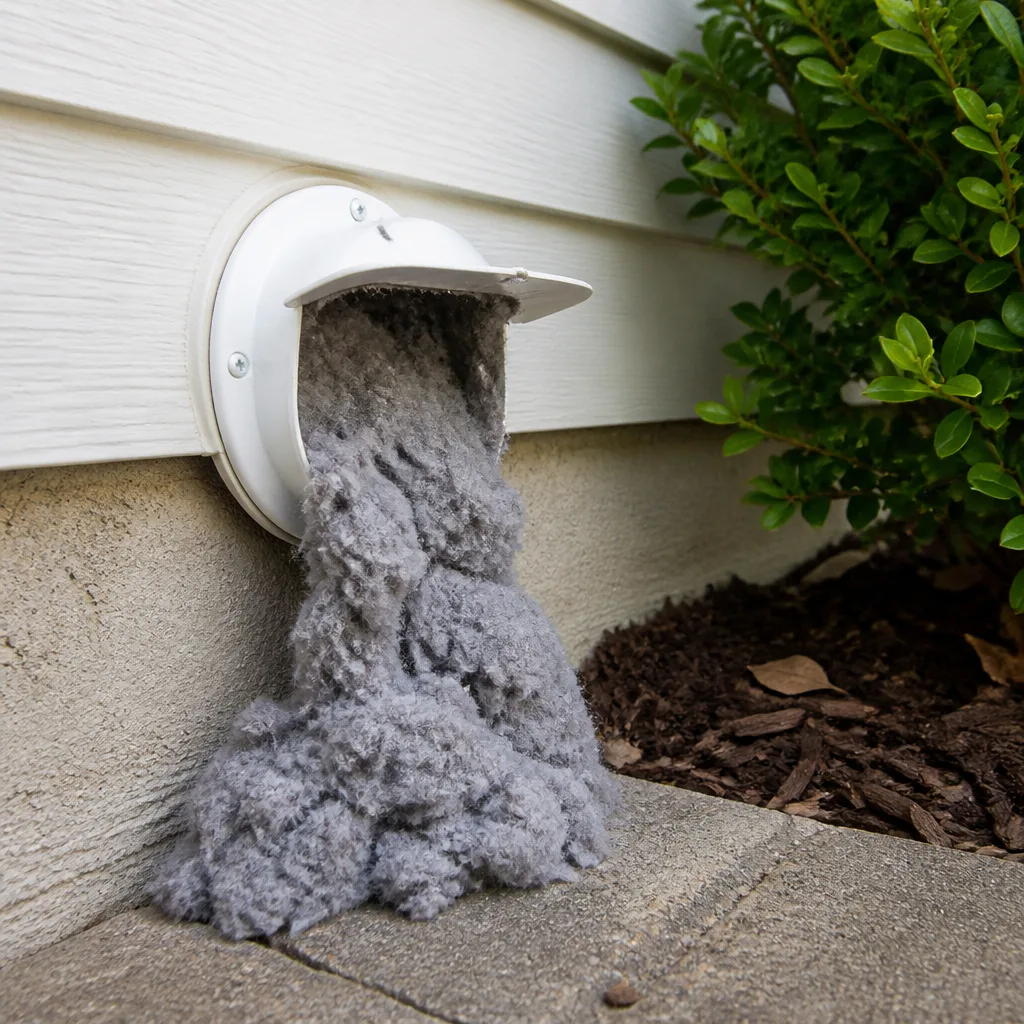 Dryer vent cleaning
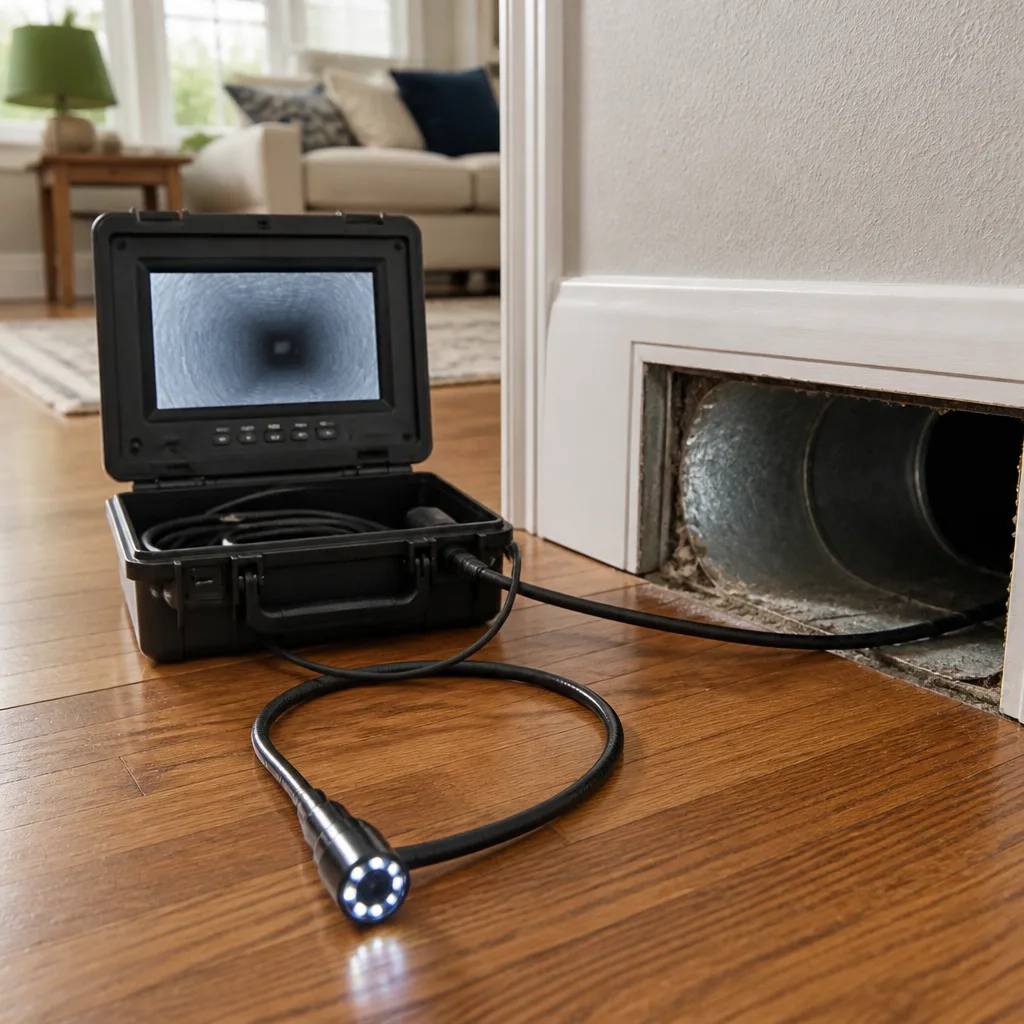 Camera inspection
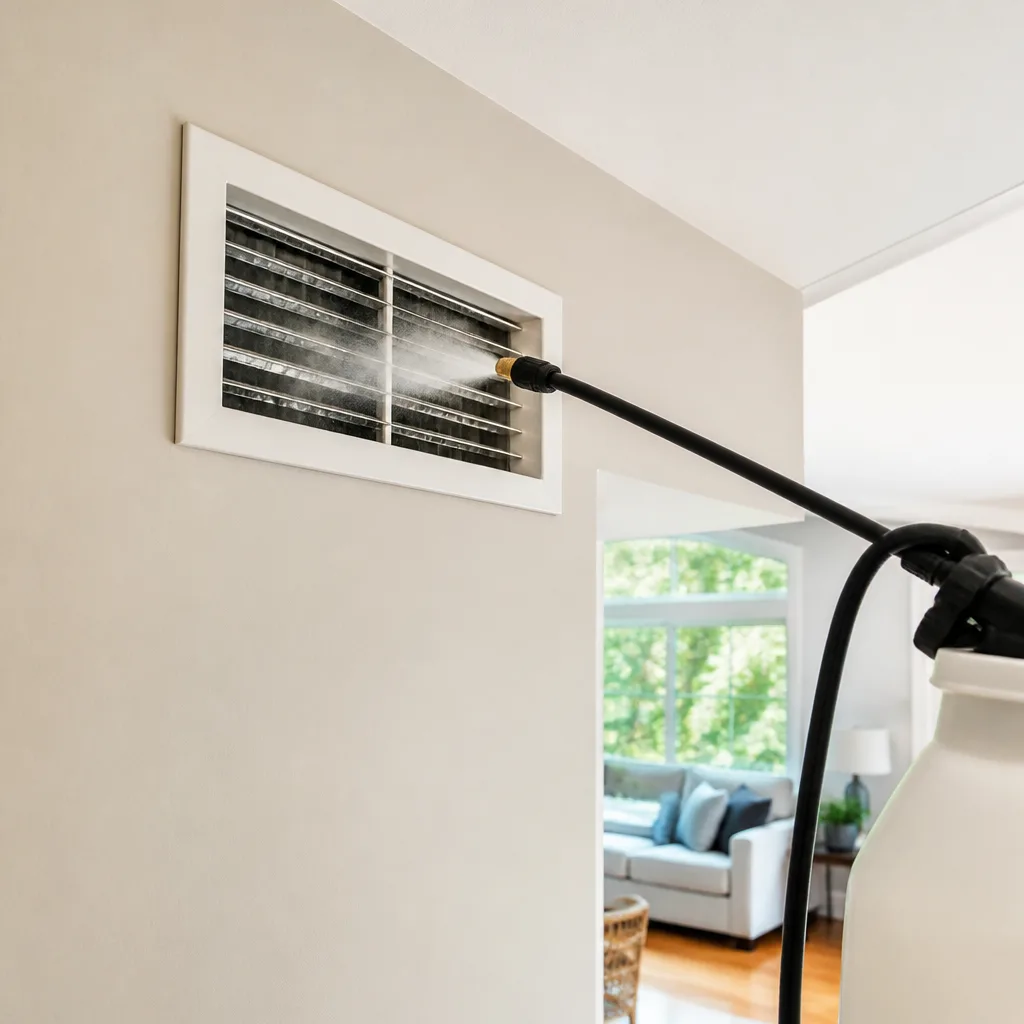 Sanitizing & deodorizing
Whole-system duct and dryer vent check with before-and-after photos - you see exactly what came out of your vents
That "$99 whole-house special" is a bait ad - the real number appears once they are in your hallway, or the "clean" is a shop-vac at the register. We photograph the inside of your ducts before and after instead.
Seasonal Air Duct Cleaning Care for Lancaster: Year-Round Homeowner’s Guide
Most duct care advice online was written for places with four gentle seasons. Lancaster doesn’t qualify. The Antelope Valley gives us a spring wind season that can coat the inside of a duct system with fine grit in a matter of weeks, a summer wildfire window that pushes ultrafine smoke particles past standard filtration, and a hard, fast switch into heating mode that locks in whatever the system collected all year. This guide replaces the generic ‘clean in spring, check in fall’ calendar with a Lancaster-specific schedule: what’s actually happening inside your ducts each season, what you can do yourself, and when the right call is professional equipment. We’re writing this from Lancaster, for Lancaster homeowners and property managers who treat indoor air as part of the property’s health and safety system.
Styles & brands we work with
- Whole-home duct cleaning
- Dryer vent cleaning
- Camera inspection
- Sanitizing & deodorizing
Quick Answer
In Lancaster, the highest-value air duct maintenance window is late spring, right after the Antelope Valley wind season deposits weeks of fine dust and grit into the return side of your system. A second, equally important window opens in late fall, before you switch to heating mode, to clear anything that settled during wildfire season or summer construction. Most Lancaster homes do best with our Air Duct Cleaning services on a professional schedule: inspection twice a year, a filter upgrade during smoke events, and a full duct cleaning every 2 to 3 years depending on occupancy, pets, and how close you are to open desert or unpaved roads.
Table of Contents
- Lancaster’s Real Seasons: What Actually Stresses Your Duct System
- Spring (March – May): The Highest Dust-Loading Period of the Year
- Summer (June – September): Wildfire Smoke and Ultrafine Particle Build-Up
- Fall Transition (October – November): The Critical Pre-Heating Window
- Winter (December – February): Combustion Byproducts and Duct Integrity Under Heat
- Build a Seasonal Duct Log: Make Every Professional Visit Count
- What You Can Do Yourself vs. What Requires Professional Equipment
- Common Mistakes to Avoid
- When to Call a Professional
- Frequently Asked Questions
- The Bottom Line
Lancaster’s Real Seasons: What Actually Stresses Your Duct System
The national duct-cleaning calendar assumes pollen in April, humidity in July, and snowmelt in March. Lancaster gets none of those. What we get is wind. The Antelope Valley is one of the windiest inland regions in California, with sustained spring gusts that routinely exceed 30 mph and peak events that push 60 mph or more. That wind picks up fine desert silt, road dust, and construction debris from the valley floor and forces it into every gap in a home’s exterior envelope. Your HVAC system’s return ducts are a direct route.
Here’s what that means in practical terms. A duct system in a coastal city might accumulate a visible dust layer over 3 to 5 years. A duct system in Lancaster, especially in neighborhoods near open desert on the east side of town or near active construction, can accumulate the same layer in a single spring. The dust here is not soft household lint. It’s abrasive mineral grit that scores duct surfaces and degrades filter seals. That grit doesn’t just sit there; it circulates, and every pass through the blower and across coils adds a little more wear to components that are not cheap to replace.
We’ve opened return ducts in Lancaster homes in May and found a quarter-inch of fine tan powder coating the bottom of the trunk line. That’s not neglect. That’s one wind season. The homeowner’s filter was clean, the house was tidy, and the duct system looked like it had been through a sandstorm. Because it had.
So the Lancaster seasonal calendar is not spring clean / fall prep. It’s post-wind inspection, smoke-season filter response, pre-heat cleaning, and winter combustion monitoring. Four distinct phases, each with different failure modes and different homeowner actions. Here they are, in order.
Spring (March – May): The Highest Dust-Loading Period of the Year
If you only do one duct-related thing all year in Lancaster, do it in May. The spring wind season is the single largest driver of duct contamination in this city, and it happens fast. A single multi-day wind event can force more particulate into your duct system than the previous eleven months combined. This isn’t a gradual accumulation you can track with a filter; it’s an event-driven loading, and the duct system bears the brunt of it.
Two mechanisms are at work. First, wind-driven dust enters the home through door seals, window frames, vent screens, and any exterior gap. It settles on surfaces and gets pulled into the return registers as the HVAC cycles. Second, if your system runs a fresh-air intake, which many newer Lancaster homes do to meet California building code ventilation requirements, that intake becomes an active dust injection port during wind events unless it has a properly fitted, serviceable filter installed.
What should you do during this window?
- Upgrade to a MERV-11 or MERV-13 filter for March through June. Standard MERV-8 filters, the most common fiberglass or basic pleated style, allow fine wind-blown silt to pass directly into the blower and supply ducts. A MERV-11 or higher pleated filter physically blocks more of that load. Check the pressure drop rating; most residential blowers handle MERV-13 without issue, but a slightly dirty MERV-13 is more restrictive than a clean one, so change it on schedule. If you run a Honeywell or Aprilaire media cabinet, this is the season to run the higher-efficiency media it was designed for.
- Inspect the return-side registers after each major wind event. If you see tan or gray dust streaking around the return grilles, that dust is also inside the return trunk. The grille is the visible symptom. What’s behind it is usually worse.
- Check the fresh-air intake filter, if your home has one. These small, flat filters clog with wind-blown debris within days during a heavy spring. A clogged intake filter forces the system to pull harder or bypass filtration entirely, depending on the design.
- Schedule your main duct inspection for late May. By late May the wind season has typically peaked. An inspection at that point shows you the true seasonal load before summer heat and any wildfire smoke adds a sticky organic layer to the mineral dust. That layering matters: dry silt is dramatically easier to remove professionally than silt that has been baked or bonded by humid or smoky air.
One more Lancaster-specific note: the spring wind season coincides with the tail end of rainy-season runoff and, in many neighborhoods, with landscape cleanup. Homeowners clearing weeds and dead brush from their lots create localized dust clouds that the wind carries for blocks. If your neighbors are grading or clearing in March or April, close your windows on those days, and plan for a heavier-than-average filter load that month.
Summer (June – September): Wildfire Smoke and Ultrafine Particle Build-Up
Lancaster’s summer brings two duct problems that don’t show up on a standard cleaning checklist. The first is smoke from wildfires that burn in the mountains and foothills ringing the Antelope Valley, producing plumes that drift over the city for days or weeks at a time. The second is the combination of extreme heat and low humidity, which bakes whatever settled in the ducts during spring into a hard, compacted film that standard cleaning methods can miss if they’re not thorough.
Wildfire smoke is the more serious issue for air quality. Smoke particles are not like the dust we just described. Most wind-blown desert dust is relatively large, in the 10 to 100 micron range, and a decent pleated filter catches it. Wildfire smoke produces ultrafine particles in the 0.3 to 1 micron range, which slip through even high-efficiency residential filters in significant quantity. Those particles enter the supply duct system and settle on interior surfaces of the trunk lines, particularly along the bottom of horizontal runs and at the inside of any bend or elbow.
The problem compounds when the smoke event ends. Those fine particles sit in the supply ducts. When the system next runs in heating mode, the warm air picks them up and delivers a concentrated dose of whatever the smoke carried, right at the supply registers in your living space. That’s why a home that was smoky in August can smell faintly of smoke in November when the heater first fires, even after the outdoor air has been clear for months. The smoke never left the house. It moved into the ducts.
What to do during fire season:
- Run your blower fan continuously during smoke events. Set the thermostat fan to ‘ON’ rather than ‘AUTO.’ This keeps air moving through the filter and reduces the amount of time smoke particles have to settle inside the duct system. It also improves whole-house filtration performance because the filter is doing work continuously, not just during heating or cooling calls.
- Upgrade to the highest-rated filter your system can handle for the duration of the smoke event. MERV-13 is the minimum you want for meaningful smoke particle capture. If you run an Aprilaire or Honeywell media cabinet, use the highest-efficiency media available for your cabinet model. Standard 1-inch MERV-13 filters work but may need changing every 3 to 4 weeks during heavy smoke.
- Keep outdoor air intakes closed or filtered during smoke. If your home has a fresh-air ventilation intake, shut it off or upgrade its filter during active smoke events. An unfiltered or lightly filtered intake during a smoke plume is a direct pipe from the fire to your duct system.
- Inspect supply registers in September. If you see gray or black streaking around supply vents, or if the first strong AC day produces a faint smoke note, that’s ultrafine particle deposition in the supply lines. That requires professional attention; no residential filter removes settled particles from the inside of a duct.
Summer is also the season when we see a spike in calls about black dust around vents. That’s not always smoke. In many Lancaster homes it’s the breakdown of plastic register components or the residue from scented candles and plug-in air fresheners being pulled through the system. A trained eye can tell the difference quickly. Smoke deposition is gray and fine and coats surfaces evenly. Candle soot is darker, clings to registers, and often concentrates near the register blade edges. The distinction matters because it changes the remediation approach. Call a professional who can identify what you’re actually dealing with.
Fall Transition (October – November): The Critical Pre-Heating Window
Late October through November is the most under-rated duct maintenance window in Lancaster. Most homeowners think about the heater once the first cold night arrives, and by then it’s too late: the system is in daily heating mode, and whatever accumulated in the ducts all spring and summer is now being baked onto the interior surfaces and delivered into the home’s air on every cycle.
Here’s the dynamic. During cooling season, air moves through the system at one volume and one moisture profile. When you switch to heating, the furnace produces a different air volume, a different temperature, and a different moisture profile. The hotter supply air, often 120 to 140 degrees at the plenum, acts like an oven on the interior surfaces of your supply ducts. Dust that was dry and loose in September becomes baked-on residue by December. Biological material that might have been dormant becomes aerosolized. And the smell of it comes out of your vents.
The pre-heating window, roughly the six weeks from mid-October through late November, is your last easy opportunity to address all of it. The system is not yet running daily. The technician can access the equipment without fighting a furnace that’s cycling. And whatever was deposited by spring winds and summer smoke is still in a removable state.
What should happen in this window?
- Replace the smoke-season filter. If you ran a MERV-13 filter through fire season, it’s loaded with smoke particles and dessert silt. Put in a fresh filter for heating season. Do this in late October or early November, whether or not the filter looks dirty. The smoke-collection efficiency of a loaded MERV-13 filter drops quickly.
- Have the duct system inspected for moisture and biological growth. Lancaster is dry, but condensation forms inside duct systems anyway: cold air in summer against warm interior surfaces, particularly in homes with ductwork in the attic or on exterior walls. Fall is the time to check for any organic growth that developed during the humid, warm conditions inside the ducts during July and August.
- Clean before heating season if you hit the 2-to-3-year mark. If it’s been more than two years since your last full duct cleaning, or if this past spring’s wind season was severe, schedule the cleaning for October or early November. The ducts will be at their cleanest through the entire heating season, and nothing gets baked on by the furnace’s first month of operation.
- Inspect the returns before you seal the house up. Lancaster homes go from open-window season to closed-up heating season almost overnight. Everything the house gathered during open-window months is in the system. Pull a few return grilles and look at what’s behind them before the cold sets in.
This is also the season for Air Duct Repair inspections, the same way we approach them in Lancaster: checking for cracked trunk lines, separated duct joints, and pinhole leaks that matter far more during heating season because heated air is lighter and escapes through gaps more aggressively than cooled air. A leaky supply duct in July wastes cooled air. The same leak in December wastes heated air and pulls cold air from unconditioned spaces into the system, which shows up as one cold room and a furnace that never seems to satisfy the thermostat.
Winter (December – February): Combustion Byproducts and Duct Integrity Under Heat
Winter in Lancaster is mild by national standards, but the heating season is real, and it runs from late November through February. This is the season when two duct-system issues move to the front: gas furnace combustion byproducts and the physical stress of heating on duct materials and seals.
On gas furnaces: every gas furnace produces combustion byproducts. In a properly operating system, those byproducts are vented outside through the flue. They never enter the duct system. But when a heat exchanger cracks, which is a known failure mode on furnaces more than about 15 years old, combustion gases can enter the supply air stream and be distributed throughout the home. Carbon monoxide is the headline danger, but the less-dramatic symptom is a persistent dusty, dry, slightly acrid smell that appears only when the heat runs. Homeowners often confuse this with a dirty duct smell. It’s not. It’s a combustion byproduct signature, and it’s a safety issue, not a cleaning issue.
What should you do each winter?
- Install or test your carbon monoxide detector before heating season. California requires CO detectors in most residential properties. If yours are more than 7 years old, replace them. If you have a gas furnace, test the detector monthly during heating season. This is the single most important winter air-safety measure for any Lancaster home.
- Smell the register air on the first few furnace cycles of the season. If you smell something dusty or musty on the first cycle that fades within a minute or two, that’s settled dust burning off. It’s normal, if unpleasant, and it suggests your ducts were due for cleaning. If you smell something sharp, dry, or exhaust-like that persists, shut the furnace down and call a professional immediately. Do not ignore a persistent combustion-type odor.
- Check supply registers for new gaps or movement. Heating cycles cause materials to expand. Over many cycles, duct tape, mastic seals, and metal hangers can shift. If a register is suddenly loose, the duct behind it may have shifted at a joint. That’s a repair issue, not a cleaning issue.
- Monitor furnace runtime and temperature differentials. If the furnace runs noticeably longer than it did last winter, or if some rooms are suddenly harder to heat, suspect a duct leak. Heated air escaping into an attic or crawlspace drives up energy costs and extends furnace runtime. We see this every winter in Lancaster, in homes where the duct system never received a professional integrity inspection.
Winter is also when dryer vent performance becomes a more visible safety issue. The dryer runs more in winter as clothes dry more slowly in cold air. A restricted dryer vent, packed with lint accumulated over the summer, builds heat and backpressure. Dryer fires in the Antelope Valley are not a theoretical risk; they happen every year, and the vent is the most common ignition point. We handle Dryer Vent Cleaning in Acton and throughout the Lancaster area year-round, but the pre-winter and mid-winter checkups are the ones that matter most. If your dryer is taking longer than 45 minutes to dry a normal load, or if the laundry room gets unusually warm while the dryer runs, get the vent checked before it becomes an emergency.
Build a Seasonal Duct Log: Make Every Professional Visit Count
Most duct cleanings are scheduled reactively, when a homeowner sees dust at the registers or smells something odd. That’s fine, but it means the technician is working blind. They arrive at a house, open the system, and make decisions based on what they see in the moment. If the homeowner can’t tell them when the system was last cleaned, what filter was used, or whether the house sat empty for a month after a wind event, the technician’s assessment is less precise than it could be.
A seasonal duct log solves this. It’s a simple document, kept with your HVAC service records, that notes the events that matter for your duct system. You don’t need to be an engineer. You just need to write down what happened.
Here’s the log format we recommend, and it costs you nothing:
- Note every major wind event. If the National Weather Service issues a high wind warning for the Antelope Valley, write it down. Date, duration, and whether your filters came out visibly dusted.
- Note every smoke event. If you can smell wildfire smoke inside the house, record the date range and which filter you were running.
- Note every filter change. Date and type. ‘March 12, MERV-13, Pleated’ is all you need.
- Note every duct cleaning or inspection. Company, date, what was found, what was done. Include photos if you have them.
- Note occupancy changes. Did a household member move out? Did you renovate? Did you add a pet? These change dust loading.
- Note any illness clusters or allergy flare-ups. If the entire family had respiratory symptoms during a specific month, that’s useful context.
When you bring this log to a professional duct cleaning, you transform the visit. Instead of a generic cleaning, the technician can look at your log and say: ‘You had three major wind events in April, you ran a MERV-13 through June, and you smelled smoke in August. We’re going to focus on the supply side because that’s where the fine particles settle.’ That’s targeted service. It’s faster, more cost-effective, and it produces a better air-quality outcome for the same professional visit.
This is what we mean when we talk about an engineered approach to duct work. The equipment matters, and we’ll get to that. But the foundation is knowledge: what happened to your system, when it happened, and what you did about it. A homeowner who keeps this log gets far more value from every professional service call, from Duct Cleaning Lancaster home inspections to full cleanings.
What You Can Do Yourself vs. What Requires Professional Equipment
There’s a persistent myth that duct cleaning is a DIY job, fueled by online videos of homeowners poking smartphone cameras into registers and running consumer vacuum attachments into the first few feet of duct. That approach doesn’t clean a duct system. It cleans the first 18 inches of a register boot and gives you a false sense of completion. The actual contamination is in the trunk lines, the plenum, and the return drops, areas measured in linear feet and accessible only through professional access points.
Here’s the honest division of labor.
What you can and should do yourself:
- Change filters on schedule, and upgrade during spring wind and summer smoke events.
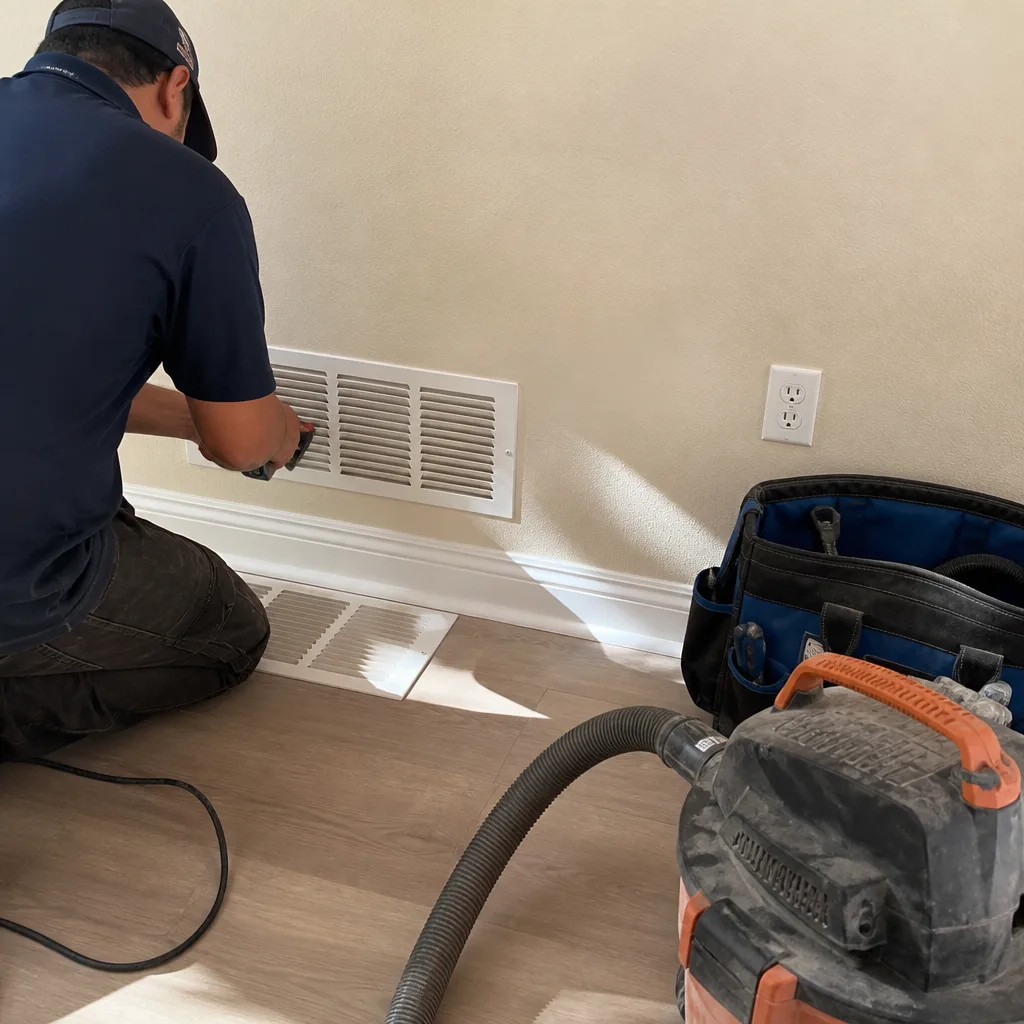
- Vacuum return and supply grilles when you see dust accumulating.
- Keep the area around return registers clear of pet hair, dust, and household debris.
- Check that registers are open and unblocked; closed registers damage system balance.
- Keep a seasonal log of wind events, filter changes, and system observations.
- Visually inspect the exposed ductwork in your attic or crawlspace for obvious damage: disconnected joints, hanging sections, visible holes, animal entry.
- Test CO detectors monthly during heating season if you have a gas furnace.
- Check the outdoor dryer vent flap each season to ensure it opens freely and isn’t packed with lint.
What requires professional equipment and training:
- Full cleaning of the supply and return trunk lines, including plenum and main distribution boxes.
- Removal of ultrafine smoke particles from supply duct surfaces. These require agitation and high-efficiency extraction; a vacuum alone will not lift them.
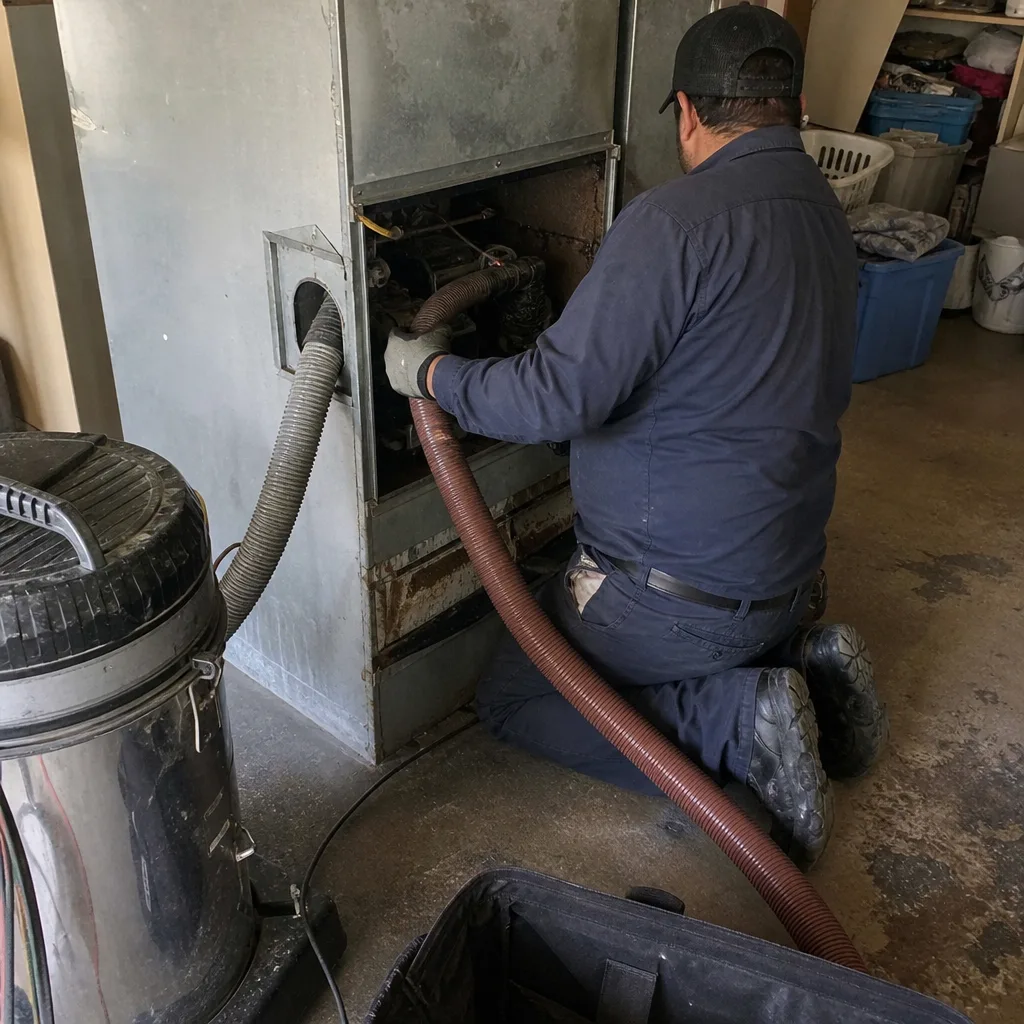
- Cleaning the blower fan, evaporator coil, and plenum interior. These sit behind the filter and accumulate whatever the filter misses.
- Duct repair: sealing joints, replacing crushed or disconnected sections, repairing torn flex duct, addressing pinhole leaks in metal trunk lines.
- Dryer vent cleaning through the full vent run, especially for runs over 10 feet or with multiple bends.
- Any inspection involving chemical or biological assessment of duct interiors.
On equipment: the difference between a professional duct cleaning and a consumer-grade attempt is not effort. It’s the tool. We run Rotobrush and Nikro systems, which are purpose-built for duct cleaning: powered agitation heads that contact the duct walls, coupled with high-volume negative-air extraction that pulls loosened debris out of the system rather than pushing it around. We also use Abatement Technologies equipment for containment and air quality control during cleaning, the same category of tools used in professional remediation work. If someone shows up at your door with a shop vacuum and a drill attachment, that’s not duct cleaning. That’s a visual effect with no air quality benefit.
Common Mistakes to Avoid
- Ignoring the spring wind season because the filter looks clean. Lancaster’s wind-driven dust is heavier than household lint, and it settles in the return trunk, not on the filter. A clean filter tells you nothing about return trunk loading. Check the return registers after wind events, not just the filter housing.
- Running a MERV-8 filter during wildfire smoke events. MERV-8 media lets the dangerous fraction of smoke, the sub-micron particles, pass directly into the supply ducts. If you can smell smoke inside your home, your current filter is not capturing the particle fraction that matters. Upgrade for the duration of the event.
- Skipping the pre-heating duct inspection because the AC worked fine all summer. Cooling mode and heating mode stress the duct system differently. Problems that were invisible in July become apparent in December. The fall window is the cheapest and easiest time to catch them.
- Assuming a musty smell from the vents means mold. In Lancaster’s dry climate, true mold growth inside ducts is less common than baked-on dust, rodent activity, or a torn flex duct pulling air from an unconditioned space. The cause matters for treatment, and guessing wrong wastes money.
- Cleaning ducts when there’s a structural problem. If a duct system is leaking, disconnected, or crushed, cleaning it is a waste of money. The contamination will return immediately. The repair has to come first, which is why we offer Air Duct Cleaning and repair as separate, sequenced services: inspect, repair, then clean.
- Expecting a standard filter to protect against Lancaster’s dust. Basic fiberglass filters are designed to protect the equipment, not the air you breathe. They catch large debris and let everything else through. In Lancaster’s spring wind, that means everything from the desert floor ends up in your duct system within weeks.
- Ignoring dryer vent maintenance until the dryer stops working. By the time the dryer refuses to dry, the vent is fully blocked or nearly so. That’s a fire risk with a long enough vent run. Lint accumulation is gradual; service the vent on a schedule, not on symptom onset.
When to Call a Professional
Some situations are obviously professional: visible mold growth, standing water in ducts, collapsed or disconnected duct sections, rodent activity. Call immediately. But there are quieter signals that you need a professional inspection, and in Lancaster they cluster around the seasonal events we’ve described. After a severe spring wind season, if you see dust streaking at return grilles or dust reappearing within days of cleaning, the system likely has heavy loading that requires professional extraction. After a wildfire smoke event, if you can still smell smoke in the house weeks later or see gray film around supply registers, the smoke particles are in the supply ducts. Before heating season, if the system hasn’t been cleaned in more than three years, or if you’ve never had a professional duct inspection, schedule one now. And any time you detect a persistent combustion-type odor during heating, shut the system off and call a professional immediately. Duct Cleaning Lancaster offers free estimates in Lancaster, and we can assess seasonal loading and recommend whether cleaning, repair, or both are needed. Call (833) 589-9773.
Frequently Asked Questions
Every 2 to 3 years for most Lancaster homes, with the interval depending on your location, occupancy, and exposure to wind and smoke. Homes near open desert or unpaved roads may need annual cleaning; homes in central Lancaster neighborhoods with no pets and no smokers can often go a full 3 years. The best schedule is driven by a seasonal log and professional inspection, not a fixed calendar.
Lancaster’s wind-driven dust is predominantly mineral: fine quartz, feldspar, and clay particles from the desert floor, mixed with road dust and construction debris. It’s denser and more abrasive than household lint, it settles faster in the return trunk, and once it’s in the system it doesn’t break down. This means it’s both easier to see on register grilles and harder on HVAC components than the organic dust common in coastal climates.
Yes, if you want meaningful particle capture. MERV-13 media is the minimum rating that removes the ultrafine particles, the 0.3 to 1 micron fraction, that dominate wildfire smoke. MERV-8 filters capture roughly 20% of particles in that range; MERV-13 captures more than 85% of the most-penetrating particle size. The filter upgrade during smoke events is the cheapest high-impact air quality measure available to a Lancaster homeowner.
It can, through two mechanisms. A heavily loaded duct system forces the blower to work against higher resistance, which increases energy draw. And if the ducts are also leaking, which we commonly find in Lancaster homes where ductwork runs through attics, the heated air escapes into unconditioned space before it ever reaches the rooms. A duct system that’s clean and sealed heats the home with less furnace runtime and less energy.
Duct cleaning removes accumulated contamination from the interior surfaces of the duct system; duct repair addresses structural problems like leaks, disconnected sections, crushed flex runs, and damaged trunk lines. If a duct system is structurally compromised, cleaning it without repairing it is wasted effort because the contamination returns immediately. We recommend an inspection first, then repair where needed, then cleaning as the final step. That’s the sequence that produces a lasting air quality result.
You should receive before-and-after photos of the duct interior, particularly the main trunk lines and plenum, showing the same views before and after cleaning. A professional duct cleaning includes powered agitation of the duct walls and high-volume negative air extraction, not just vacuuming at the registers. Ask to see the equipment before work begins; Rotobrush and Nikro systems are visually distinct from consumer vacuums, and a legitimate company will show you what they’re running. For exact pricing in your Lancaster home, call (833) 589-9773 for a free estimate.
The Bottom Line
Lancaster’s duct-care calendar is dictated by the Antelope Valley’s actual seasons: wind in spring, smoke in summer, the heating switch in late fall, and combustion monitoring in winter. Each window has a different threat profile and a different homeowner response. The home-run move for Lancaster homeowners is a simple habit stack: upgrade the filter during wind and smoke seasons, keep a written log of events, inspect the visible parts of the system regularly, and schedule professional inspection at the two highest-value moments: late May, after the wind season, and late October, before the heat comes on. Do that consistently, and your duct system stays cleaner, your HVAC runs more efficiently, and you stop paying to recirculate last season’s dust. For year-round maintenance tips, explore more guides & resources.
Written by the team at Duct Cleaning Lancaster, serving Lancaster since 2014.
See the difference
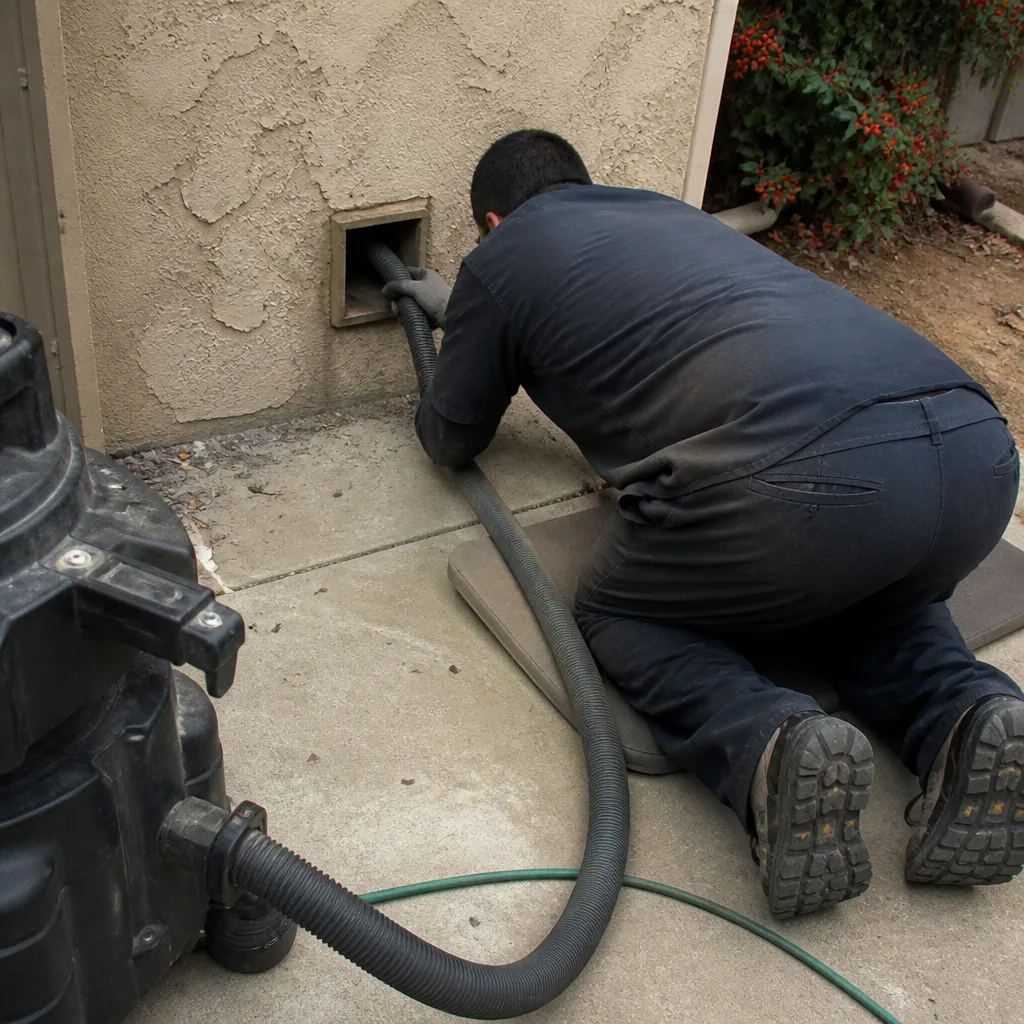 Before
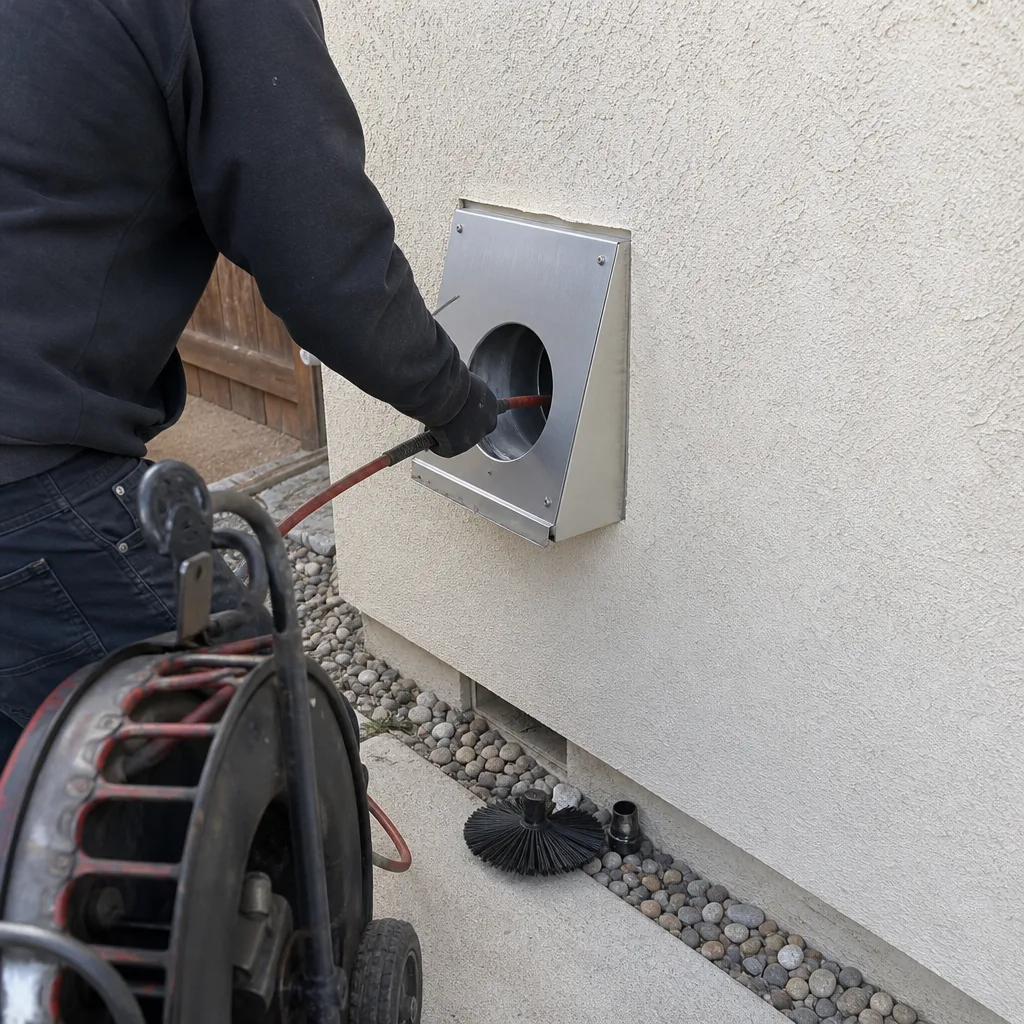 After
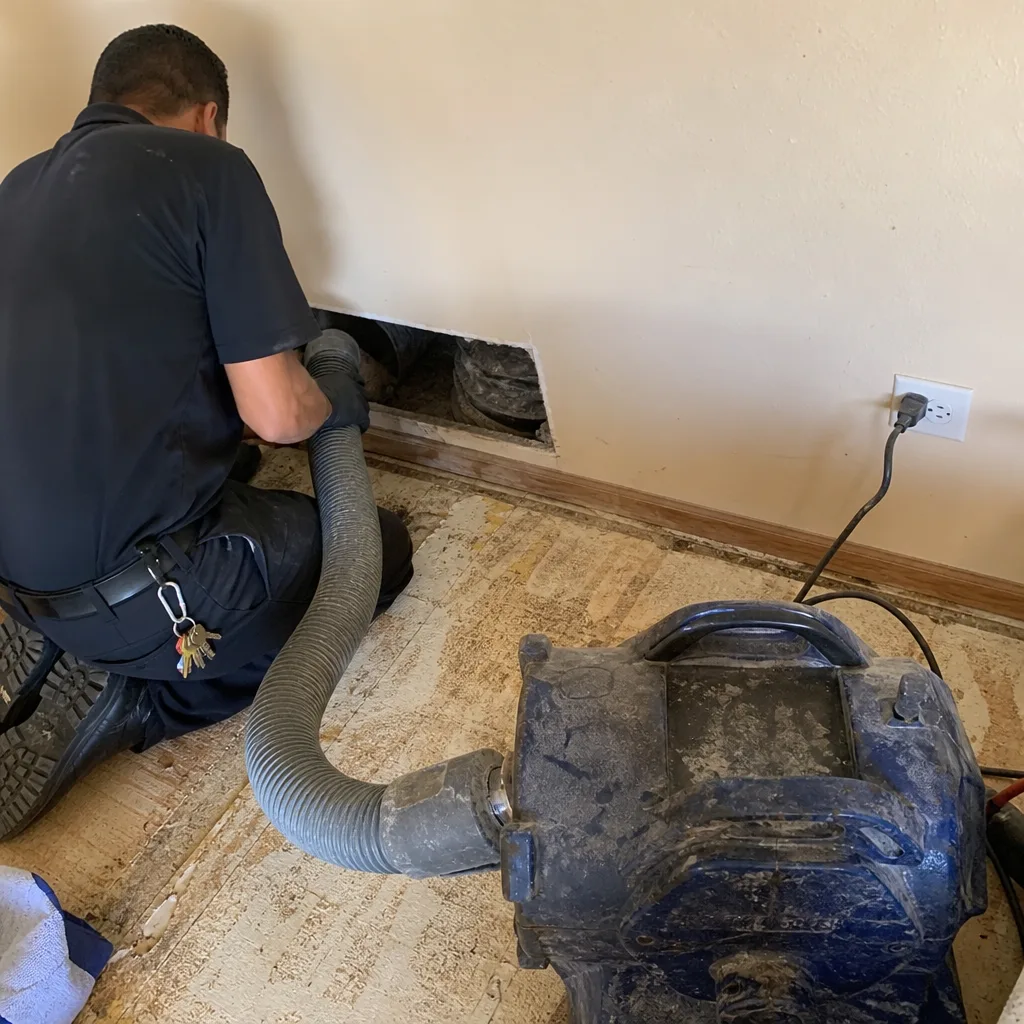 Before
 After
 Before
 After