
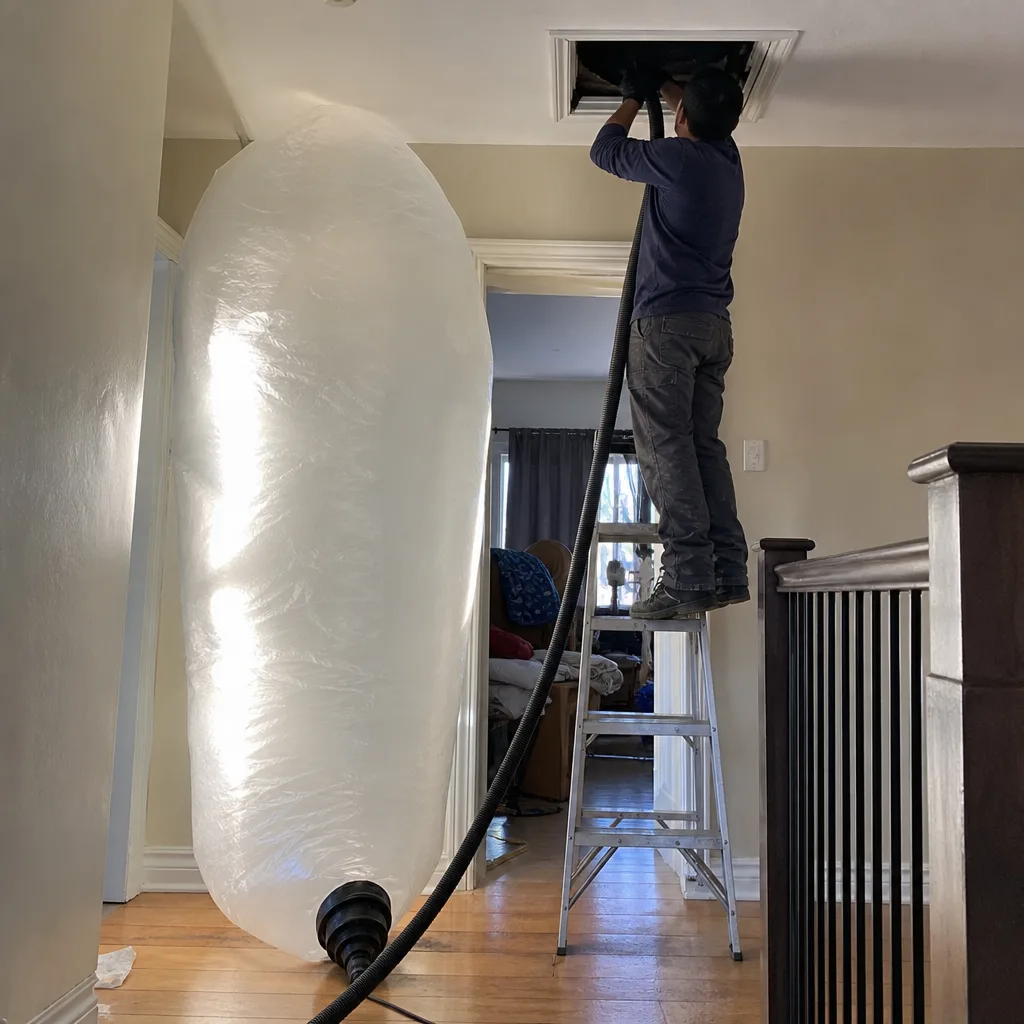
Last updated November 2, 2026
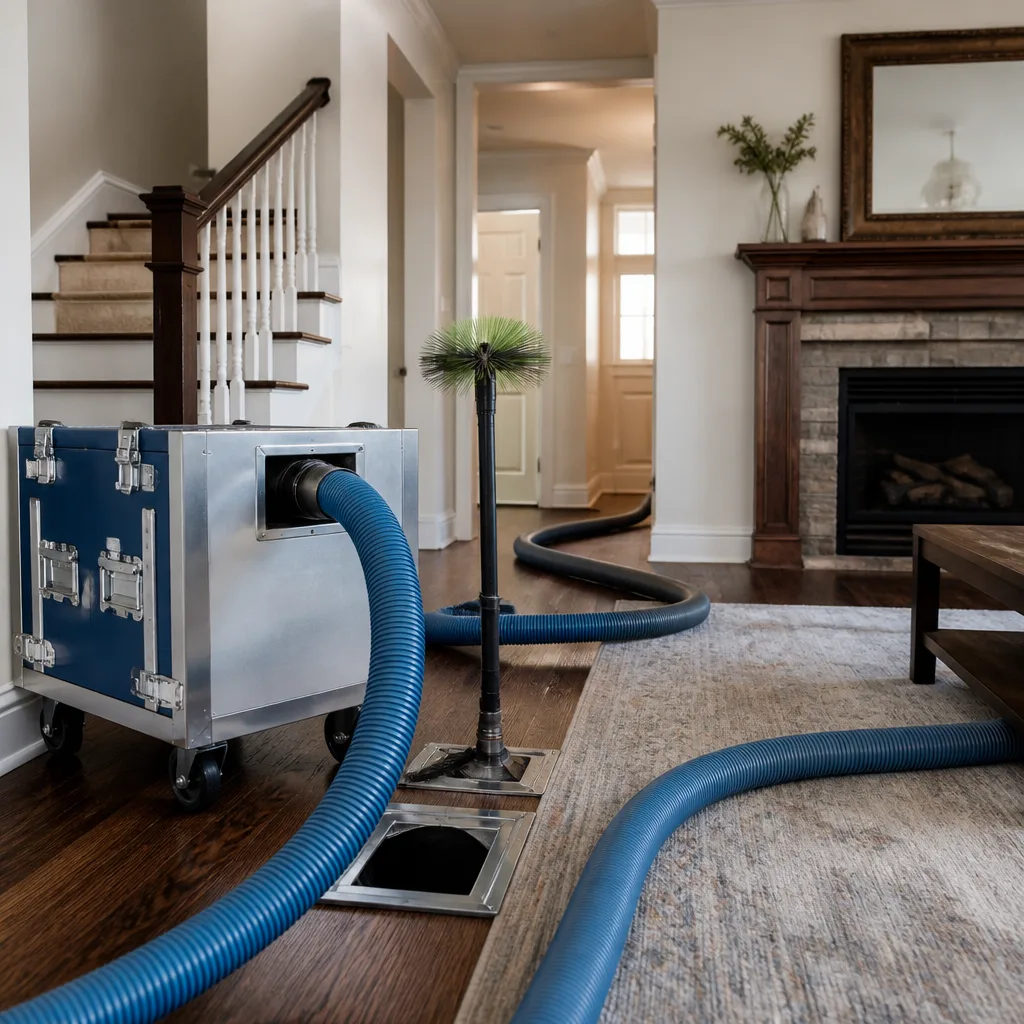 Whole-home duct cleaning
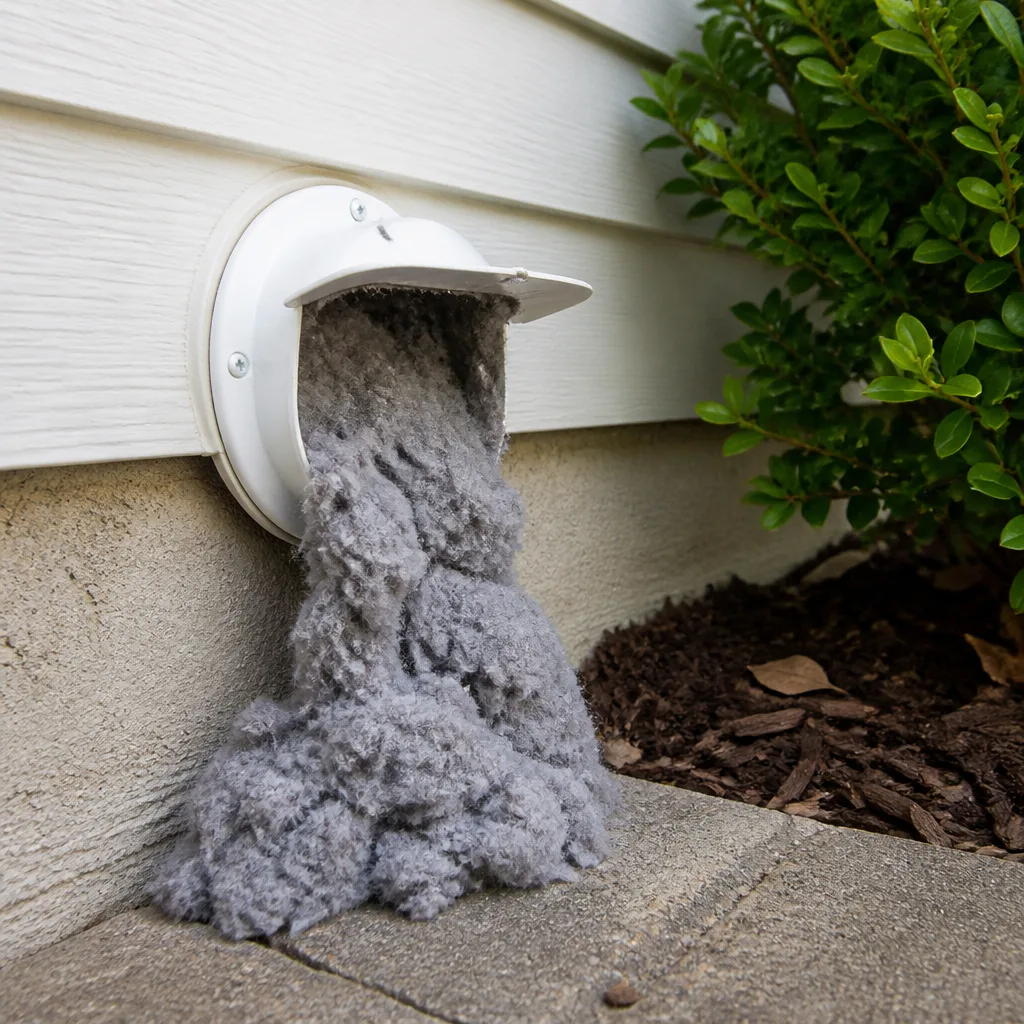 Dryer vent cleaning
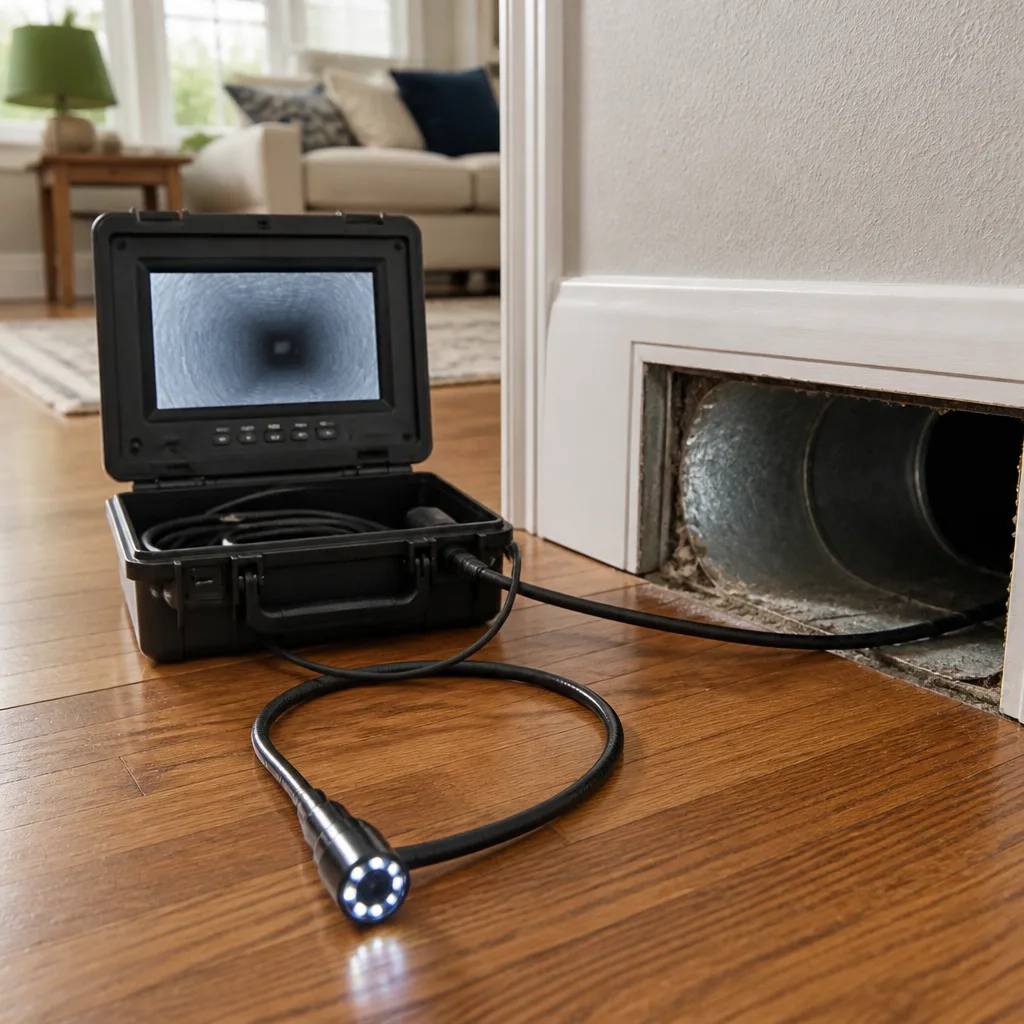 Camera inspection
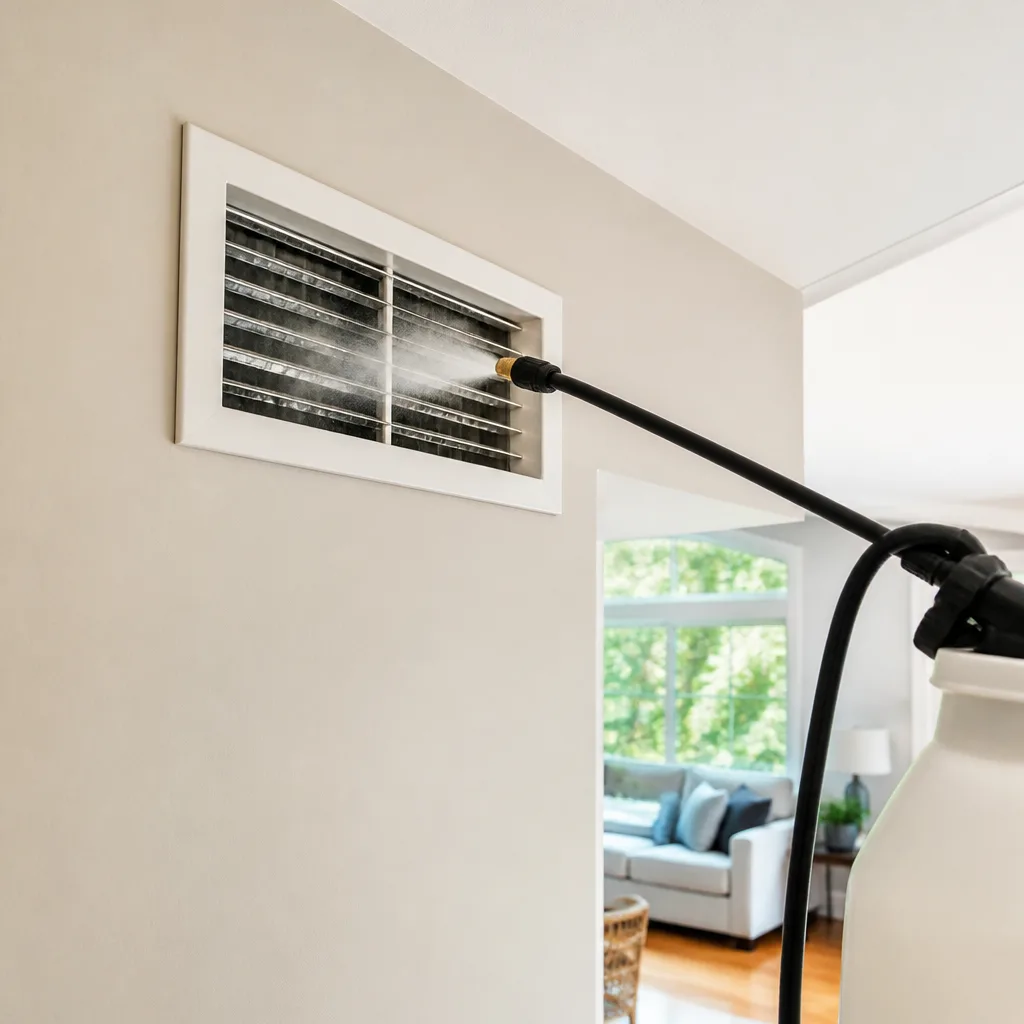 Sanitizing & deodorizing
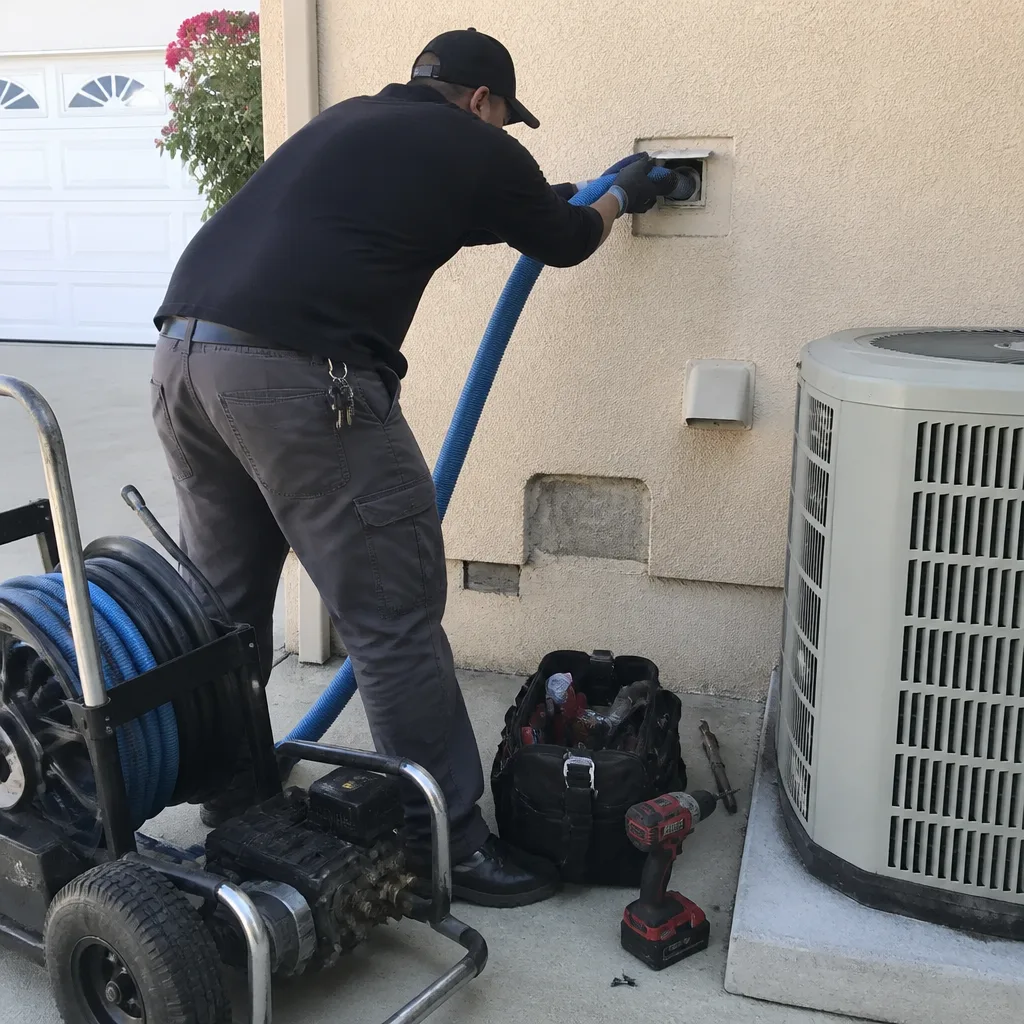
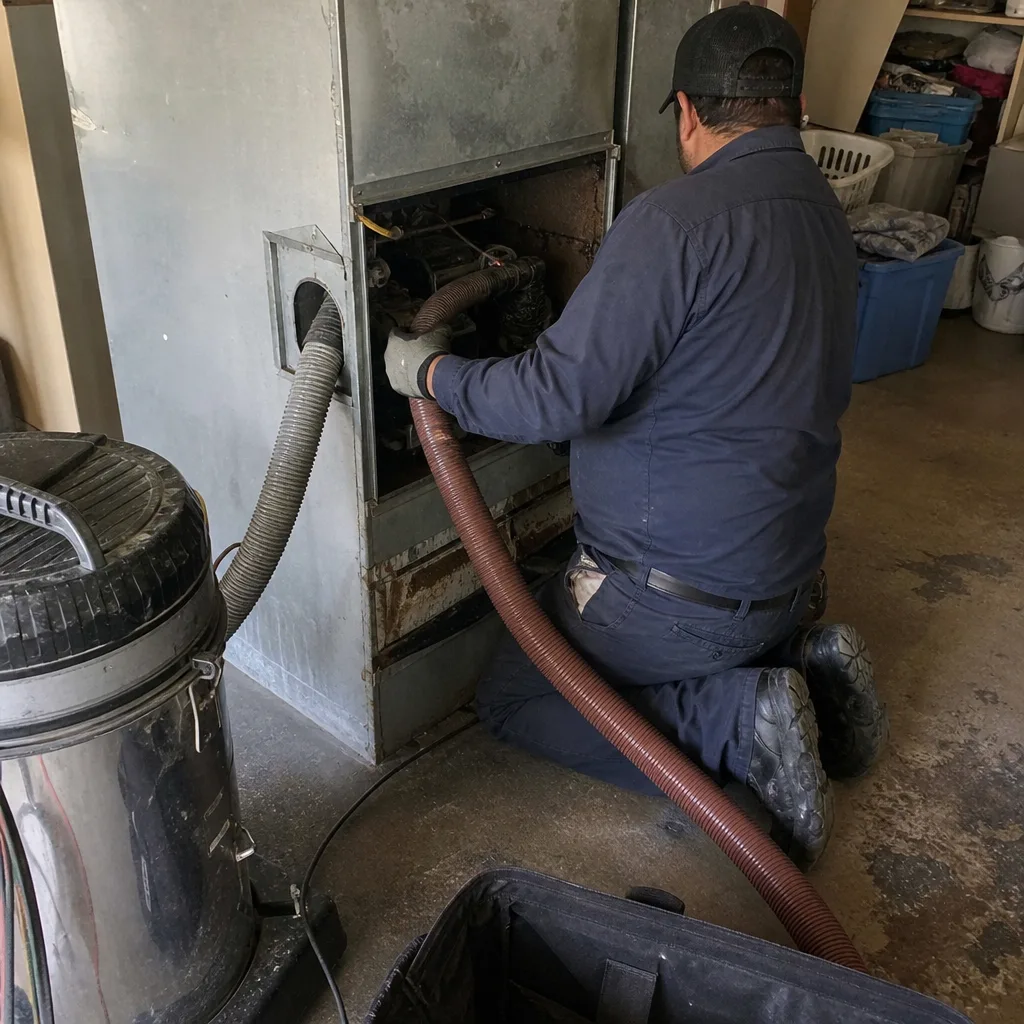
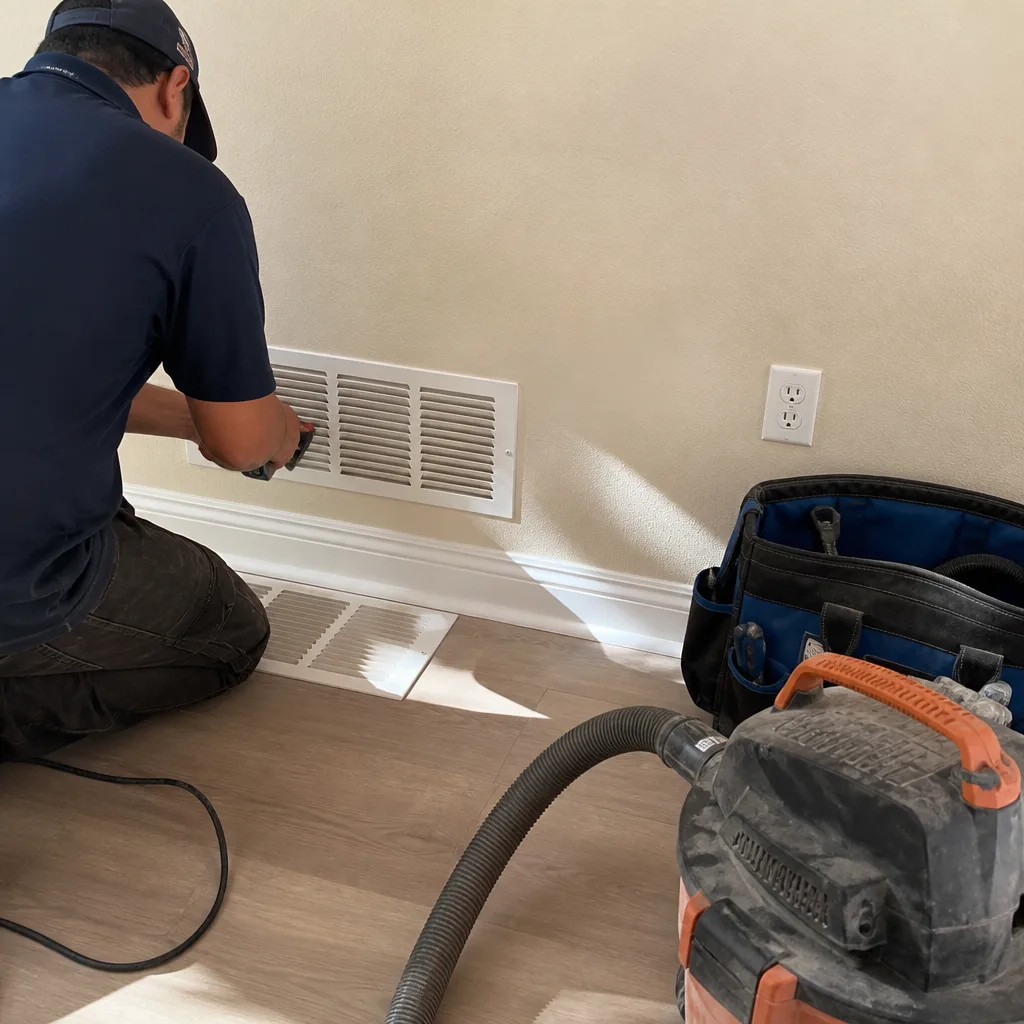
Whole-system duct and dryer vent check with before-and-after photos - you see exactly what came out of your vents
That "$99 whole-house special" is a bait ad - the real number appears once they are in your hallway, or the "clean" is a shop-vac at the register. We photograph the inside of your ducts before and after instead.
How to Hire an Air Duct Cleaning Contractor in Lancaster: A Step-by-Step Guide
The $49 duct cleaning special that keeps showing up in Lancaster mailers has a business model, and it isn’t cleaning your ducts. It’s charge almost nothing to get a van in your driveway, then manufacture a problem once the technician is inside your home. You’ll hear about “mold blooms” that need a $400 antimicrobial fog, or “severe buildup” requiring an upgraded package that doubles the invoice. This guide – and our companion on Air Duct Cleaning Cost Breakdown: The Lancaster Homeowner’s Reference for 2026 – breaks down exactly how to vet a duct cleaning contractor in Lancaster before they ever touch your system, so you pay for an engineered clean, not theater.
Quick Answer
To hire an Air Duct Cleaning contractor in Lancaster, verify the company uses truck-mounted or high-CFM portable vacuum systems with true negative air pressure, ask for NADCA membership and proof of ACR-standard compliance, demand a written scope of work with itemized inclusions before signing, and require video inspection footage before and after the job. Avoid any bid under $300 for a whole-home cleaning in Lancaster, because contact-only methods that leave 60 to 70 percent of compacted particulate behind are the industry’s dirty secret.
Styles & brands we work with
- Whole-home duct cleaning
- Dryer vent cleaning
- Camera inspection
- Sanitizing & deodorizing
Table of Contents
- Why Lancaster Is Different for Duct Cleaning
- The Real Cost of Duct Cleaning in Lancaster
- Step 1: Ask About Equipment Before You Ask About Price
- Step 2: Verify NADCA Membership and ACR Standards
- Step 3: Demand a Written Scope of Work
- Step 4: Evaluate Before-and-After Documentation Standards
- Step 5: Recognize the Red Flags in Bids and Sales Tactics
- Step 6: Verify the Clean After the Crew Leaves
Why Lancaster Is Different for Duct Cleaning
Lancaster sits in the Antelope Valley, where the high desert does two things relentlessly: blows fine alkaline dust and cycles temperatures hard enough to run HVAC systems most months of the year. That combination means duct systems here accumulate a specific kind of particulate: extremely fine, densely packed, and mixed with the lint and skin cells that glue it to duct walls. A surface vacuum pass doesn’t move it. It requires agitation tools and genuine negative-air extraction to break the bond and remove the material.
We’ve opened ducts in Lancaster homes that had been “cleaned” six months earlier by a coupon operation, and found a half-inch of compacted dust still lining the trunk line. The homeowner paid for a service that didn’t happen in any meaningful sense. This is not a hypothetical. The low-bid model depends on the fact that most homeowners never look inside their ducts before or after the job. They can’t verify the work, so they pay and move on.
The HVAC load in Lancaster also means repair issues surface more often. Cracked duct runs, separated joints, and crushed flex duct are common in older Antelope Valley homes. A contractor who only cleans will leave those defects in place, and your freshly cleaned system will re-contaminate within months. That’s why repair capability matters in this market specifically.
The Real Cost of Duct Cleaning in Lancaster
A legitimate whole-home air duct cleaning in Lancaster typically runs between $400 and $900 for a standard single-family residence with up to about 15 vents. Larger homes, dual-zone systems, or systems with significant contamination run higher. That’s the honest range for a contractor using truck-mounted extraction equipment, running full negative air pressure, and spending three to five hours on the job.
The $49 or $99 specials you see are not the same service at a discount. They’re a different service entirely. These operations run a portable vacuum attached to one vent, block the others, and spend 45 minutes in your home. They clean the first few feet of ductwork near each register and call it done. The compacted material in the trunk line stays exactly where it was. The model works because the low price gets them in the door, and the upsell conversation gets them paid.
Here’s what a fair Lancaster quote should include:
- Full system coverage: supply and return ducts, trunk lines, all branch runs, supply plenum, return plenum, blower compartment, and coils if accessible.
- Agitation tools: rotary brushes, air whips, or skipper balls driven by compressed air to dislodge compacted particulate from duct walls.
- Negative air extraction: a vacuum system pulling 2,000-plus CFM while the system is sealed, so debris exits the home rather than recirculating.
- Time on site: three to five hours for a standard home. Anything under two hours signals a contact-only pass.
- Documentation: video inspection before and after, with the camera showing duct interiors, not register grilles.
When you evaluate quotes in Lancaster, ask what specifically is being cleaned. If the answer is “all your vents,” that’s a red flag. Vents are the registers. Ducts are the system. You want the system.
Step 1: Ask About Equipment Before You Ask About Price
Price is the wrong first question. Equipment is the right one, because equipment determines whether the service is physically capable of cleaning a duct system. In Lancaster, where fine desert dust compacts into a dense layer, the difference between the right tools and the wrong tools is the difference between a clean system and a paid-for visit.
Here’s what to ask and what the answers mean:
- “What CFM rating is your vacuum system?” A legitimate duct cleaning rig pulls at least 2,000 cubic feet per minute at the point of contact. Truck-mounted systems built by companies like Nikro or Rotobrush typically pull 8,000 to 14,000 CFM. A portable unit rated under 1,000 CFM cannot create the air velocity needed to pull compacted particulate from a trunk line. It’s a surface pass, nothing more.
- “Is your system truck-mounted or portable?” Truck-mounted systems generate significantly more suction and keep the collection outside your home. High-quality portable units exist and can be effective for smaller jobs, but they need honest CFM ratings and proper HEPA filtration. Ask which specific unit they run. If they can’t name the model, they’re likely using a repurposed shop vacuum.
- “What agitation method do you use?” Vacuum pressure alone doesn’t remove adhered particulate. The contractor should describe rotary brushes, air whips, or compressed-air skipper balls that physically break the bond before extraction. A contractor who says “the vacuum does all the work” is describing a contact-only clean.
- “Do you use HEPA filtration on the exhaust side?” Any air leaving the vacuum and returning to your home environment should pass through HEPA filtration. Without it, the system just aerosolizes fine particulate around the work area.
When the equipment answers check out, the price conversation becomes meaningful. When they don’t, no price is low enough. We run Rotobrush and Nikro equipment on our Lancaster jobs because these are purpose-built duct cleaning systems, not general-purpose vacuums with attachments. The same logic applies to Abatement Technologies equipment, which we use for containment and air quality control during jobs where significant contamination or repair work is involved. That’s the standard to look for.
Step 2: Verify NADCA Membership and ACR Standards
NADCA, the National Air Duct Cleaners Association, publishes the industry’s ACR standard: Assessment, Cleaning, and Restoration of HVAC Systems. Any contractor claiming professional credentials should be able to show a current NADCA membership and explain what the ACR standard requires. Membership alone doesn’t guarantee quality, but it’s a meaningful filter. The standard has teeth.
The ACR standard specifies that cleaning must include:
- All supply and return ductwork, including branch runs and trunk lines
- All supply and return plenums
- The blower motor, housing, and assembly
- Evaporator coils, drip pan, and condensate drain
- Registers and grilles
- The air filter housing
What the standard allows contractors to skip is equally important. Access panels that cannot be created without damaging the system may be documented and excluded, but the contractor must explain why. Insulated flex duct that’s severely degraded may be replaced rather than cleaned, which requires the contractor to offer repair or replacement, not just cleaning. A contractor who glosses over what they’re excluding is not honoring the standard.
Ask directly: “Are you a NADCA member, and can I see your membership verification?” Then ask: “Does your scope of work follow ACR 2021 or current standard?” A legitimate operator answers both without hesitation. A contractor who shifts to “we’ve been doing this for years and know what we’re doing” may still be competent, but they’ve just declined to verify credentials that cost them a few hundred dollars a year to maintain. That tells you something about how they’ll handle your job.
Step 3: Demand a Written Scope of Work
A verbal agreement is not a scope of work. Before any contract is signed, the contractor should provide a written document that itemizes exactly what will be cleaned, what equipment will be used, how long the job will take, and what the total price includes. This is where legitimate operators separate from coupon operations, because a written scope is legally enforceable and prevents the classic “that wasn’t included” upsell.
Three clauses that are red flags if missing:
- Itemized inclusions. The scope must list supply ducts, return ducts, trunk line, plenums, blower compartment, coils, registers, and filter housing. If it says “complete duct cleaning” without itemization, the contractor has room to skip components and claim they weren’t included.
- Total price with no variables. The scope should state the final price for the work described. Language like “additional charges may apply based on condition” is reasonable only if the conditions are defined. Open-ended “we’ll see when we get in there” pricing is the upsell engine.
- Documentation requirement. The scope should promise video inspection before and after. If documentation isn’t written into the agreement, you have no way to verify the work and no leverage if it’s done poorly.
In Lancaster specifically, we recommend asking about dryer vent cleaning while you’re getting a duct scope. The Antelope Valley’s dry air and hard-working HVAC systems mean dryer vents accumulate lint faster than coastal climates, and a clogged dryer vent is a fire hazard that a duct-only contractor won’t address. A full-scope duct specialist includes Dryer Vent Cleaning in Acton and the surrounding Antelope Valley as a standard companion service, not an afterthought.
Step 4: Evaluate Before-and-After Documentation Standards
Documentation is where low-bid operations fall apart, because honest video evidence doesn’t lie and they know it. The difference between real verification and theater comes down to the tool used and what the footage actually shows.
Video inspection footage captured with a duct camera pushed through the trunk line and branch runs is evidence. It shows the interior surfaces of your ducts before cleaning, with visible particulate accumulation, and it shows the same surfaces after, with the material gone. If the contractor runs a camera through the system and shows you the footage on a screen, you have verification.
Photos taken with a phone flashlight pointed into a register are theater. A register photo captures the first six inches of ductwork, which any vacuum can make look clean. It tells you nothing about the 30 feet of trunk line behind it. A contractor who offers only register photos is either unskilled or deliberately obscuring the work. Neither is acceptable.
Ask this question before you sign: “Will you provide video inspection footage of the ducts before and after, and can I watch it?” A legitimate contractor says yes without hesitation. A coupon operation will hedge, offer “photos,” or claim the footage “isn’t necessary because you’ll feel the difference.” You can’t feel the difference in 25 feet of branch duct behind a wall. Demand the footage.
Step 5: Recognize the Red Flags in Bids and Sales Tactics
The low-bid model in Lancaster follows a predictable script. Recognizing the pattern is the single most effective defense against paying hundreds of dollars for a cosmetic cleaning.
- Unsolicited coupons and aggressive direct mail. The $49 special arrives in your mailbox every few weeks. Real duct cleaning costs several hundred dollars for a reason: equipment, labor, and time. A price that can’t cover the fuel to get to your home is a loss leader designed to get a salesperson in your living room, not a legitimate offer.
- “Free inspection” with a mandate to sell. A free inspection is fine if it’s a pre-quote walkthrough. It’s not fine if the inspector arrives with a tablet full of stock photos of “mold” and a rehearsed presentation about health risks. The inspection becomes a sales pitch, and the price quoted initially evaporates.
- The mold upsell. This is the big one in Lancaster. A technician opens a duct, shows you some dark dust, and announces “mold.” The treatment costs $400 to $800, takes 15 minutes, and consists of a fogger spraying an antimicrobial that does nothing to address the actual source. If real microbial growth is present, it needs lab confirmation and a remediation protocol, not a fogging wand. Ask for the lab report. There won’t be one.
- Per-vent pricing. Some operations price by the vent. You have 14 vents, they charge $35 per vent, and the math works out to $490 for a surface pass that took 45 minutes. Legitimate contractors price by the system because they’re cleaning the whole system, not waving a brush at registers.
- Pressure to sign today for a “special price.” A legitimate contractor doesn’t need urgency pricing. The price is the price. If the number drops by 40 percent when you hesitate, the original number was fiction.
Step 6: Verify the Clean After the Crew Leaves
Once the contractor finishes, you should be able to confirm the work happened. This is straightforward if you’ve already demanded video documentation in the scope. Watch the after footage. It should show the same duct sections as the before footage, with the material gone. If the after footage skips the trunk line or shows only register ends, push back.
Beyond video, here’s what else to check:
- Registers and grilles: These should be clean, with no visible dust on the louvers. They should also be properly reinstalled, not bent or forced into place.
- Furnace area: The floor around the HVAC unit should be clean. A professional crew lays down protection and cleans up after themselves. Dust spread across your utility room suggests careless work.
- Filter replacement: Ask if the filter was changed. A cleaned system with a clogged filter is a system that’s already re-contaminating. If they didn’t change it or flag it for you, the job isn’t complete.
- System operation: Turn the system on and listen. Airflow should be noticeably stronger than before. Reduced airflow after cleaning suggests a dislodged duct connection or other repair issue that needs attention.
If the contractor identified structural issues during the job, like separated joints, crushed flex duct, or damaged runs, those need repair for the cleaning to hold any value. We regularly encounter this in Lancaster. A system cleaned without addressing a separated return duct will pull attic dust back in within weeks. That’s why Air Duct Repair in Acton and Lancaster is part of what we do, not a separate contractor you have to find afterward. The cleaning and the repair happen in the same visit, so the work actually lasts.
What a Legitimate Lancaster Duct Cleaning Job Looks Like
A properly executed duct cleaning in Lancaster follows a defined sequence, and knowing the sequence helps you evaluate whether a contractor is working to standard or rushing through a surface pass.
- System assessment. The technician inspects the full duct system, identifies access points, checks for visible damage, and notes the blower compartment condition. This assessment determines the cleaning approach and flags repair needs before cleaning begins.
- Containment setup. The work area is protected. Floor coverings go down, and the system is sealed so negative air pressure pulls from the ducts, not the living space. Abatement Technologies equipment serves this exact purpose: creating a controlled work environment during the job.
- Negative air connection. The vacuum system connects to the supply and return sides. In truck-mounted systems, the vacuum unit outside the home pulls through the system at high CFM while the ducts remain sealed.
- Mechanical agitation. Rotobrush or Nikro agitation tools travel through each branch run and the trunk line, breaking the bond between compacted particulate and duct surfaces. The loosened material is immediately pulled into the vacuum stream and out of the home.
- Component cleaning. The blower compartment, blower wheel, evaporator coil if accessible, and filter housing receive direct cleaning. These components hold significant particulate and are part of the ACR standard.
- Post-cleaning inspection. The camera goes back through the system. You see the before and after footage side by side. The work is verifiable or it isn’t.
- Repair recommendations. If structural issues were identified during the assessment or cleaning, the contractor presents them with photographic evidence and provides repair options. We repair what others leave behind, because a clean duct with a hole in it doesn’t stay clean.
This sequence typically runs three to five hours for a standard Lancaster home. Anything dramatically shorter is a shortcut, and the thing being shortened is your clean.
See the difference
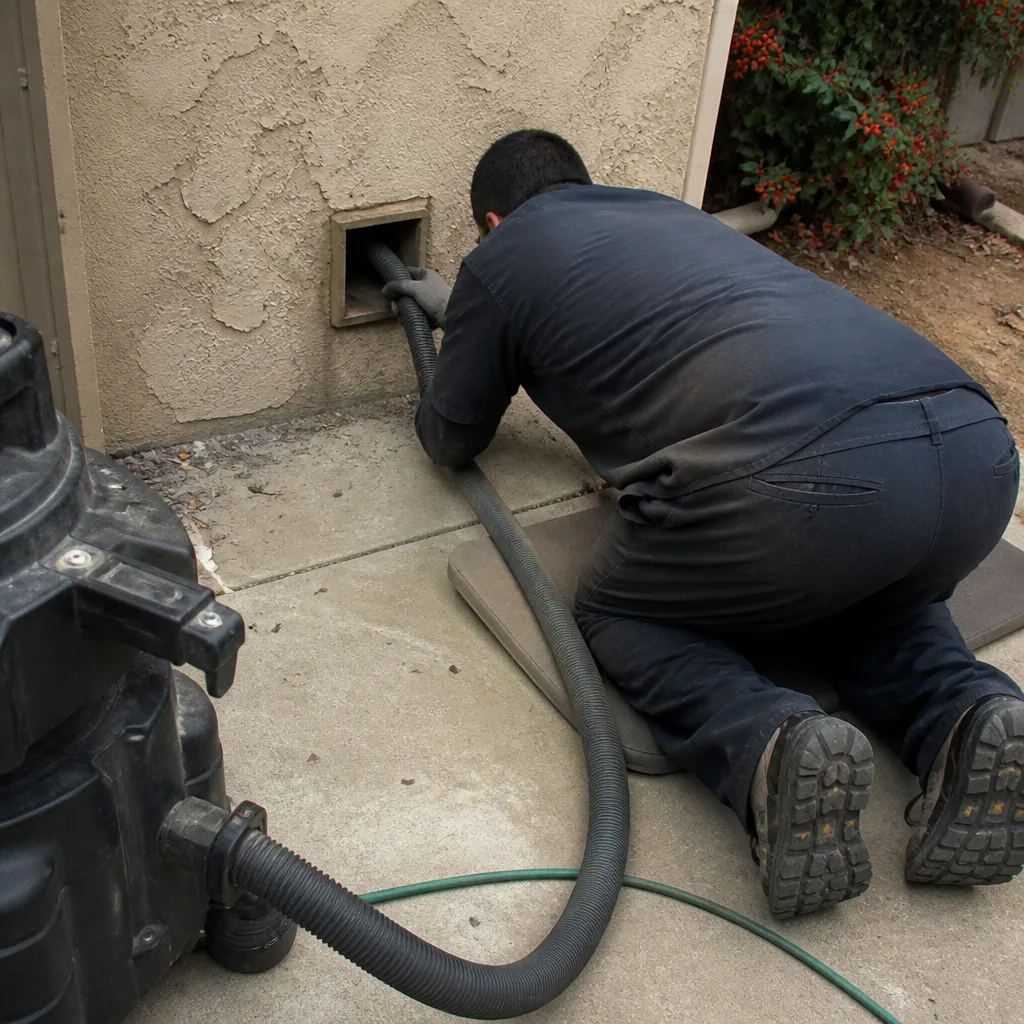 Before
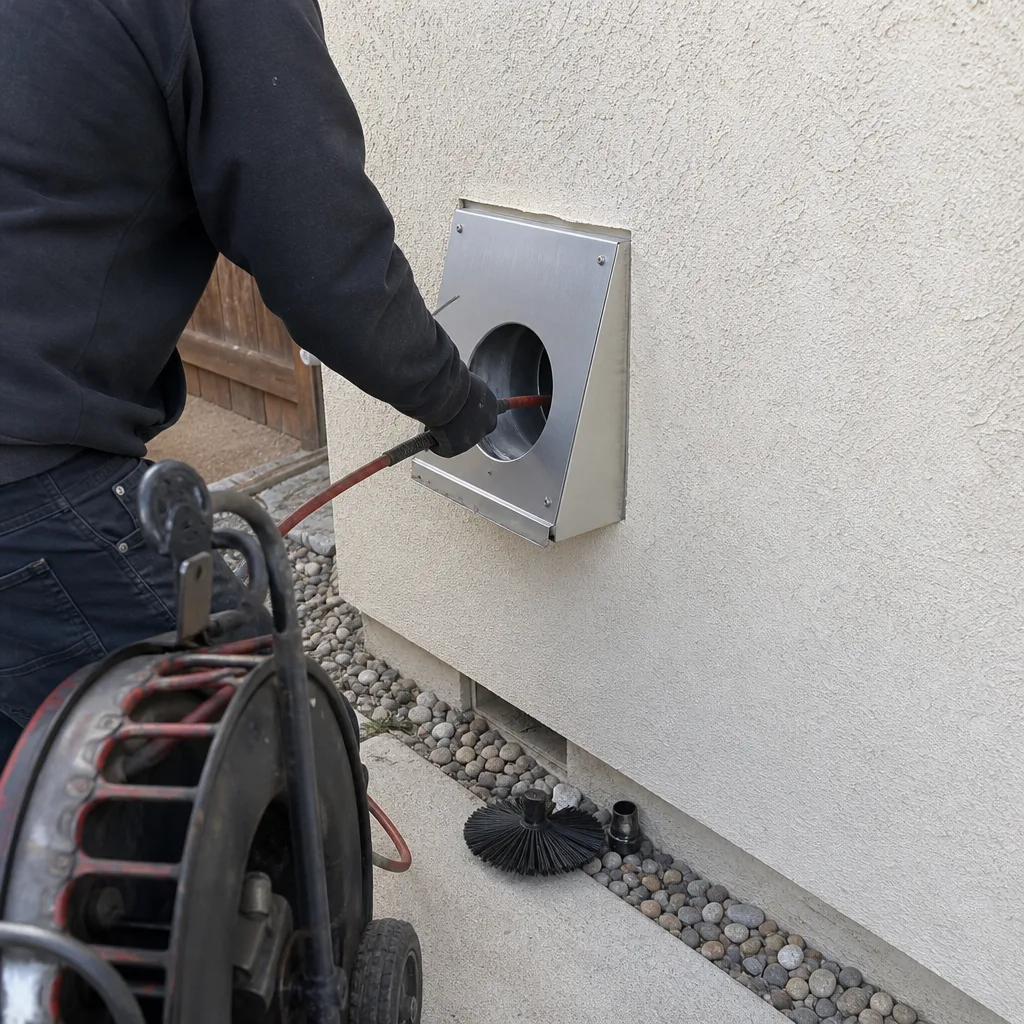 After
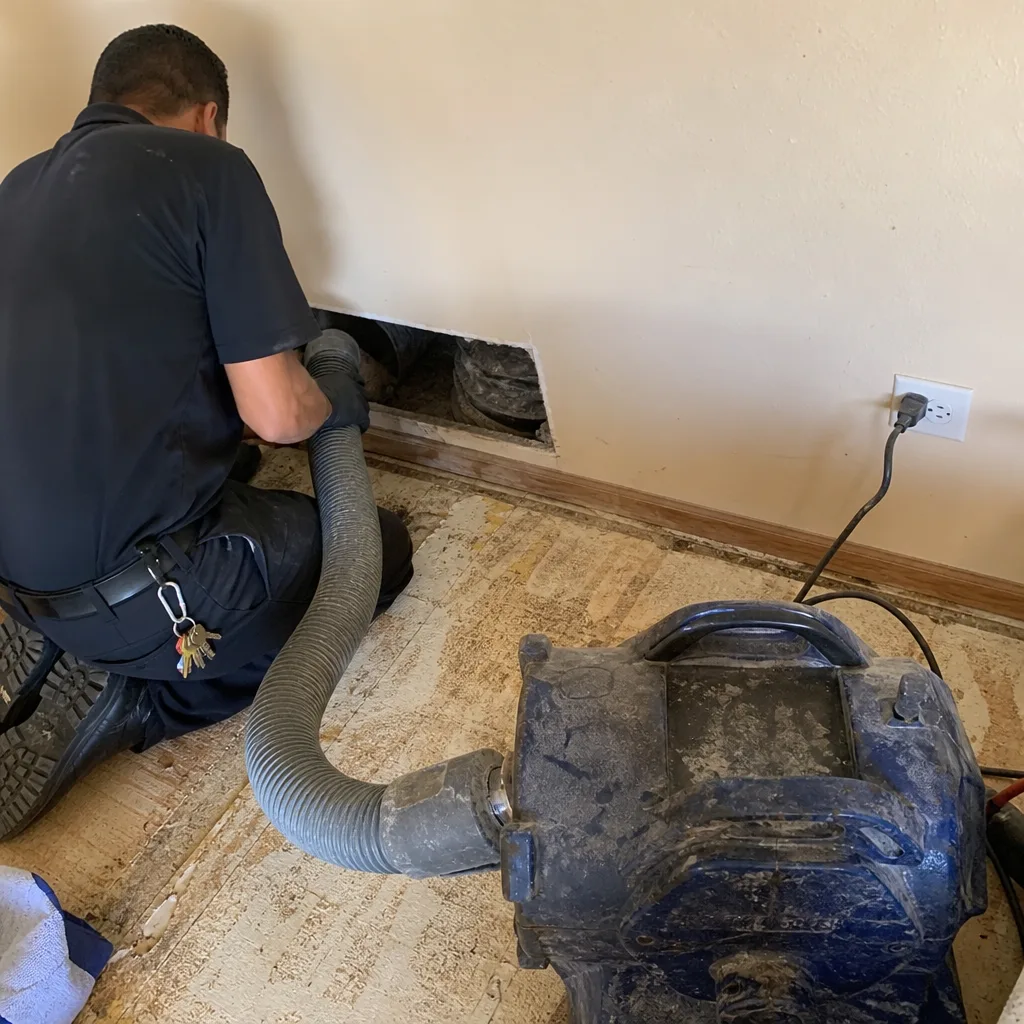 Before
 After
 Before
 After
What to Know About Filters and Whole-Home Air Quality
Duct cleaning is one component of a broader air quality picture, and a contractor who understands that picture adds value beyond the vacuum pass. The most common question we hear from Lancaster homeowners after a cleaning is what they should do next to keep the system clean. The answer starts with filtration.
We work with Honeywell and Aprilaire filtration products regularly because these brands make the filtration hardware that actually holds up in high-desert conditions. A basic one-inch fiberglass filter catches large particles and lets the fine dust pass through. A media filter with a higher MERV rating, installed properly in a sealed filter housing, captures far more of the fine particulate that would otherwise accumulate in your ducts. When we clean a system and the homeowner upgrades to a Honeywell or Aprilaire media filter, the duct system stays visibly cleaner longer. That’s not marketing, it’s physics: capture the particulate before it enters the ductwork and the ductwork doesn’t become a reservoir.
The sequence matters. Clean the ducts first, then install the upgraded filter. If you upgrade the filter before cleaning, the new filter catches what the dirty ducts release for the first few weeks and clogs prematurely. Clean first, filter second. That’s the order. For homeowners in Lancaster looking for the full scope, Air Duct Cleaning in Acton and the broader Antelope Valley follows the same sequence: system assessment, engineered clean, filter check, dryer vent service if needed, and repair work where the assessment found damage.
Common Mistakes to Avoid When Hiring in Lancaster
- Choosing the lowest bid without equipment verification. The $299 whole-home cleaning is almost always a contact-only pass. You’ll pay again in six months for a real cleaning, or you’ll live with the particulate that never left. Ask about CFM and agitation tools before accepting any price.
- Accepting register photos as proof of work. A phone photo of a clean register shows you nothing about the 30 feet of duct behind it. Demand video footage through the trunk line and branch runs before and after.
- Falling for the mold upsell without lab confirmation. Dark dust is not mold. If a technician claims mold, ask for a lab report. Real microbial growth requires lab testing and a defined remediation protocol, not a $500 fogging wand.
- Signing a contract without a written scope of work. Verbal promises vanish the moment a dispute arises. A written scope with itemized inclusions and a fixed price is your only real protection.
- Skipping dryer vent service because it’s “not included.” In Lancaster’s dry, hard-working HVAC climate, dryer vents clog faster than most homeowners realize. If your duct contractor doesn’t offer it, find one that does. A separate dryer vent company means two visits, two crews, and two invoices for work that should be one appointment.
- Cleaning ducts without addressing structural damage. A duct system with separated joints or crushed flex runs will re-contaminate within weeks no matter how thoroughly it’s cleaned. Repair capability is not optional in older Lancaster homes. If the contractor can’t repair what they find, you’ll need a second contractor to finish the job.
- Upgrading filters before cleaning the system. The new filter clogs within weeks as it catches everything the dirty ducts are releasing. Clean the system first, then address filtration. The order is not a subtle preference; it’s the only sequence that works.
When to Call a Professional
The right time to call a duct cleaning contractor in Lancaster is before you notice a problem, but certain signs make the call urgent. Visible dust accumulating on registers within days of cleaning your home signals a duct system that’s actively distributing particulate. Reduced airflow from some registers but not others suggests a blockage or crushed duct section. A burning smell from the HVAC system that persists after filter changes can indicate dust buildup on the heat exchanger or blower components. Rodent activity in the attic or crawlspace means the duct system needs inspection and likely cleaning and repair. And any home in the Antelope Valley that hasn’t had its ducts cleaned in five or more years is due, because the fine desert dust that defines Lancaster compacts into a layer that standard HVAC maintenance doesn’t touch.
Duct Cleaning Lancaster offers free estimates in Lancaster and the surrounding Antelope Valley. We’ll assess your system, provide a written scope of work, and show you video footage of your ducts before any work begins. Call (833) 589-9773 to schedule. You can also visit the Duct Cleaning Lancaster home page to learn more about our full service scope.
Frequently Asked Questions
Air duct cleaning in Lancaster typically costs between $400 and $900 for a standard single-family home with up to about 15 vents. The price depends on system size, accessibility, and contamination level. Any bid under $300 for a whole-home cleaning is almost certainly a contact-only pass that leaves compacted particulate in the trunk line. Call (833) 589-9773 for an exact quote, and we’ll provide a written scope before any work begins.
Cheap duct cleaning quotes are cheap because they’re a different service, not a discount. A $99 special typically covers a portable vacuum visit that spends under an hour in your home and cleans the first few feet of duct near each register. The compacted material in the trunk line stays in place. The low price exists to get a technician in the door for an upsell conversation. Legitimate Lancaster duct cleaning costs several hundred dollars because the equipment, labor, and time required to clean a full duct system are real costs that cannot be discounted to double digits.
You know the work was done when the contractor provides video inspection footage of your ducts before and after the cleaning, with the camera traveling through the trunk line and branch runs rather than sitting at the register openings. Before footage should show visible accumulation. After footage should show the same surfaces clean. Register photos taken with a phone flashlight are not evidence, because they capture only the first few inches of ductwork. Demand video documentation in the written scope of work before signing anything.
In Lancaster’s high-desert climate, air ducts typically need professional cleaning every three to five years, though homes with pets, smokers, recent construction, or dirt landscaping may need service more frequently. The fine alkaline dust that defines the Antelope Valley compacts into a dense layer that standard HVAC filter changes don’t address. A good indicator is visible dust on registers and surfaces within days of housekeeping, which signals that the duct system is actively distributing stored particulate. The honest answer for most Lancaster homes is every three to four years.
Air duct cleaning is worth it regardless of whether anyone in the home has allergies, because the primary benefits extend beyond allergen reduction. A clean duct system improves HVAC efficiency by removing the insulating layer of particulate that reduces heat transfer and airflow. It reduces the volume of dust that settles on surfaces throughout the home. And in Lancaster specifically, where fine desert dust accumulates quickly, cleaning extends the life of your HVAC components by reducing the load on the blower motor and preventing premature coil contamination. The return on investment is mechanical and financial, not just health-related. Call (833) 589-9773 for a free estimate and we’ll walk you through your system’s specific condition.
Yes. Dryer vent cleaning and duct cleaning are separate systems, but they share the same access points and the same accumulation conditions. In Lancaster’s dry climate, dryer vents fill with lint faster than in coastal areas because the air is dry and the dust load is high. A clogged dryer vent is a fire hazard, not just an efficiency problem, and a duct-only contractor will leave it untouched. A full-scope duct specialist handles both in the same visit, saving you a second appointment and a second service call fee. We include dryer vent service as a standard companion to duct cleaning, not an upsell.
The Bottom Line
Hiring a duct cleaning contractor in Lancaster comes down to verification. Verify the equipment: high-CFM vacuum systems with mechanical agitation, not repurposed shop vacuums. Verify the credentials: NADCA membership and ACR-standard compliance, not vague claims of experience. Verify the scope: itemized inclusions with a fixed price, not verbal promises with open-ended variables. Verify the work: video inspection footage through the trunk line and branch runs, not register photos from a phone. And verify the follow-through: repair capability for structural defects, dryer vent service for fire prevention, and filtration recommendations that keep the system clean. The $49 specials will keep arriving in Lancaster mailboxes, but now you know what they’re actually selling. For more guides & resources on protecting your home, see our blog. You’re not buying it.
Ready to schedule? Contact (833) 589-9773 for a free estimate. We’ll assess your system, show you what’s inside, and give you a written scope of work before anything is signed.
Written by the team at Duct Cleaning Lancaster, serving Lancaster since 2014.