
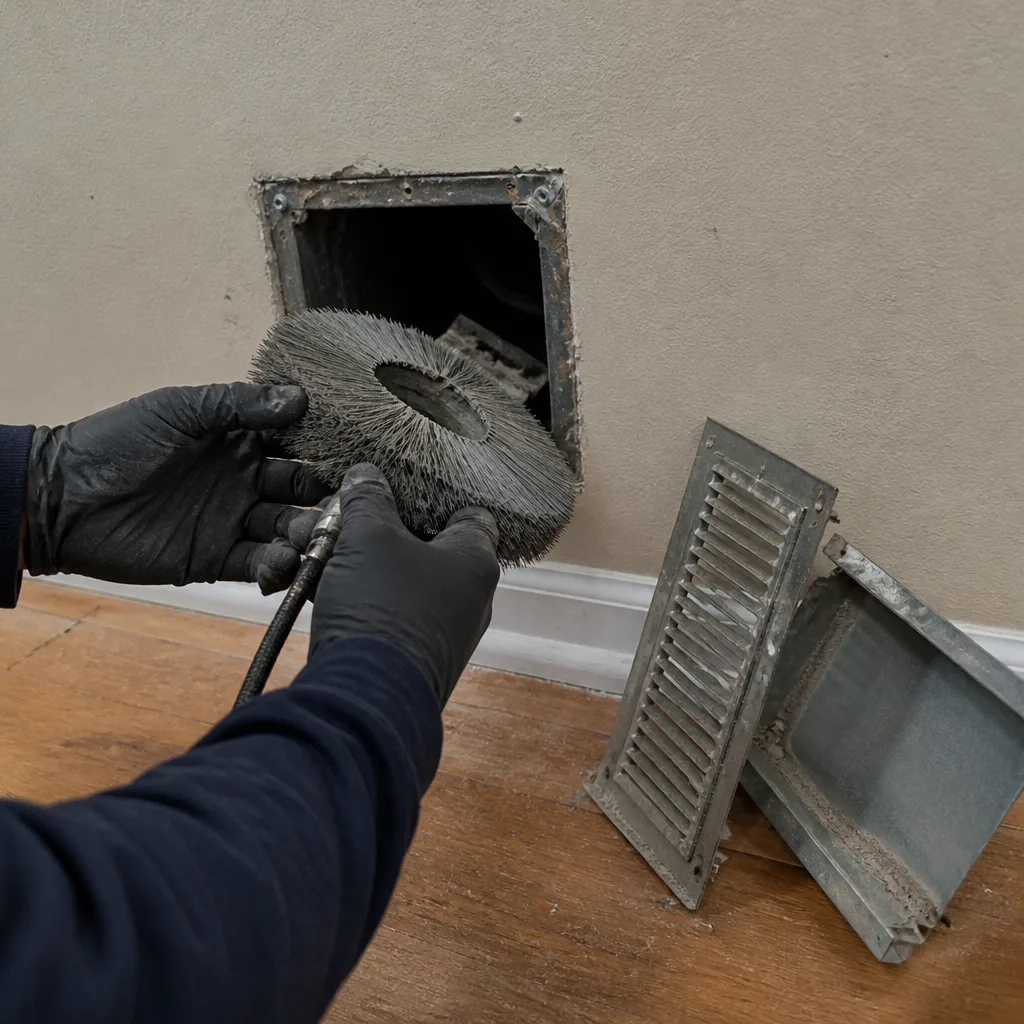
Last updated November 2, 2026
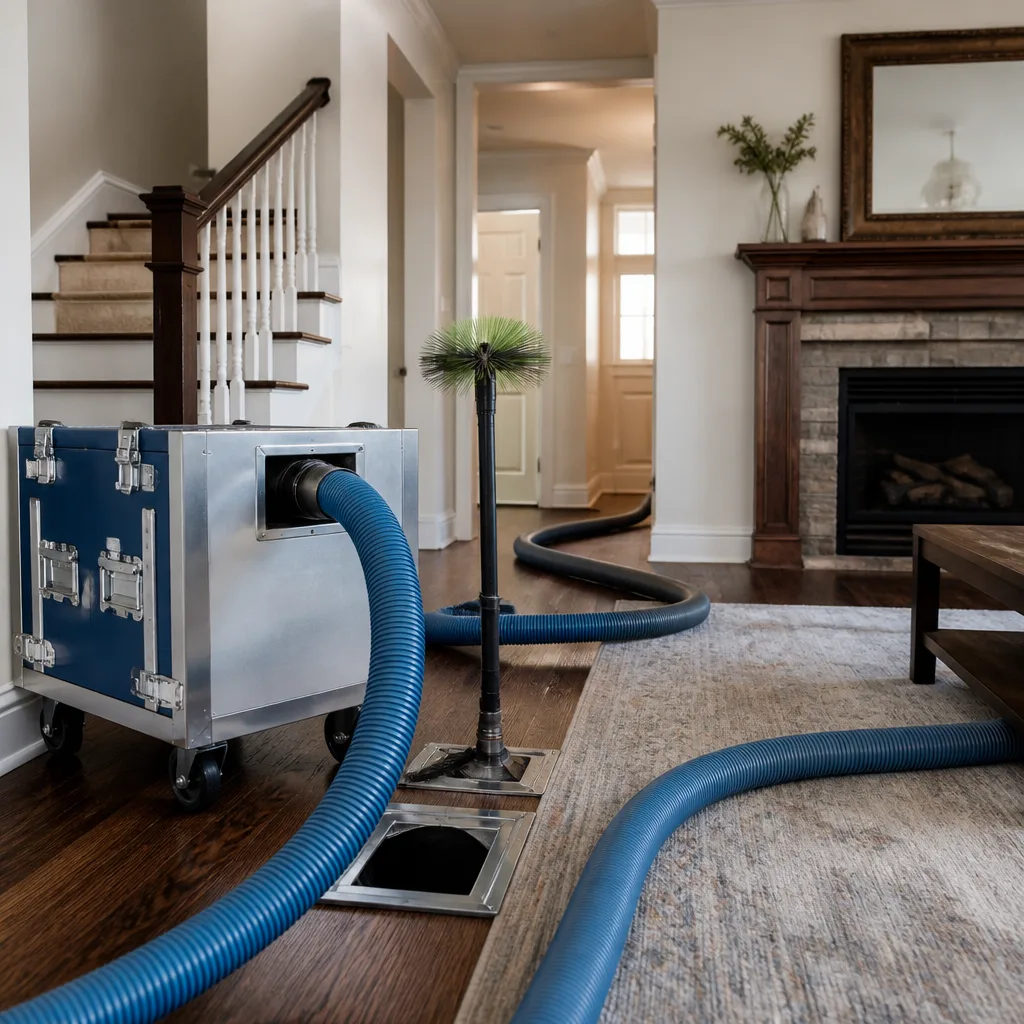 Whole-home duct cleaning
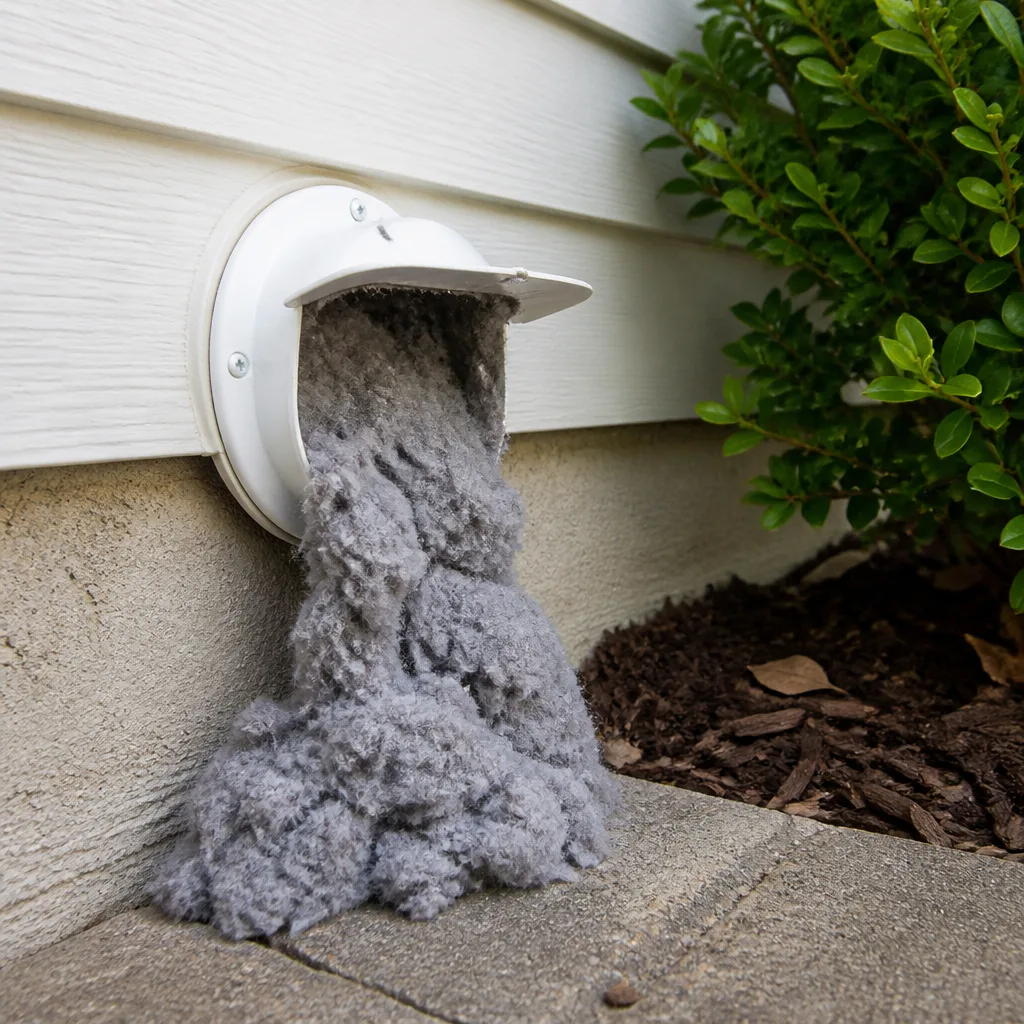 Dryer vent cleaning
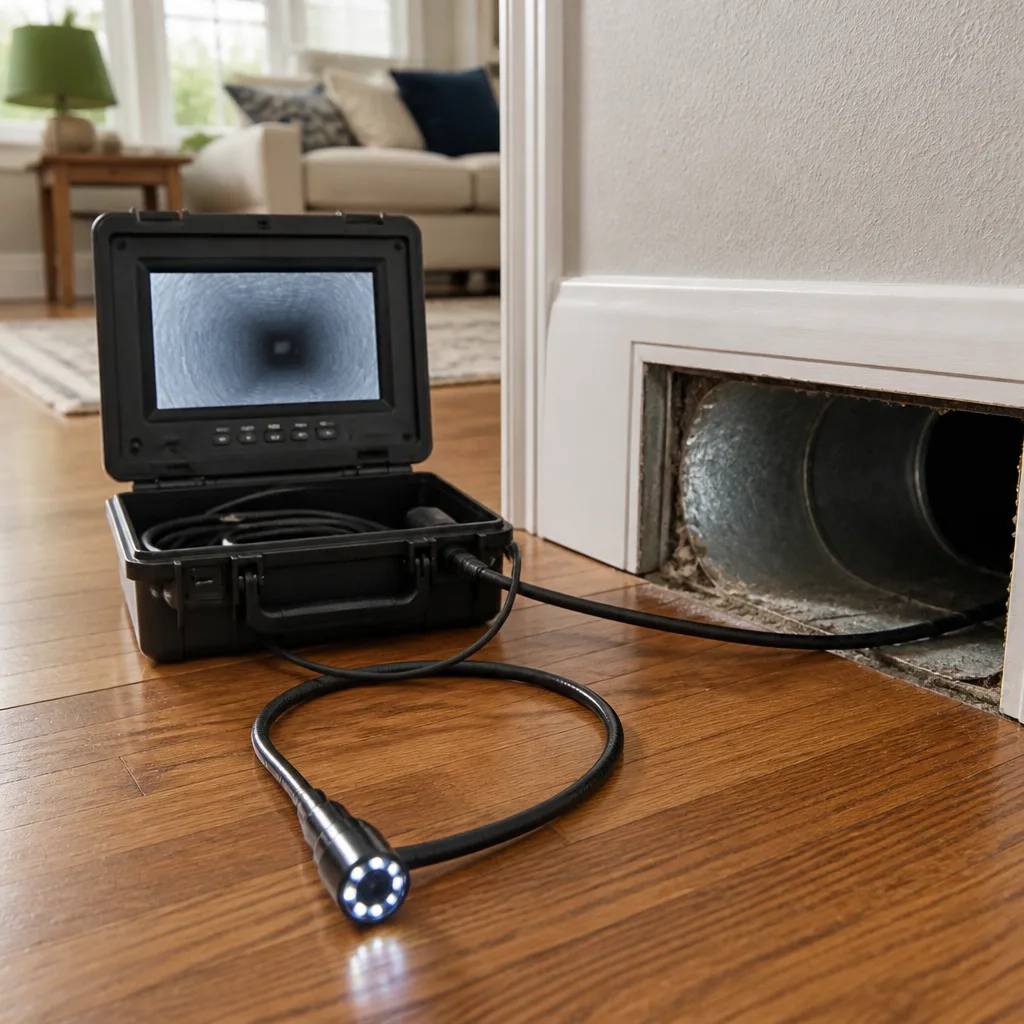 Camera inspection
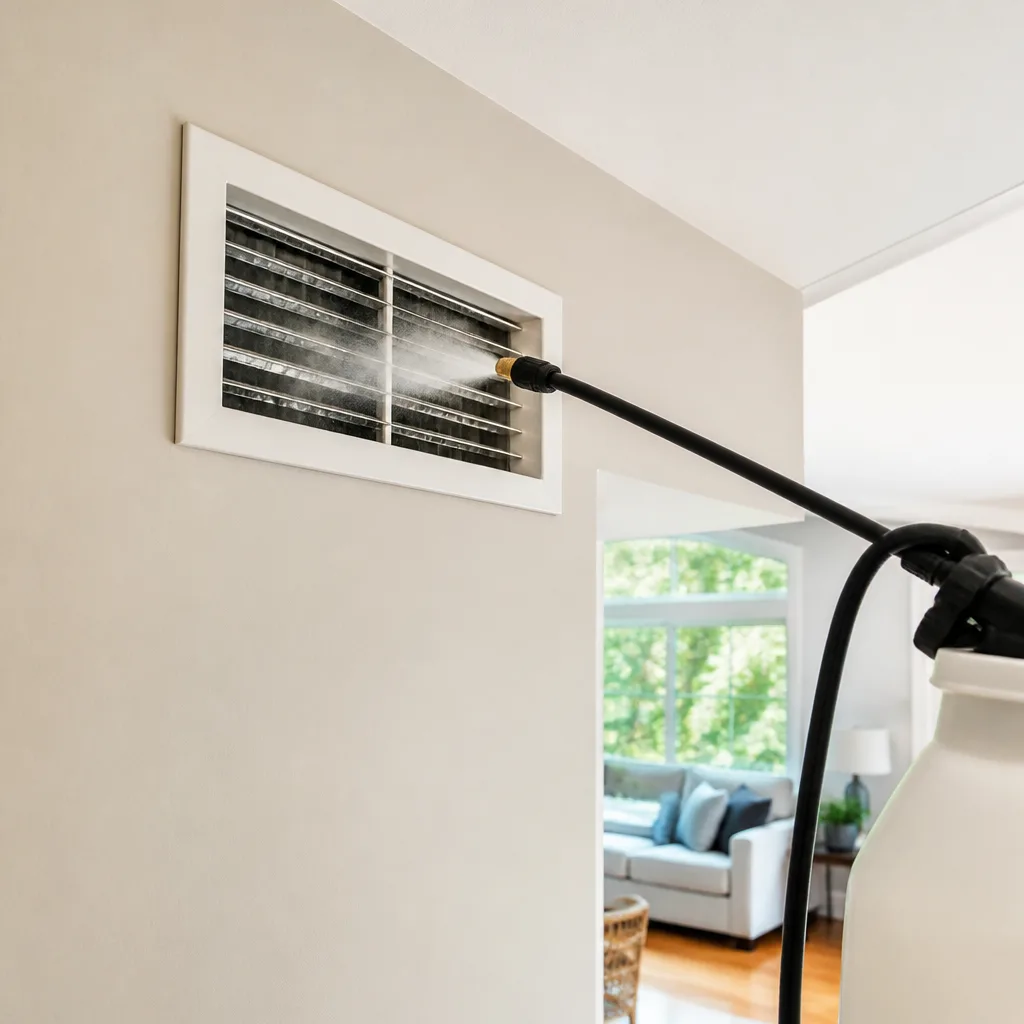 Sanitizing & deodorizing
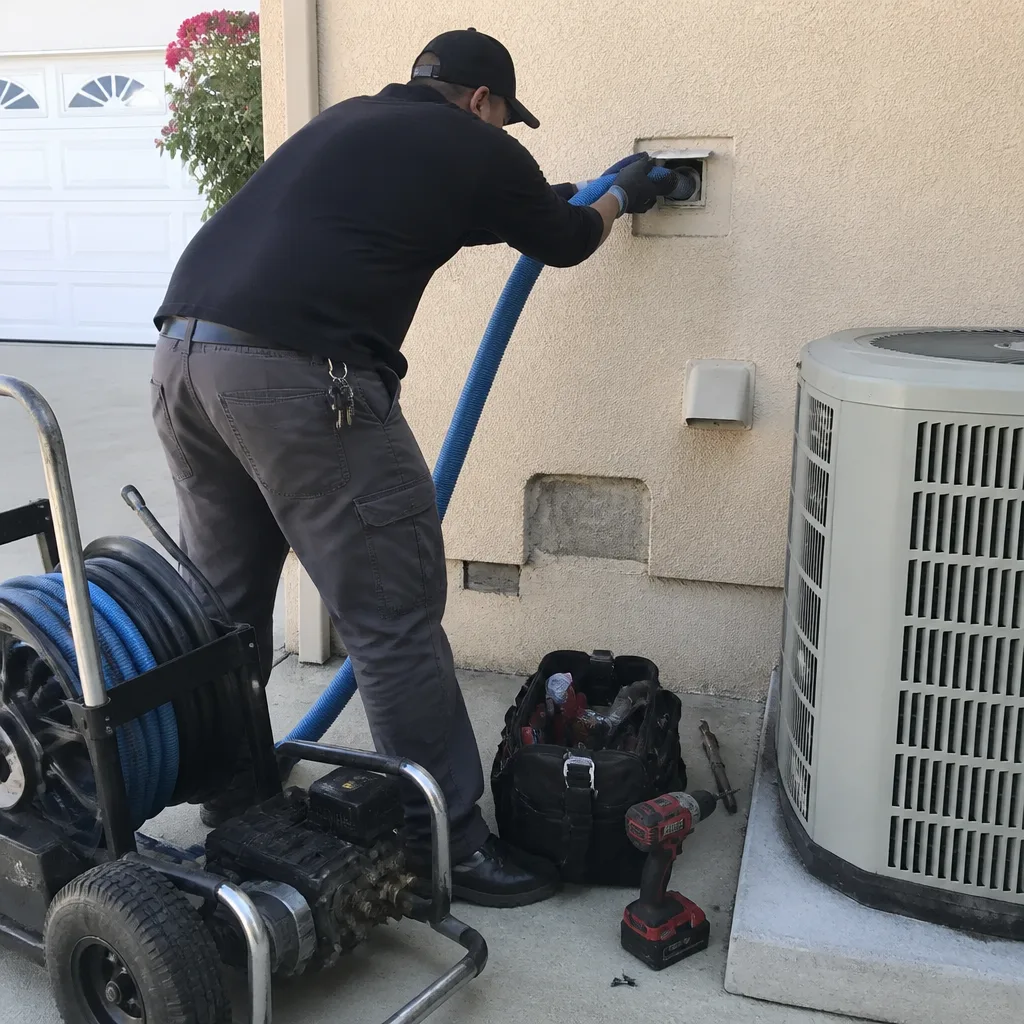
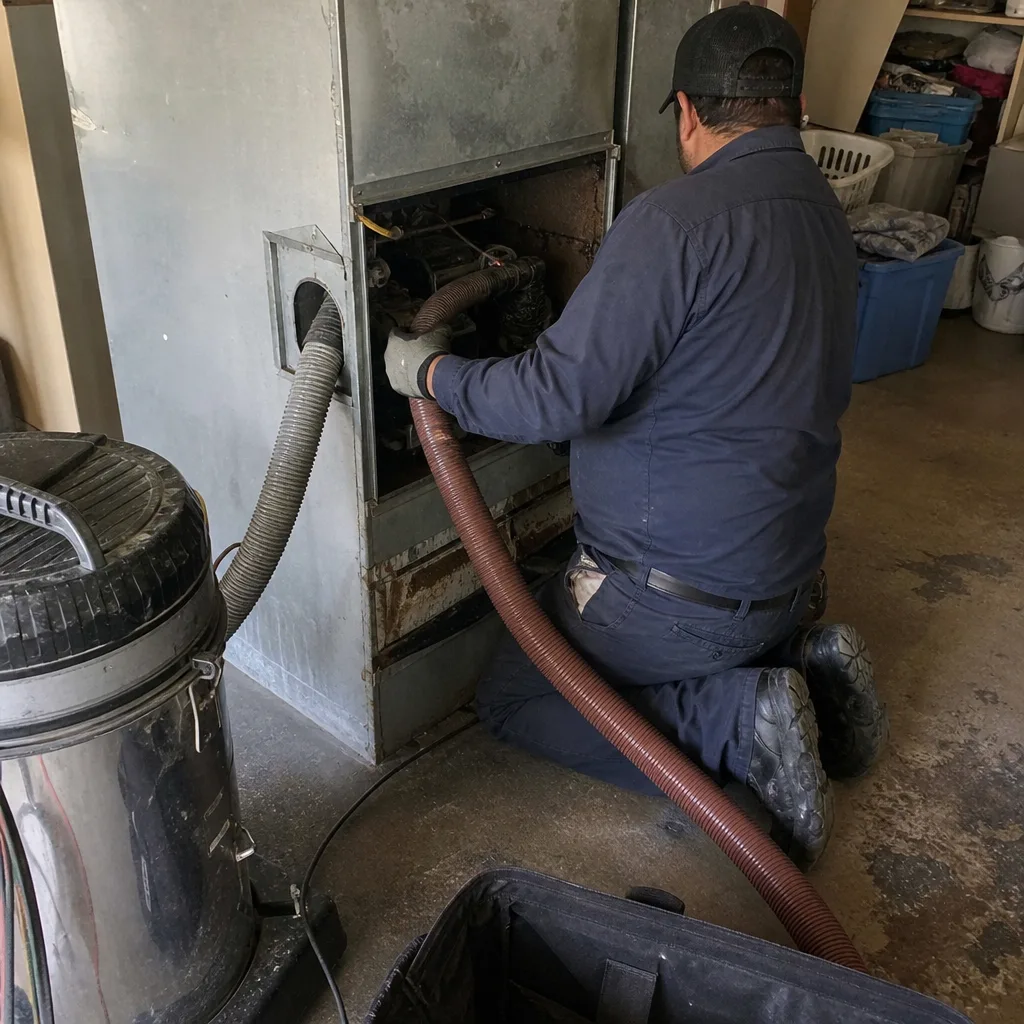
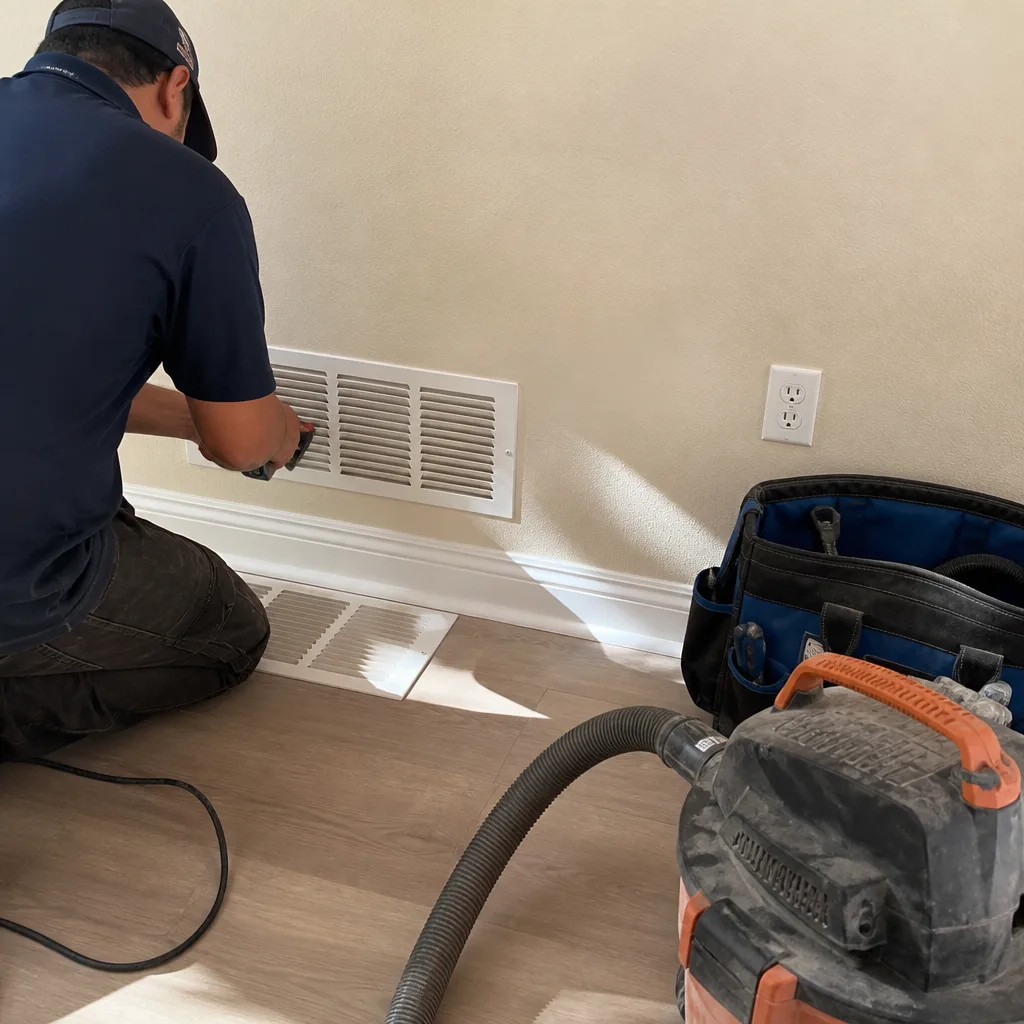
Whole-system duct and dryer vent check with before-and-after photos - you see exactly what came out of your vents
That "$99 whole-house special" is a bait ad - the real number appears once they are in your hallway, or the "clean" is a shop-vac at the register. We photograph the inside of your ducts before and after instead.
Air Duct Cleaning Permits, Codes & Inspections in CA: What You Need to Know
Most homeowners assume duct cleaning is entirely permit-free, and for straight cleaning, they’re right. But the moment a contractor repairs a collapsed duct section or modifies a return air plenum, you’ve crossed into work that California’s Title 24 and local mechanical codes regulate. That line, between maintenance and modification, is where honest contractors and expensive mistakes part ways. If you own a home in Lancaster or anywhere else in California, understanding this distinction before you hire anyone for Air Duct Cleaning services will save you from building code violations, insurance claim denials, and rework fees that can exceed the original cleaning quote by a factor of three or more.
This guide covers the exact permit triggers, the Title 24 duct sealing provision most contractors never mention, how Los Angeles County jurisdiction works for Lancaster and unincorporated Acton, and the specific paperwork that separates a genuine cleaning from an unpermitted remodel of your duct system. For Air Duct Cleaning Troubleshooting: Common Problems and How to Fix Them, see our dedicated resource.
Quick Answer
Straight air duct cleaning, meaning the removal of dust and debris from existing ducts using negative-pressure equipment, requires no permit anywhere in California. Duct repair, duct replacement, reconfiguration of duct runs, or modification of the supply or return plenum is regulated mechanical work that requires a permit in most California jurisdictions, including unincorporated Los Angeles County and incorporated Lancaster under the California Mechanical Code and Title 24 Part 6. The practical rule: if a contractor is cutting, removing, or reconnecting duct sections rather than only accessing them through existing openings, you’re in permit territory.
Styles & brands we work with
- Whole-home duct cleaning
- Dryer vent cleaning
- Camera inspection
- Sanitizing & deodorizing
Table of Contents
- The Legal Line: Cleaning vs. Repair vs. Modification
- Title 24 Part 6: Duct Sealing Rules That Apply During Cleaning
- Lancaster vs. Unincorporated Acton: Two Different Rulebooks
- Insurance Implications of Unpermitted Duct Work
- How to Document Cleaning vs. Repair on the Same Invoice
- When an Inspection Actually Makes Sense for Ducts
- Common Mistakes to Avoid
- When to Call a Professional
- Frequently Asked Questions
The Legal Line: Cleaning vs. Repair vs. Modification
California’s Mechanical Code treats ductwork as part of the building’s mechanical system, subject to the same permit and inspection requirements as furnaces, water heaters, and other fixed equipment. But it also recognizes a category of ordinary maintenance that exists outside the permit system. Air duct cleaning sits in that maintenance category because the ducts themselves are not being altered. A technician creates an access point, runs agitation and negative-pressure equipment through the system, and restores the same ducts to their pre-existing condition.
Duct repair is different. Cutting out a crushed flex-duct run and reconnecting a new section is an alteration. Rebuilding a damaged return air plenum is an alteration. Rerouting a supply branch to improve airflow is an alteration. Even resizing a transition collar where a duct meets the air handler changes the system’s configuration. In most California cities and counties, those jobs require a mechanical permit, and the work must be performed by a contractor holding a valid C-20 warm-air heating, ventilating, and air-conditioning license.
The distinction matters for a practical reason most homeowners never hear. A cleaning company that is not licensed for mechanical work may still legally clean ducts. But the moment that company starts repairing what it finds during the cleaning, it is performing regulated work without a permit or a qualifying license. That’s the exposure. As a full-scope duct specialist, we’ve made air duct repair a core service at Duct Cleaning Lancaster home precisely because we saw too many Lancaster homeowners stuck between a cleaning-only contractor who wouldn’t touch structural damage and a repair they didn’t know needed permitting. The right contractor is licensed for both scopes and knows which one requires paperwork.
Title 24 Part 6: Duct Sealing Rules That Apply During Cleaning
California’s Title 24, Part 6, the state’s building energy efficiency standards, includes a provision that catches most people off guard. When a contractor accesses ductwork during a cleaning and discovers or creates openings in the duct system, the code’s mandatory duct sealing requirements apply to any section that is opened or altered. In practice, this means that if a cleaning technician cuts an access hole in a supply duct, that opening must be sealed to meet Title 24’s leakage standards when the job is done, not just patched with duct tape.
Title 24 is explicit about what counts as a compliant sealant. The code lists mastic systems, mastic-plus-fabric systems, and certain UL-listed tape products designed for duct sealing. Standard cloth duct tape, the gray stuff from the hardware store, has not been an approved duct sealant in California for over two decades. Yet it’s still what we find in roughly one in five existing systems during first-time cleanings in Lancaster’s older neighborhoods.
This is where equipment and discipline separate a specialist from a vacuum-and-go operator. We use Rotobrush and Nikro duct cleaning systems to perform the cleaning itself, which matters because both systems integrate agitation and negative-pressure collection in a way that minimizes the number of access cuts required. Fewer cuts means fewer openings to reseal to Title 24 standards. When sealing is needed, we use code-compliant mastic and UL-listed materials, not tape from a van’s door pocket.
Homeowners should ask a simple question before any cleaning begins: “If you open any access points, what sealing material will you use to close them, and does it meet Title 24 Part 6?” A contractor who can’t answer that question in one sentence should not be touching your ducts.
Lancaster vs. Unincorporated Acton: Two Different Rulebooks
Lancaster is an incorporated city with its own building and safety division, which means mechanical permits for duct modification are issued and inspected by Lancaster city staff under the California Mechanical Code. The process is typically straightforward: a contractor pulls the permit, work is done, an inspector verifies the installation before the system is put back into service.
Unincorporated Acton is a different situation, and it’s one we navigate regularly for our Air Duct Cleaning in Acton clients. Acton falls under Los Angeles County Building and Safety jurisdiction, which applies the same California Mechanical Code but through the county’s permit pathway. That pathway is often slower than Lancaster’s city process, with different scheduling windows for inspections and different documentation requirements for the contractor. It works, but a contractor who only knows the Lancaster city process can create delays in Acton.
For straight cleaning, the jurisdiction doesn’t matter because no permit is needed. For repair work, it matters a great deal. A contractor pulling a permit in the wrong jurisdiction, or worse, skipping the permit in Acton because they don’t handle county work, exposes the homeowner to a stop-work order and a fine. If you own a property in unincorporated Acton and a contractor tells you repairs to your duct system don’t need a county permit, get that statement in writing and check with Los Angeles County Building and Safety yourself. The county is unambiguous about mechanical alterations.
One more local note: Lancaster’s climate sends the same fine dust through our ducts for eight months of the year, which is why we published Air Duct Cleaning Warning Signs: A Lancaster Homeowner’s Reference Guide. That dust accelerates wear on flex-duct joins and frame-to-collar connections, which is part of why we find enough repairable damage during cleanings here to make the permit question come up so often.
Insurance Implications of Unpermitted Duct Work
Here’s the part nobody tells you until it’s too late. If a fire, HVAC failure, or water damage event traces back to duct work that was modified without a permit, your homeowner’s insurance carrier has grounds to deny the claim. The carrier’s logic is straightforward: the policy covers losses arising from lawfully installed systems, and unpermitted mechanical work breaches the policy’s requirement that alterations be made in accordance with local building codes.
This is not theoretical. We have seen it happen with furnace fires where an insurance adjuster found unpermitted duct modifications near the heat exchanger. The insurer denied the claim, the homeowner ate a five-figure repair, and the contractor who did the work was long gone. The same exposure exists with dryer vent work. A Dryer Vent Cleaning in Acton is permit-free maintenance, but if a contractor reconfigures the vent run to discharge in a different location, that’s an alteration, and the same permit logic applies.
Protect yourself with two habits. First, before any repair work begins, ask the contractor to confirm in writing whether a permit will be pulled for the specific repair scope. Second, after the work is done, keep the permit final sign-off, the contractor’s license number, and the scope-of-work description in a file that survives longer than the warranty. If an adjuster ever questions the work, that file is your defense.
How to Document Cleaning vs. Repair on the Same Invoice
The same job can legally include both permit-free cleaning and permit-required repair on one invoice. What matters is that the invoice separates the two scopes clearly enough that a building inspector or insurance adjuster can tell what happened. A vague line item like “duct service” is useless for this purpose. Two line items, “negative-pressure air duct cleaning of existing supply and return system” and “replacement of 8 linear feet of damaged flex duct with R-8 insulated flex, permit included,” are exactly what you want.
Here’s the step-by-step documentation standard we recommend for any job that includes both scopes:
- Ask for a written scope before work starts. The document should list the cleaning sections and the repair sections separately, with the permit status of each one noted.
- Confirm which entity issues the permit. In Lancaster city, it’s the city’s building division. In unincorporated Acton, it’s Los Angeles County Building and Safety. The contractor should name the correct one without hesitation.
- Get the permit number before repair work begins. Not after. The permit should be pulled and visible before the first repair cut is made.
- Insist on a separate invoice line for each repair action. “Replace 8 ft flex duct” is a line. “Reseal supply plenum per Title 24” is a line. Together they tell a story a permit reviewer can follow.
- Keep the final inspection sign-off. In both Lancaster and Los Angeles County, the inspector’s final approval is the legal closeout of the permit. Without it, the permit is technically open and the work is not fully cleared.
This documentation discipline also protects the cleaning side of the job. When the repair scope is clearly isolated, the cleaning scope stays in its permit-free category, which means no one later argues that the whole job should have been permitted because the lines were blurred.
When an Inspection Actually Makes Sense for Ducts
Not every repair triggers a mechanical permit, and not every cleaning should trigger an inspection. The useful mental model is one of thresholds. Cleaning alone never requires either. Repairs that restore an existing duct to its original configuration without altering size, location, or connections usually fall under maintenance and need no permit. But anything that changes the system’s configuration, routing, size, or connection points is mechanical alteration and belongs in the permit system.
Here’s a practical list of threshold examples, drawn from the work we see in the Antelope Valley:
- Cleaning access cut, then sealed to Title 24. Mandatory sealing compliance, but no permit needed. The opening is temporary and the system is restored.
- Patching a small puncture in a duct run. No permit in most cases. This is a restoration, not an alteration.
- Replacing a full damaged flex-duct section. Permit required in most jurisdictions. This is a replacement of a system component.
- Rebuilding a return air plenum. Permit required. The plenum is part of the building’s mechanical pressure envelope.
- Adding a new supply branch to serve a room addition. Permit required, and not just mechanical, likely also electrical and framing depending on the addition.
- Resealing all accessible duct joins during a cleaning. No permit needed, and strongly recommended under Title 24. This is maintenance that improves compliance.
The inspection itself, when a permit is pulled, is a real verification step. In Lancaster, a mechanical inspector will visually confirm that the installed duct components are code-compliant, that the connections are sealed with approved materials, and that the system’s airflow path matches the approved plan. It’s not a formality. Unpermitted duct work tends to fail on the details: under-insulated flex in an attic, a supply branch fed from the wrong side of the plenum, or a return too close to a furnace vent. Those failures are exactly what Title 24 and the Mechanical Code are designed to catch, and they are what your insurance policy assumes were caught when it prices your premiums.
For a deeper look at what proper duct repair entails in the Antelope Valley, see our Air Duct Repair in Acton page, where we explain the actual repair process from diagnosis through code-compliant completion.
Common Mistakes to Avoid
- Assuming a low quote means a simple job. When a duct cleaning quote comes in suspiciously low, it often means the contractor only owns a portable vacuum and has no plan for what happens when they find damage. In Lancaster’s older housing stock, damage is common, and an unlicensed operator either ignores it or makes an illegal fix.
- Accepting duct tape as a sealing material. Cloth duct tape fails Title 24 and is a red flag for a contractor who doesn’t understand California code. The moment you see it used on a duct in Los Angeles County, you’re looking at non-compliant work.
- Letting the contractor blur cleaning and repair on one invoice. If you can’t tell from the paperwork where cleaning ended and repair began, neither can an insurance adjuster. The blur itself is the liability.
- Skipping the permit for a full flex-duct replacement. Some handyman-level operators will tell you a permit is unnecessary for a “simple swap.” In Los Angeles County, replacing a flex run is mechanical work. If the county finds out, the work is tagged and you’re the one holding the bill to correct it.
- Not verifying the contractor’s license class. Cleaning requires no special license, but mechanical repair requires a C-20 classification. A contractor who only holds a general B license may legally pull some permits, but a C-20 is the specific HVAC credential that tells you the contractor’s core trade is air systems, not remodeling.
- Ignoring the difference between Lancaster city and county territory. The same repair may process through Lancaster’s building division on one side of Avenue K and through Los Angeles County on the other. A contractor who doesn’t know which side you’re on hasn’t done their homework.
When to Call a Professional
You should involve a licensed, permit-savvy duct specialist when any of these conditions appears: your ducts have visible crushed or separated sections in the attic or crawlspace, your return plenum shows signs of structural failure, you’re adding a room that requires new supply branches, or your energy bills have climbed while certain rooms stay uncomfortable regardless of thermostat setting. These are repair signals, not cleaning signals, and they sit on the regulated side of the line.
We also recommend a professional walk-through before any major renovation that touches the HVAC system, and after any event that could have damaged ducts, such as a rodent infestation or water intrusion into the duct cavity. The walk-through establishes whether your project is cleaning, repair, or both, and it answers the permit question before any money changes hands. Duct Cleaning Lancaster home offers free estimates in Lancaster. Call (833) 589-9773 to schedule.
Frequently Asked Questions
No. Straight air duct cleaning, the removal of dust and debris from existing ducts without altering the system, is classified as maintenance and requires no permit anywhere in California. The permit requirement attaches only when ducts are repaired, replaced, reconfigured, or modified, at which point the work falls under the California Mechanical Code and usually requires a mechanical permit.
If you’re unsure whether your job is cleaning or repair, call (833) 589-9773 and we’ll tell you straight before any work is scheduled.
In Lancaster city, permit requirements follow the California Mechanical Code: alterations to the duct system’s configuration, size, or connections need a permit, while restoration of the existing system to its original condition generally does not. The simplest reliable test is to ask your contractor to name which Lancaster city department issues the permit and what the permit scope will say. A hesitation or vague answer is your signal to get a second opinion.
For a free, honest scope assessment of your ducts, call (833) 589-9773.
Title 24 Part 6 requires that all duct openings and connections be sealed with code-approved materials such as mastic, mastic-plus-fabric, or listed duct-sealing tapes when ducts are accessed or altered. Standard cloth duct tape is not an approved sealant under the California energy code. The requirement applies whenever a cleaning contractor opens or alters a duct section, making the sealing material a real compliance issue even on a maintenance job.
Yes. Insurance policies typically require that mechanical systems be installed and altered in accordance with local building codes, and unpermitted duct modification breaches that requirement. If a loss traces back to unpermitted work, the carrier can deny coverage for the resulting damage. Keeping permits, final inspections, and clear scope documentation is your strongest protection.
Before you pay for any duct repair, confirm in writing that the permit is pulled. If you need help with the right questions to ask, call (833) 589-9773.
The price spread exists because the industry splits roughly into two tiers: portable vacuum operators who clean surfaces and full-scope contractors who use purpose-built systems like Rotobrush and Nikro with HEPA-level containment from companies like Abatement Technologies. The second tier costs more because the equipment is industrial-grade and the contractor is usually also licensed or aligned for repair work that the first tier cannot legally perform. In Lancaster, where older duct systems often need repairs found during cleaning, the cheaper quote can end up more expensive when the cleaning-only operator either ignores damage or walks away from it.
Get a real quote with a real scope breakdown. Call (833) 589-9773.
Ask four specific questions: Are you licensed for mechanical work in California, and what is your license class? If repairs are found, will you pull a permit and from which jurisdiction, Lancaster city or Los Angeles County for Acton? Will the invoice separate cleaning scope from repair scope? And if you open any ducts, will you seal them with Title 24 approved materials? A contractor who answers all four clearly and in writing is one you can work with.
The Bottom Line
For more guides & resources: duct cleaning is maintenance, and maintenance needs no permit. Duct repair, modification, and reconfiguration are regulated mechanical work, and in Lancaster and unincorporated Acton, they usually need a permit from the city or county building authority. Title 24 Part 6 adds a sealing requirement that applies even during cleaning when ducts are opened, and unpermitted repair work is a real insurance exposure. The homeowner’s defense is simple: hire a contractor who knows the line, documents both scopes separately, pulls the permit when required, and seals every opening with approved materials. That’s the standard we work to on every job in the Antelope Valley.
Written by the team at Duct Cleaning Lancaster, serving Lancaster since 2014.
See the difference
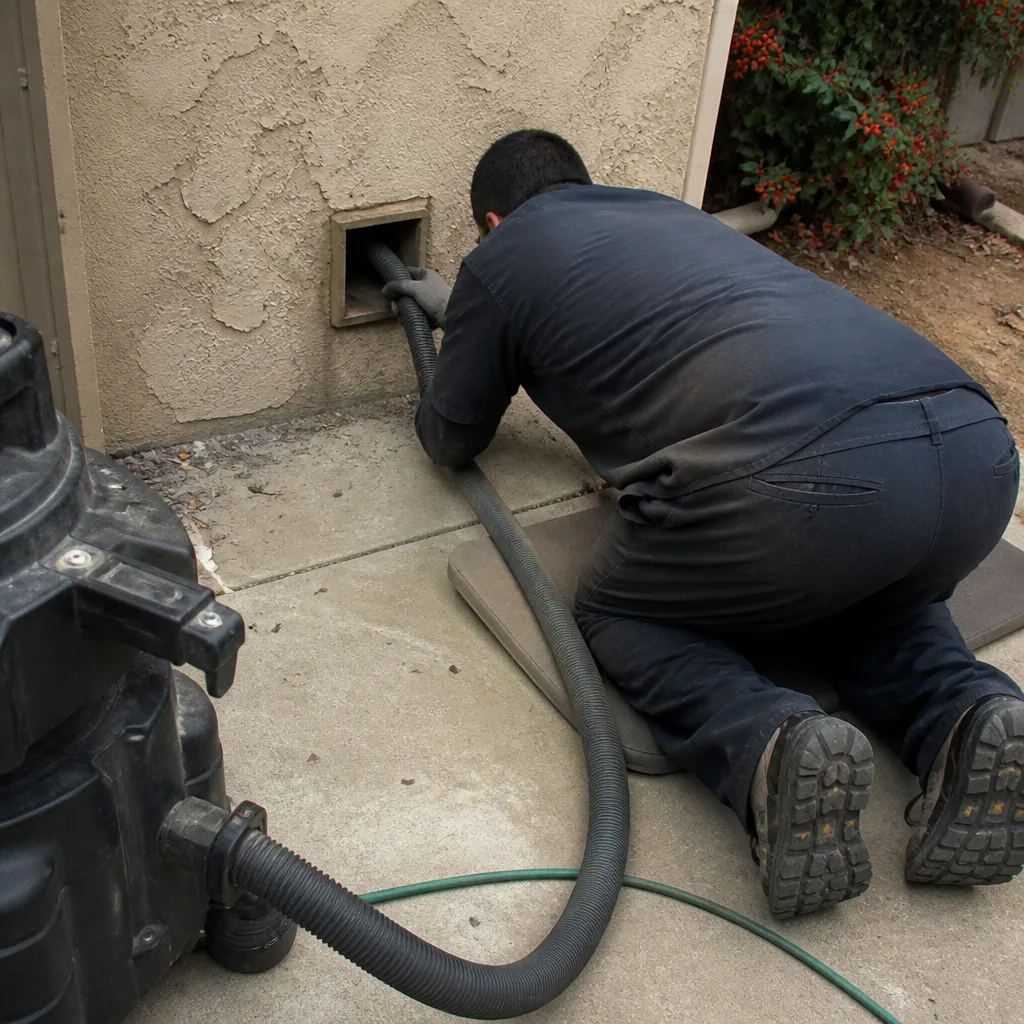 Before
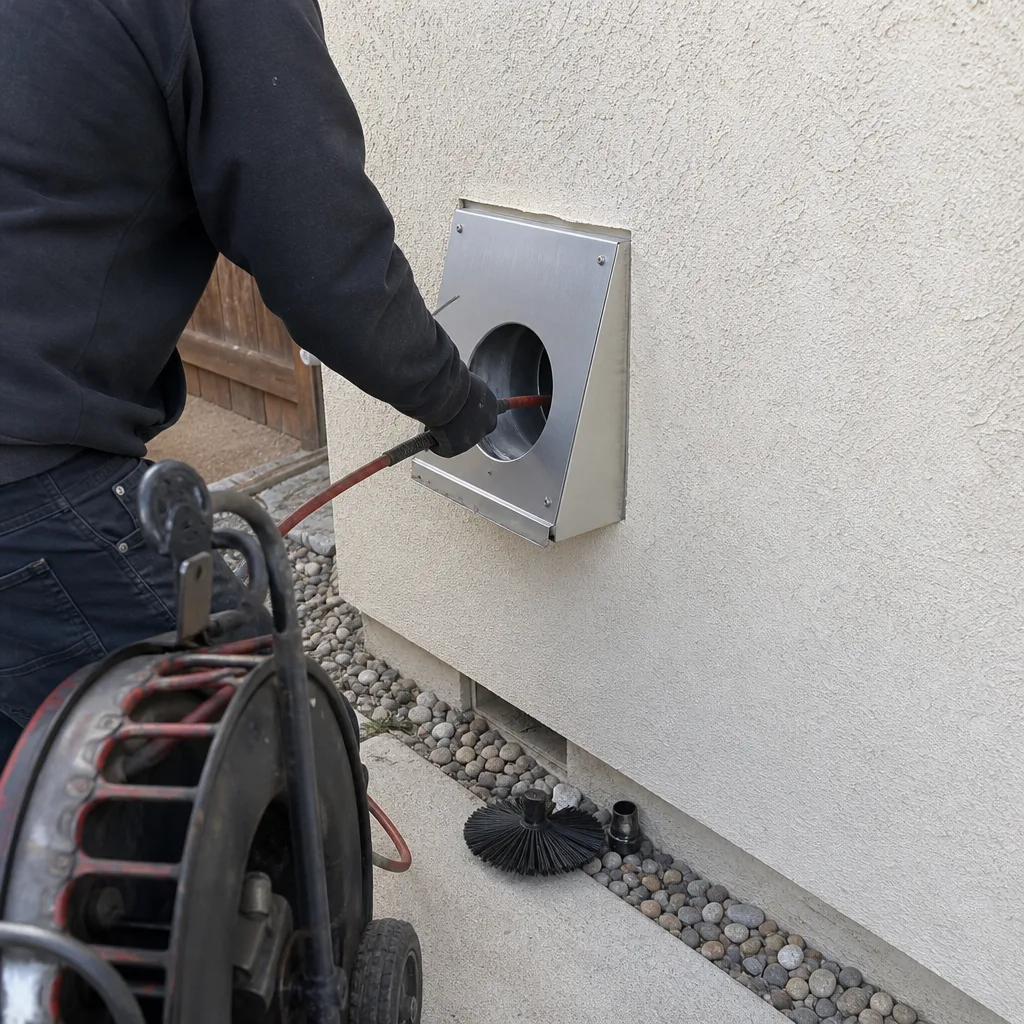 After
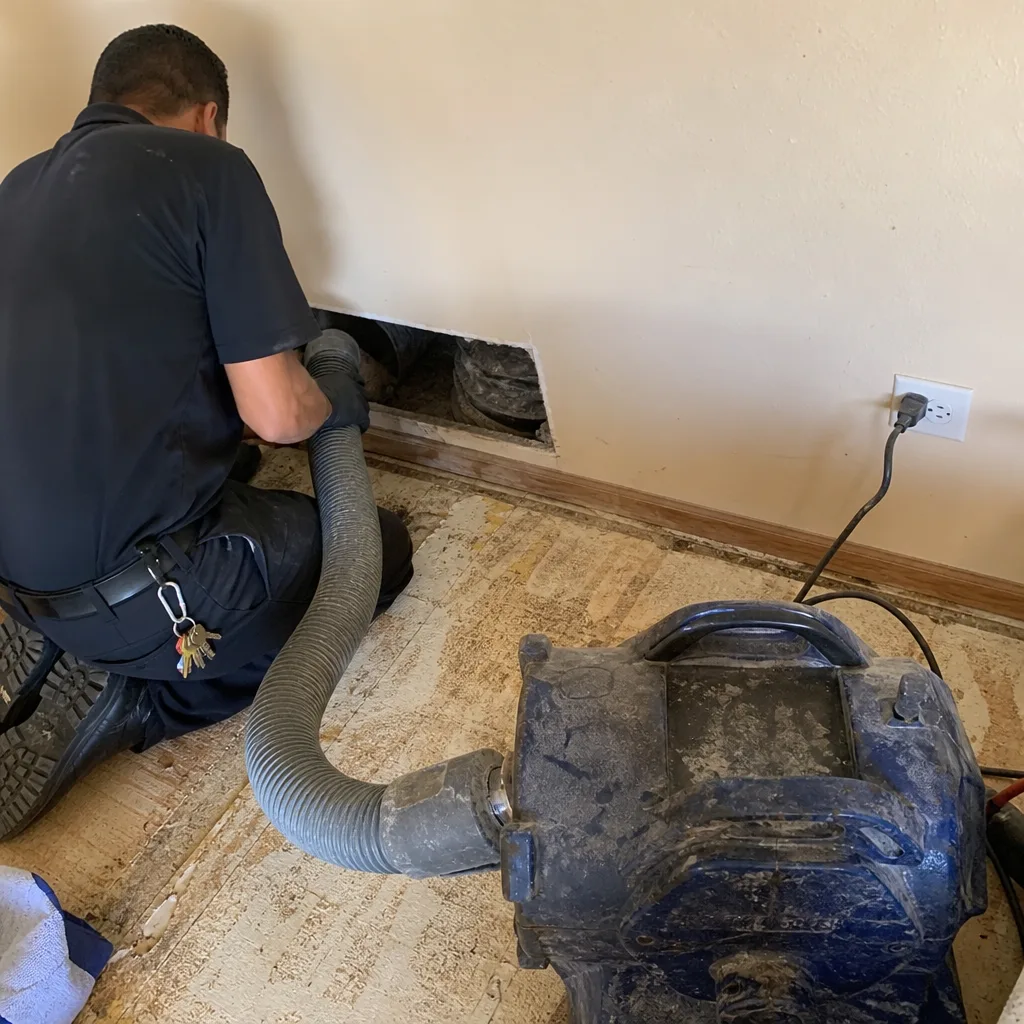 Before
 After
 Before
 After